
Planting
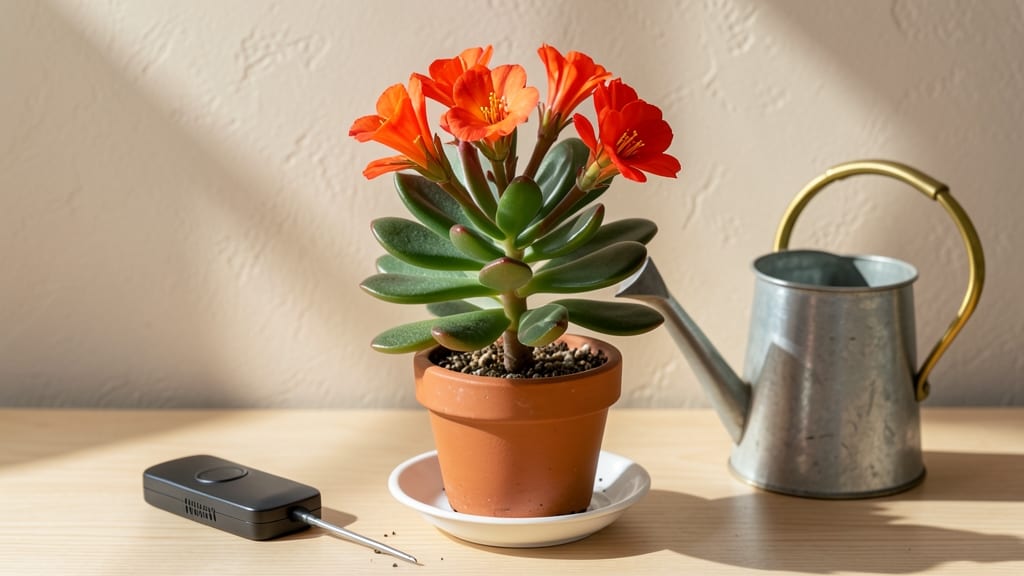
If your Kalanchoe 🌸 plant keeps wilting or developing mushy roots despite your best efforts, you're not alone—most people struggle with how to care for a kalanchoe plant indoors with water because this succulent thrives on neglect, not attention.
The key isn't just how often you water but when and how much, and getting it wrong can turn your vibrant plant into a sad, droopy mess in weeks.
I’ve learned the hard way that Kalanchoes despise soggy soil, yet many beginners drown them by following generic houseplant rules. This guide cuts through the confusion with a simple, science-backed watering schedule that keeps your plant thriving year-round, even in dry indoor air.
No more guessing—just clear steps to prevent root rot while keeping those gorgeous blooms coming back.
You’ll discover the exact signs your Kalanchoe needs water (and when to resist the urge to hydrate), plus how to adjust for seasons without overcomplicating things.
Whether you’re a first-time plant parent or a seasoned grower, these tricks will save your Kalanchoe from the most common mistakes that turn green thumbs into black thumbs overnight.
Let’s start with the foundation: a watering routine so foolproof, your Kalanchoe will thank you with bold leaves and cheerful flowers—no green thumb required. Ready to master the art of underwatering (yes, it’s a real thing)?


The perfect kalanchoe watering schedule to prevent root rot
Kalanchoe plants thrive on neglect—literally! Their succulent nature means they store water in their leaves, making them incredibly drought-tolerant. But this trait also makes them highly sensitive to overwatering, which can lead to root rot and even kill your plant.
The key is a consistent, minimal watering schedule that mimics their natural arid environment.
Most indoor kalanchoe care guides recommend watering only when the top 1-2 inches of soil feel completely dry. Stick your finger in the soil—if it's dry, it's time to water.
If it's still moist, wait another 5-7 days. This simple test prevents the #1 killer of kalanchoes: soggy soil.
Seasonal adjustments are crucial. In spring and fall, water every 2-3 weeks when the soil is bone-dry. During summer heat, stretch this to 3-4 weeks since the plant enters a semi-dormant state. In winter, reduce watering to every 4-6 weeks—this is when most kalanchoes naturally rest and conserve energy.
| Season | Watering Frequency | Soil Moisture Test | Watering Time |
|---|---|---|---|
| Spring | Every 2-3 weeks | Top 1-2" dry | Morning (8-10 AM) |
| Summer | Every 3-4 weeks | Top 2-3" dry | Late morning (10 AM) |
| Fall | Every 3-4 weeks | Top 2" dry | Morning (8-10 AM) |
| Winter | Every 4-6 weeks | Top 3" dry | Early morning (7-9 AM) |
Never water your kalanchoe on a schedule. Instead, rely on the soil's moisture level and the plant's appearance. A wrinkled leaf is a clear sign it's time to water, while soft or mushy stems mean you've waited too long and risked root rot.
For extra protection, use a terracotta pot, which allows excess moisture to evaporate faster than plastic.
When you do water, soak thoroughly until water runs out the drainage holes, then empty the saucer immediately. Stagnant water in the saucer is a magnet for root rot.
Aim for deep watering rather than light, frequent drinks—this encourages the plant to develop a strong root system that can handle dry spells.
Pro tip: Group your kalanchoe with other succulents or cacti in the same pot or tray. This creates a microclimate where humidity levels stay low, mimicking their natural habitat. Just avoid placing them near humidifiers or houseplants that love moisture, like ferns or peace lilies.
If your kalanchoe is blooming, reduce watering slightly—too much moisture can cause buds to drop. Instead, focus on providing bright, indirect light (4-6 hours daily) and a cool nighttime temperature (around 60-65°F) to prolong the bloom. A west-facing window is ideal for this.
Remember, underwatering is less harmful than overwatering for kalanchoes. If you're unsure, wait one more week before watering. Your plant will thank you with vibrant blooms and lush foliage for years to come!
The perfect kalanchoe watering schedule to prevent root rot
Kalanchoe plants thrive on neglect—literally! Their secret to survival is dry soil, not soggy roots. Unlike thirsty houseplants, kalanchoes store water in their leaves, so they only need water when the top 1-2 inches of soil feel completely dry.
Stick your finger in the soil: if it's damp, wait another week. This watering rhythm prevents root rot, the #1 killer of indoor kalanchoes.
Seasonal changes drastically alter your watering schedule. In spring and fall, when growth is active, water every 2-3 weeks. But during summer's heat, stretch it to 3-4 weeks—even longer in winter when the plant rests.
Overwatering in winter is a fast track to mushy stems and lost blooms. Think of winter as your kalanchoe's dormancy vacation, not its active season.
🌱 Healthy Soil vs. Waterlogged Soil Comparison
| Condition | Healthy Soil | Waterlogged Soil |
|---|---|---|
| Moisture Level | Dry top 1-2" | Damp throughout |
| Smell | Earthy, fresh | Musty, sour |
| Root Appearance | White, firm roots | Brown, mushy roots |
| Leaf Condition | Plump, vibrant | Wrinkled, yellowing |
| Watering Frequency | Every 2-3 weeks | Too frequent |
💧 Pro Tip: Always water in the morning to allow excess moisture to evaporate.
Use the finger test before watering—it's foolproof. Push your index finger 1-2 inches deep into the soil. If it comes out clean and dry, it's time to water. If it feels damp, resist the urge!
Kalanchoes despise wet feet, and their succulent nature means they'd rather go thirsty than drown. Overwatering causes root rot, which turns leaves yellow and mushy within days.
Pot size matters more than you think. A smaller pot means soil dries faster, reducing overwatering risks. Choose a container with drainage holes—non-negotiable!
If your pot lacks holes, water sparingly and let excess drain from the saucer within 30 minutes. Terracotta pots are ideal because they wick away moisture, while plastic traps humidity. For extra protection, add a layer of perlite or pumice to the soil mix to improve drainage.
Watch for seasonal cues like leaf wrinkling or stem shrinking—these are your kalanchoe's way of saying, "I'm thirsty!" But don't confuse thirst with underwatering stress. Droopy leaves can also signal overwatering or root rot. The key is balance: water deeply but infrequently.
Aim for 50-100ml per watering, enough to moisten the soil without creating a swamp. Consistency is critical—stick to your schedule, and your kalanchoe will reward you with vibrant blooms for months.
Remember, kalanchoes are drought-tolerant survivors. They'd rather you underwater slightly than overdo it. With this watering discipline, your plant will thrive indoors for years, blooming like a desert wildflower in your living room. 🌸