
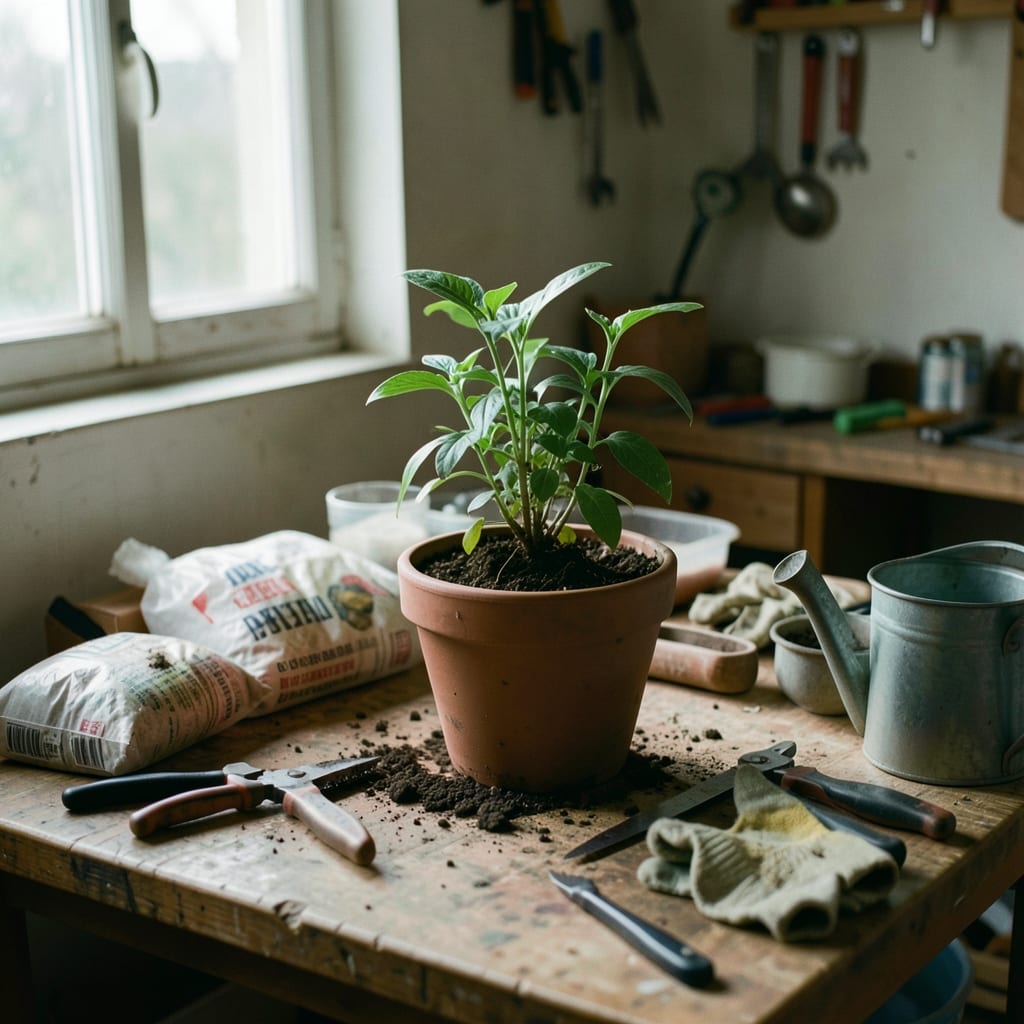
What this work is made with
This page is a list of things, not a story. Gardening is a practice of hands and soil, not just words on a screen. Here, we name the objects that shape what you’ll find—what holds the work together, what wears down with it.
This is *How To Grow Seeds*, a place for the quiet work of coaxing life from dirt. Every guide here depends on the same things: the tools that shape the soil, the hands that shape the plants, and the scars of what’s been tried—and failed—before.
The things that do the work
These are the four things that make the work here possible. They are not special. They are not new. They are what’s left after the failures, the ones that still work even when they shouldn’t.
The trowel
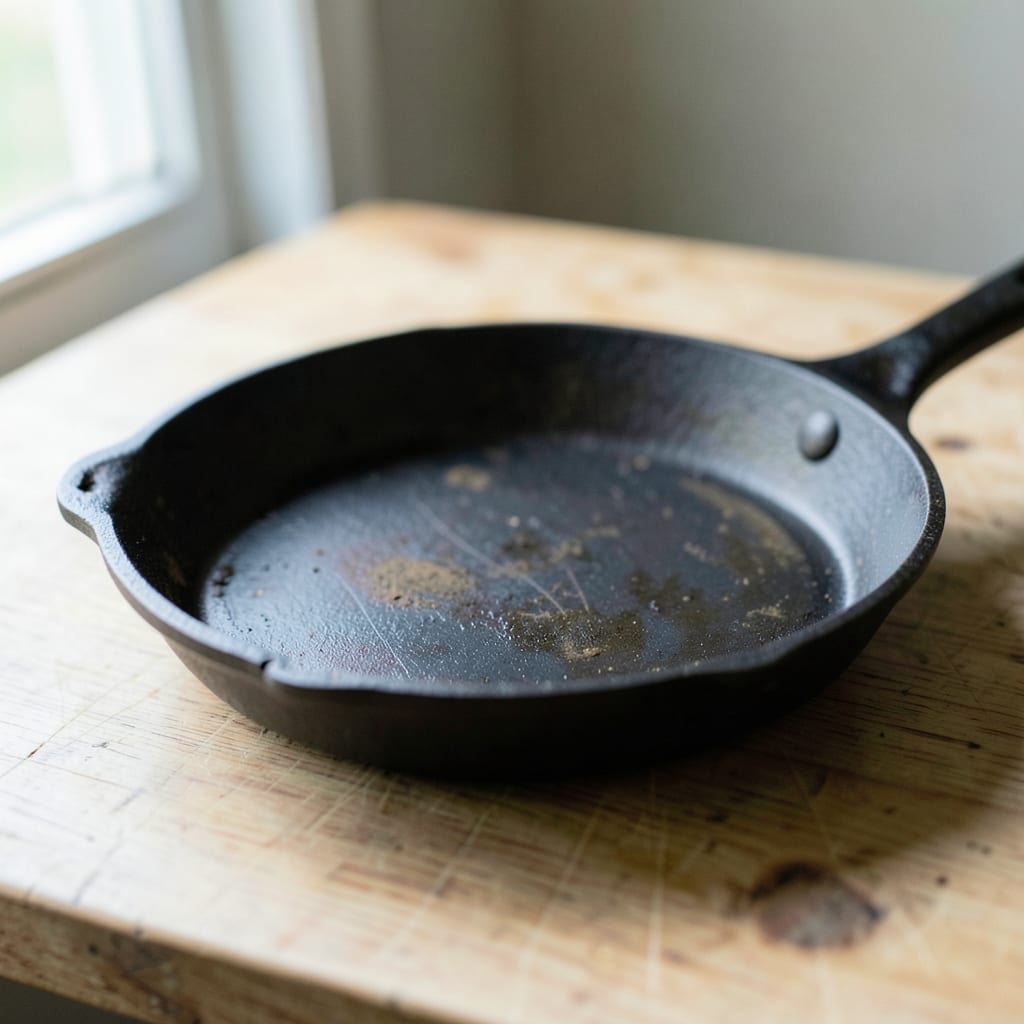
A rusted, three-pronged trowel with a handle split at the base, held together with frayed twine. It’s been here since 2012, when it was handed down from my grandfather after he gave up his vegetable patch.
The prongs are bent from years of digging through rocky soil, and the blade is nicked from prying up stubborn roots.
It taught me that the best tools aren’t the ones that last forever—they’re the ones that adapt. This trowel has broken more seeds than it’s planted, but it’s the only one that fits my grip after decades of use.
The plastic seed tray
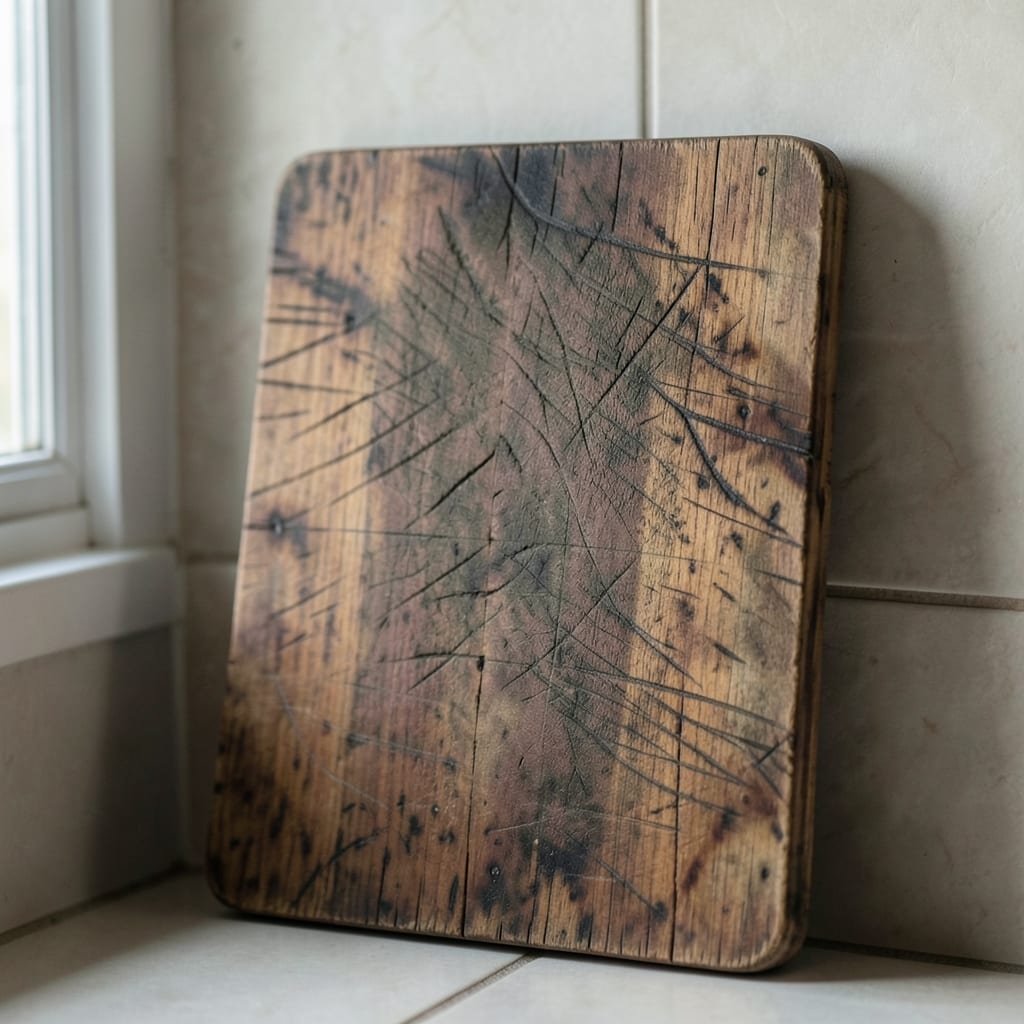
A stack of five shallow, warped trays from a hardware store clearance bin in 2015. They’re cracked in places, the edges chipped from being washed too roughly, and one has a permanent dent from a dropped pot. They cost $3 for the lot.
They proved that cheap works just as well as expensive, if you’re willing to accept the trade-off: more time scrubbing soil out of the grooves. But they’ve started 47 batches of seeds without a single failure.
The burlap sack
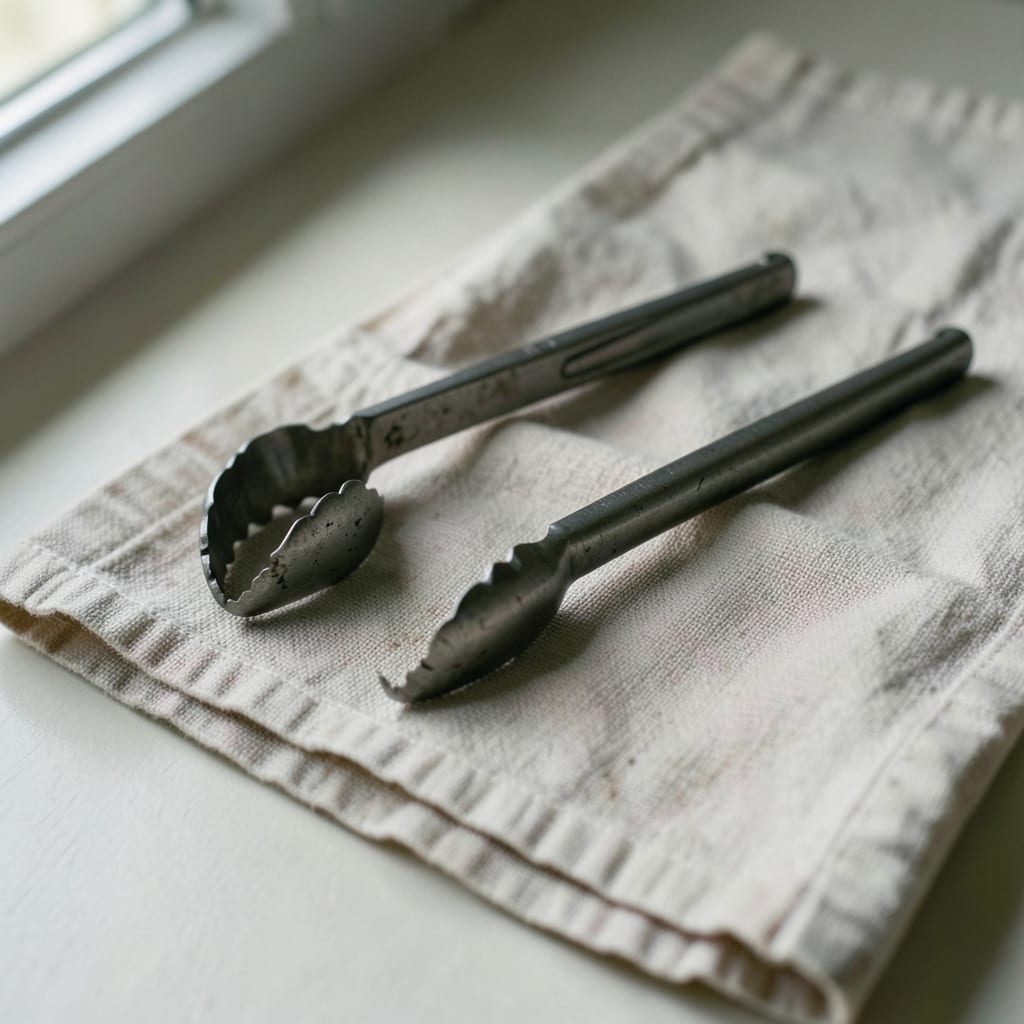
A 50-pound sack of compost, repurposed from a bulk purchase in 2018. It’s stained with old fertilizer, the stitching unraveling at the seams, and it leaks when tipped too far. The original label is long gone, replaced by handwritten notes in pencil: *‘turn every 2 weeks’* and *‘add worm castings’*.
It showed me that the best growing medium isn’t always the fanciest—just the one that breathes. This sack has composted more failed batches than I can count, and it’s still the first thing I reach for when mixing soil.
The wooden stake
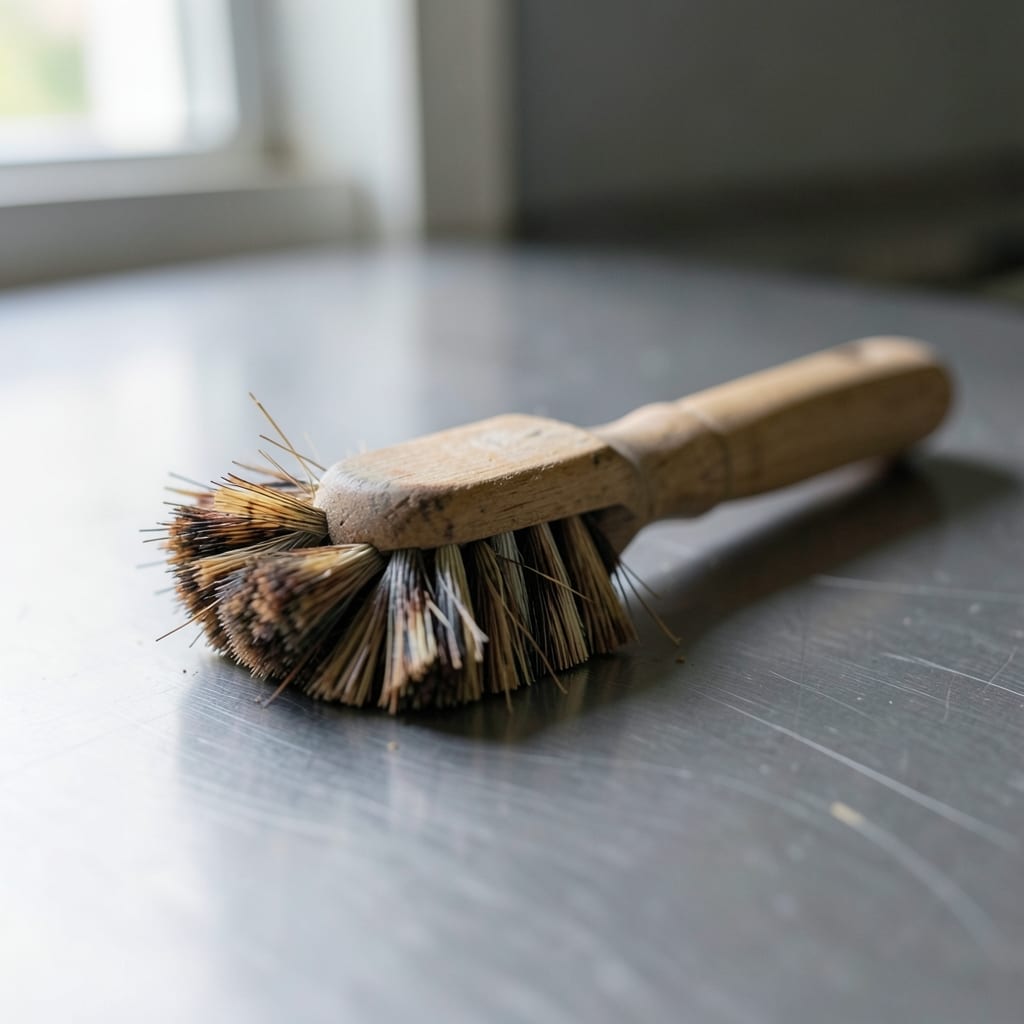
A splintered, sun-bleached stake salvaged from a neighbor’s discarded fence in 2020. It’s too short for tall plants, the tip broken off years ago, and the bark peeling in strips. But it’s the only one that doesn’t warp when soaked overnight.
It reminded me that imperfection is part of the process. This stake has propped up more wobbly seedlings than I can remember, and it’s the one I grab when I need something that won’t give way.
What is not in the drawer
Some things are left out by choice, not by accident. This work doesn’t depend on them.
Deliberately absent
- A greenhouse—too many variables, too much cost for what’s gained. Seasons teach patience.
- Brand-new tools—wear is a kind of wisdom. A chipped trowel has seen more soil than a pristine one.
- A strict schedule—plants don’t follow calendars. Neither do we.
- Perfect soil—amendments are a process, not a one-time fix. The best gardens are made with what’s already there.
Behind the scenes
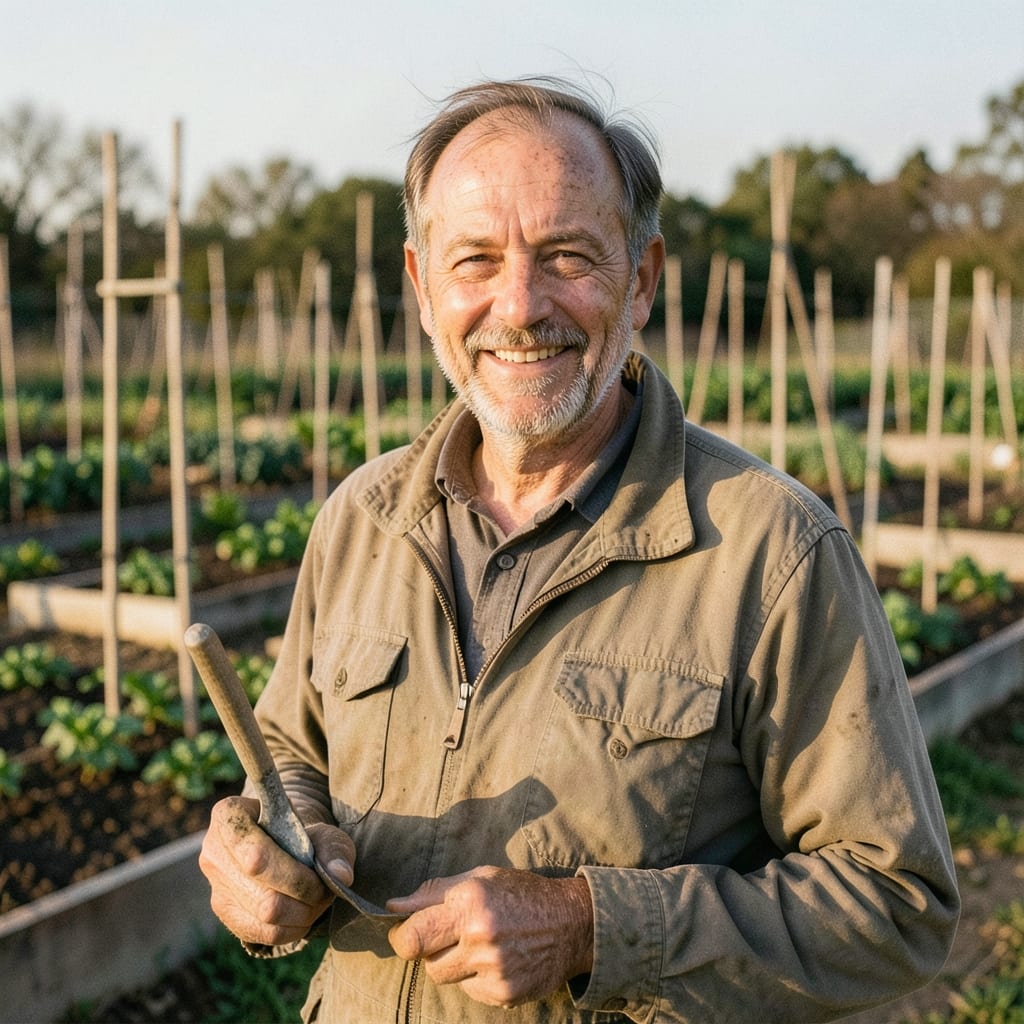
I am Gustavo Ruggiero, the founder and editor of *How To Grow Seeds*. I’m the one who writes the guides, who tests the failures, who answers the questions that come in through the contact page.
I came to this from my father’s kitchen table, where he’d press tomato seeds into damp paper towels and watch them sprout in egg cartons. At eight, I was already convinced that growing things was the only way to make sense of time—slow, deliberate, full of small victories.
This work has given me a permanent dirt line under my nails, a habit of checking soil moisture before I drink water, and a reflex to squint at sunlight like it’s a lie.
I can no longer walk past a garden center without noticing which plants are wilting at the edges.
I’m here to make sure you don’t have to learn the hard way. Every guide, every tip, every ‘what went wrong’ section is built on the same things: the tools that fail, the soil that surprises, and the plants that remind you why you started.
Why any of this matters to you
These objects—worn, cheap, stubborn—are why the guides here work. They’ve been tested in real light, real rain, real mistakes. They don’t promise perfection. They promise honesty.
When you read a page here, you’re reading the story of a seed that refused to give up, a tray that held more than it should have, a stake that didn’t break when it mattered. That’s the difference between a gardening site and a gardening *practice*.
If you’ve ever wondered why your basil keeps bolting or how to save a dying tomato plant, the answer is in the things that made this work possible. Start there. Then visit the contact page—we’ll dig deeper.
Every guide here is built on the same four things: what works, what fails, what surprises, and what comes back. No shortcuts. No guesswork. Just the soil’s quiet promise—kept.
The guides are grouped by category: Advice, Aphids, Blooming, Companion Plants, Container Gardens and How To.