
How To
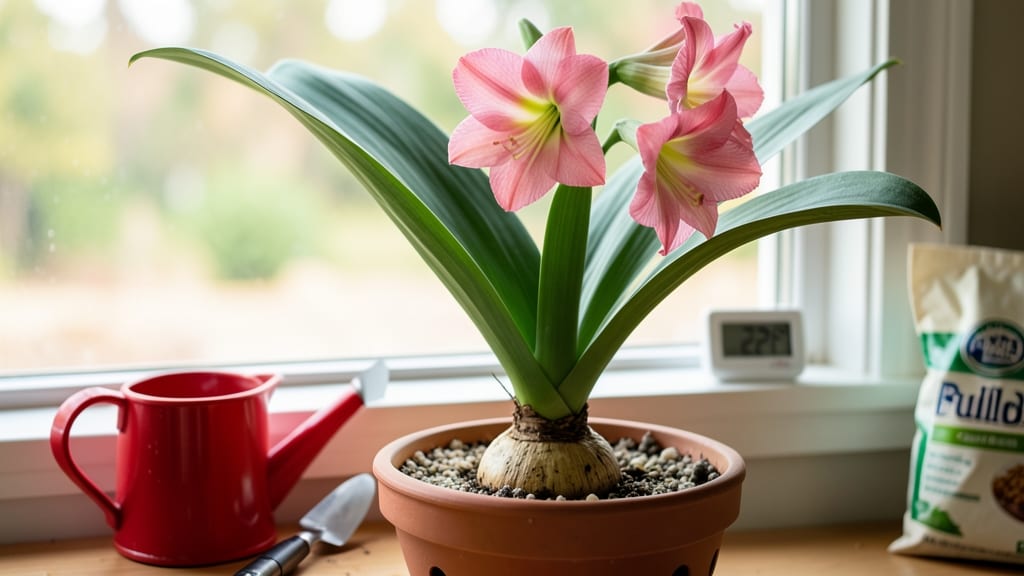
Caring for giant amaryllis (Hippeastrum) feels like nurturing a tropical showstopper—those bold blooms are worth every effort. 🌿 I’ve grown these stunners indoors for years, and the secret to their year-round blooming isn’t complicated: it’s all about light, water, and a little patience.
Most people overwater or under-feed, which is why their plants struggle—but I’ll show you the exact routine that keeps mine flowering reliably, even in winter.
The right soil mix and pot size make all the difference. These bulbs hate soggy roots, so well-draining potting mix and a container with drainage holes are non-negotiable. I use a 6-inch pot for my first-year plants and bump up to 10-12 inches as they mature.
Fertilizing lightly every 4-6 weeks during the growing season (spring and summer) is the trick to coaxing those dramatic blooms back year after year.
By summer’s end, you’ll see thick, healthy foliage—this is when your amaryllis stores energy for next year’s blooms. Let the leaves yellow naturally in fall before resting the bulb in a cooler spot (around 55-60°F) for 8-10 weeks.
When you bring it back into bright light, those showy, trumpet-shaped flowers will emerge within weeks, proving that a little seasonal adjustment goes a long way.
Outdoor growers can plant bulbs in well-draining garden beds after the last frost, but they’ll need winter protection in colder zones. Indoor plants thrive near east or south windows, or under grow lights for 12-14 hours a day.
The key is consistency—these bulbs reward attentive care with stunning, long-lasting blooms that turn heads every season.
Root Causes Behind Giant Amaryllis Struggles
Understanding why your giant amaryllis (Hippeastrum spp.) might be underperforming—or worse, failing—starts with identifying the hidden triggers behind common issues. These plants are resilient, but they do have specific needs.
Below, we break down the science-backed reasons why problems like yellowing leaves, no blooms, or bulb rot occur, so you can fix them fast.
Giant amaryllis bulbs are succulent storage organs, meaning they’re designed to hold moisture—but too much water is their silent killer. Here’s why it happens:
- Root Suffocation: Amaryllis bulbs thrive in well-aerated soil. When overwatered, roots sit in soggy conditions, cutting off oxygen.
This triggers anaerobic bacteria, which produce toxins that rot the bulb’s base (🔬 Pythium and Phytophthora fungi love this environment). - Nutrient Leaching: Excess water washes away essential minerals like potassium and phosphorus, which are critical for flowering.
Without these, your plant may produce weak stems or no blooms at all. - Temperature Shock: Cold, wet soil can cause chilling injury, where cells rupture. Giant amaryllis prefer warm roots (60–70°F), not a damp, chilly bog.
Actionable Fix:
- Test your soil: Stick your finger 2 inches deep—if it’s damp, wait to water. Aim for "dry topsoil" between waterings.
- Upgrade your pot: Use a container with drainage holes and a chunky mix (50% potting soil, 30% perlite, 20% orchid bark).
- Bottom-watering trick: Place the pot in a tray of water for 10–15 minutes, then drain. This prevents soggy centers.
Giant amaryllis are light-hungry—they need bright, indirect light to trigger blooming. Here’s how lack of light backfires:
- Stretched, Leggy Growth: Without enough light, the plant etiolates, stretching stems toward any available light source. This weakens the structure, making blooms smaller or nonexistent. - Chlorophyll Deficiency: Low light reduces photosynthesis efficiency, so the plant can’t produce enough energy for bulb reserves.
Over time, this leads to yellowing leaves (chlorosis). - Delayed Blooming Cycle: Amaryllis need 12–14 hours of light daily to set flower buds. In dim conditions, they may skip flowering entirely for a season.
Actionable Fix:
- South- or west-facing windows are ideal. If indoors, supplement with a grow light (12–14 hours/day) 6–12 inches above the plant.
- Rotate the pot weekly to ensure even light exposure.
- Outdoor tip: Move potted amaryllis outside in spring/summer (avoid direct midday sun, which can scorch leaves).
Amaryllis bulbs are heavy feeders, especially during their growth and blooming phases. Here’s how nutrient issues derail them:
- Nitrogen Overload: Too much nitrogen (from fertilizer or compost) promotes leafy growth at the expense of flowers. Think of it like a bodybuilder with no biceps—all top, no bottom! - Potassium Deficiency: This mineral is critical for flower development.
Without it, buds may form but abort before opening or produce weak, short stems. - Magnesium or Calcium Shortages: These minerals prevent cell wall integrity. Symptoms include yellowing between leaf veins (magnesium) or brown, crispy leaf edges (calcium).
Actionable Fix:
- Use a balanced fertilizer (e.g., 10-10-10 or 20-20-20) diluted to half-strength every 4–6 weeks during active growth (spring–summer).
- Avoid organic compost in the bulb’s immediate area—it can cause rot from excess moisture and microbes.
- Epsom salt boost: Mix 1 tbsp Epsom salt per gallon of water monthly for magnesium. For calcium, use crushed eggshells lightly worked into the soil.
Giant amaryllis are tropical escapees but need precise conditions to thrive. Here’s how temperature/humidity throw them off:
- Cold Stress: Below 50°F, growth stalls, and the bulb may enter dormancy prematurely. This disrupts the flowering cycle, which requires a warm-up period (60–70°F) to trigger blooms. - Humidity Shock: Low humidity (<40%) causes dry, papery leaves and bud drop.
High humidity (>70%) without airflow invites fungal diseases like powdery mildew. - Drafts and Heat Spikes: Sudden temperature swings (e.g., near AC vents or drafty windows) stress the plant, leading to dropped buds or blackened leaf tips.
Actionable Fix:
- Ideal range: Keep temps between 65–75°F during growth, 55–60°F during dormancy (fall/winter).
- Humidity hack: Place the pot on a pebble tray with water or use a humidifier near the plant (aim for 50–60% humidity).
- Avoid hot spots: Keep amaryllis away from radiators, ovens, or direct sunlight through glass (which traps heat).
Giant amaryllis need a rest period to rebloom, but modern indoor environments often trick them into thinking it’s always summer. Here’s why this backfires:
- No Flowering Trigger: Amaryllis bloom in response to short-day conditions (like their natural winter in South America). Without 6–8 weeks of reduced light (10 hours/day max) and cooler temps (55–60°F), they skip blooming. - Bulb Exhaustion: Forcing growth year-round depletes bulb reserves.
Over time, the bulb becomes too weak to produce flowers, even if other conditions are perfect. - Root Stress: During dormancy, the plant shrinks its root system to conserve energy. Disturbing this (e.g., watering or fertilizing) can stunt regrowth in spring.
Actionable Fix:
- Simulate winter: From late fall, reduce watering and move the plant to a cool, dark spot (like a closet). Stop fertilizing entirely.
- Wake it up gently: In early spring, gradually reintroduce light and resume watering when you see green shoots.
- Prune dead foliage: Once leaves yellow and die back, trim them to 2 inches above the bulb—this redirects energy to the bulb for next year’s blooms.
Fixing Your Giant Amaryllis Fast
Your giant amaryllis (Hippeastrum) is a showstopper when it’s thriving—but when problems pop up, quick action keeps it happy and blooming. Below, we’ve mapped out the most common issues, step-by-step fixes, and prevention tips to avoid future struggles. Think of this as your plant’s emergency guide!
Cause: Too much water, poor drainage, or fertilizer buildup. Fix It: 🔥 Step 1: Check the soil—stick your finger 2 inches deep. If it’s soggy, hold off on watering. 🍳 Step 2: Repot if needed. If the pot lacks drainage holes, transfer to a new container with fresh, well-draining potting mix (cactus/succulent blend works great). 👨🍳 Step 3: Flush the soil. Run lukewarm water through the pot for 10 minutes to wash out excess salts or fertilizer. ⏰ Step 4: Adjust your watering schedule. Water only when the top 2–3 inches of soil are dry, and never let it sit in standing water.
💡 Prevention Tip: Use a moisture meter or the "knuckle test" to avoid overwatering. In winter, reduce watering to every 3–4 weeks.
Cause: Insufficient light, sudden temperature swings, or skipping the dormant phase. Fix It: 🔥 Step 1: Move it to bright, indirect light. South- or west-facing windows are ideal. If natural light is lacking, supplement with a grow light (12–14 hours/day). 🌡️ Step 2: Simulate seasons. After blooming, let the plant rest in a cool (55–65°F), dry spot for 6–8 weeks (dormancy). Reduce watering to once a month. 🎯 Step 3: Fertilize strategically. Resume feeding in early spring with a balanced liquid fertilizer (10-10-10) diluted to half strength. Apply every 4–6 weeks until buds form.
💡 Prevention Tip: Avoid moving the plant frequently—it stresses the bulb and delays blooming. If buds form but drop, it’s often due to temperature shock (keep it away from drafts or heaters).
Cause: Dry air, stress, or bringing infected plants indoors. Fix It: 🔪 Step 1: Isolate the plant to prevent spreading. Quarantine it until pests are gone. 🥘 Step 2: Wipe down leaves with a damp cloth dipped in soapy water (1 tsp mild dish soap + 1 quart water). For stubborn pests, use a neem oil spray (1 tsp neem oil + 1 quart water + a drop of dish soap). ✨ Step 3: Check the soil. If pests are hiding in the pot, repot with fresh soil and trim any damaged roots.
💡 Prevention Tip: Increase humidity around your amaryllis (place the pot on a tray of pebbles + water) to deter mites. Inspect new plants before bringing them home!
Cause: Stretching for light or too many bulbs competing in one pot. Fix It: 🔥 Step 1: Trim leggy stems to encourage bushier growth. Cut just above a leaf node (where new growth can sprout). 🌡️ Step 2: Repot if overcrowded. Giant amaryllis bulbs need space—divide clumps every 2–3 years, planting offsets in their own pots. 🎯 Step 3: Rotate the pot weekly to ensure even light exposure (prevents lopsided growth).
💡 Prevention Tip: If your plant is too tall, it’s begging for more light. A south window or grow light can work wonders!
Cause: Waterlogged soil or a damaged bulb from repotting mishaps. Fix It: 🔥 Step 1: Remove the bulb from the pot and inspect it. Trim any soft, mushy sections with sterile scissors. 🍳 Step 2: Dry it out. Let the bulb air-dry in a warm, shaded spot for 3–5 days before repotting. 👨🍳 Step 3: Repot in fresh mix. Use a pot with drainage holes and a fast-draining blend (add perlite or orchid bark for fluffiness).
💡 Prevention Tip: Never let the bulb sit in water—even during dormancy, ensure the pot has drainage. If your home is humid, water even less.
Pro Tip: Keep a care journal! Note when you water, fertilize, and repot. Patterns emerge—like realizing your amaryllis blooms only after a cool winter nap.
With these fixes, your giant amaryllis will bounce back—and next season, it’ll reward you with even bigger, brighter blooms. 🌸
Frequently asked questions about giant amaryllis care
How often should I water my giant amaryllis?
Water only when the top 2-3 inches of soil feel completely dry—about once a week in summer and every 3-4 weeks in winter. These bulbs store moisture, so soggy soil causes rot. Always use pots with drainage holes to prevent waterlogging.
Why isn't my giant amaryllis blooming?
Most likely it needs a proper rest period. After blooming, reduce water and move to 55-60°F for 8-10 weeks in darkness. Without this winter-like break, the bulb won't store enough energy for flowers. Also check light—these need bright indirect light (12-14 hours/day).
Can I grow giant amaryllis outdoors?
Only in USDA zones 8-11 after the last frost. Plant bulbs 6 inches deep in well-draining soil with partial sun. In colder zones, grow as potted plants and bring indoors before 50°F temps. Mulch helps protect outdoor bulbs in mild winters.
How do I know when to repot my giant amaryllis?
Repot every 2-3 years or when you see roots circling the pot. Choose a container just 2-3 inches larger than the bulb. Spring is ideal timing—after the blooms fade but before new growth starts. Use a mix of 50% potting soil, 30% perlite, and 20% orchid bark for best drainage.
What's the best fertilizer for giant amaryllis?
Use a balanced liquid fertilizer (10-10-10) diluted to half strength every 4-6 weeks during spring and summer. Avoid high-nitrogen fertilizers—too much promotes leaves over flowers. For a magnesium boost, add 1 tbsp Epsom salt per gallon of water monthly during active growth.