
Planting
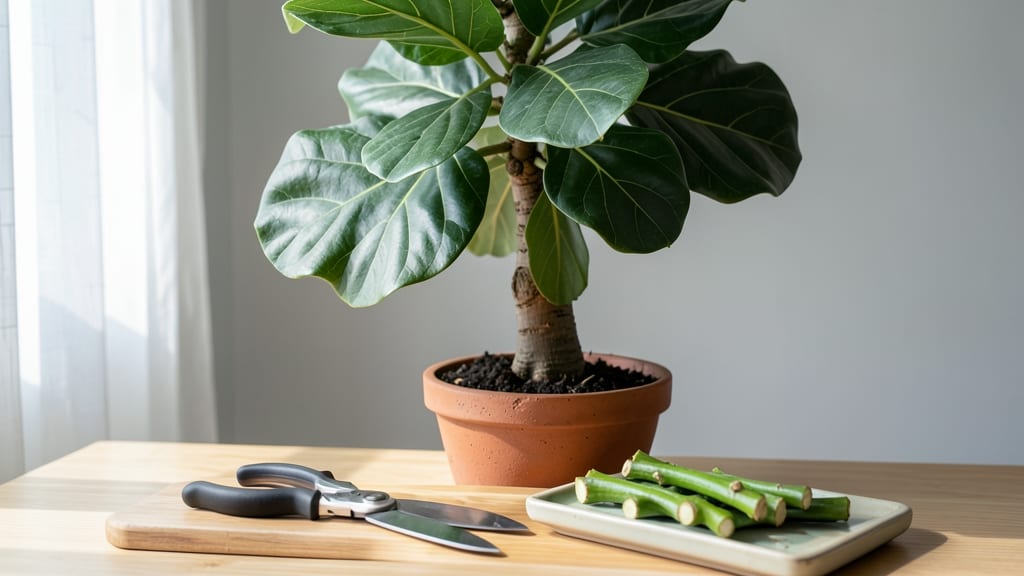
Cutting a fiddle leaf fig isn’t scary—it’s the secret to a fuller, healthier plant. ✂️ I’ve pruned mine every spring for years, and the difference in bushiness is night and day. The key? Timing, clean cuts, and knowing where to snip without stressing the plant.
You’ll need sharp pruning shears, rubbing alcohol to sterilize them, and a plan: trim just above a leaf node (that little bump where leaves grow) at a 45-degree angle. Avoid cutting too close to the stem—leave about ¼ inch of space to prevent rot.
Most people over-prune; stick to removing no more than 20-25% of the plant at once.
After cutting, wipe the shears with alcohol between snips to prevent disease spread. Place larger cuttings in water to root, or let small ones callus over before planting. Within 4-6 weeks, you’ll see new growth sprouting from those nodes—proof the plant is thriving, not struggling.
This works year-round, but spring is ideal when the plant’s energy ramps up. Even a leggy, sparse fig can bounce back with the right cuts. The best part? You’ll end up with bushier foliage and free baby plants to share with friends.
Root Causes Behind Leaf Loss
Understanding why your fiddle leaf fig (Ficus lyrata) needs pruning—and why it might be struggling—starts with recognizing the environmental and biological triggers that prompt it to shed leaves or grow leggy. These aren’t just random events; they’re often direct responses to stress or imbalanced care.
Below, we break down the science-backed reasons your plant might be signaling it’s time for a trim, along with actionable insights to address them.
---
🌱 The Problem: When a fiddle leaf fig’s roots outgrow its pot, they become tangled, compacted, or starved for nutrients. This triggers a survival response: the plant focuses energy on root expansion rather than leaf production, leading to yellowing, wilting, or premature leaf drop.
Why It Happens: - Limited Soil Volume: Roots deplete oxygen and nutrients faster in small pots, causing anaerobic stress (lack of oxygen) and toxicity buildup from excess salts. - Circulatory Blockage: Overcrowded roots can’t absorb water efficiently, leading to hydraulic failure—where the plant can’t transport water upward, causing leaves to crisp or drop. - Hormonal Imbalance: Ethylene gas (a plant stress hormone) accumulates in root-bound plants, accelerating leaf senescence (aging).
Actionable Signs: - Roots circling the pot’s bottom or growing out of drainage holes. - Soil drying out too quickly (within 1–2 days) or staying soggy for weeks. - New growth is stunted, yellow, or falls off before maturing.
---
☀️ The Problem: Fiddle leaf figs are heliophytes—they thrive in bright, indirect light. When deprived, they stretch (etiolation) to reach sunlight, creating weak stems, large gaps between leaves, and a "spindly" look.
This isn’t just cosmetic; it makes the plant vulnerable to breakage and reduces photosynthesis efficiency.
Why It Happens: - Phytochrome Deficiency: Low light reduces phytochrome B, a pigment that regulates stem elongation. Without it, the plant overproduces auxin (a growth hormone), causing rapid but weak stem growth. - Chlorophyll Dilution: Stretched leaves have less chlorophyll per unit area, reducing their ability to capture light for energy. - Energy Redirection: The plant prioritizes vertical growth over dense foliage, leading to thin, fragile stems that snap easily.
Actionable Signs: - Stems are longer than 12 inches between leaves. - Leaves are larger but paler (almost translucent) at the tips. - The plant leans toward a light source (e.g., a window).
---
💦 The Problem: Fiddle leaf figs hate soggy roots. Excess moisture leads to root rot (Phytophthora or Pythium fungi), which cuts off water and nutrient transport. The plant’s response? Dropping leaves to conserve energy.
Why It Happens: - Oxygen Starvation: Waterlogged soil displaces oxygen, forcing roots to switch to anaerobic respiration, which produces ethanol (toxic to plants). - Fungal Invasion: Fungi thrive in wet conditions, blocking xylem vessels (the plant’s "straws" for water transport). This causes wilting even when soil is wet (a classic rot symptom). - Nutrient Lockout: Excess water leaches away potassium and magnesium, essential for leaf health. Deficiencies manifest as brown edges or interveinal chlorosis (yellowing between veins).
Actionable Signs: - Soil smells musty or sour. - Leaves turn yellow and mushy (not crispy). - The pot feels heavy with water even days after watering.
--- 📊 The Problem: Fiddle leaf figs need balanced nutrients, but imbalances—whether from over-fertilizing or poor soil quality—can stunt growth or cause leaf drop.
Why It Happens: - Nitrogen Burn: Too much nitrogen (common in synthetic fertilizers) leads to salt buildup, which osmotically stresses roots, preventing water uptake. - Micronutrient Deficiencies: - Magnesium (Mg) deficiency → Interveinal chlorosis (yellowing between veins). - Iron (Fe) deficiency → Pale new leaves (even if soil is acidic). - Potassium (K) deficiency → Weak stems and leaf edges turning brown. - pH Imbalances: Soil pH outside 6.1–6.5 locks out nutrients. For example, alkaline soil (pH >7) makes iron and manganese unavailable, causing yellowing despite "wet" soil.
Actionable Signs: - Yellowing between veins (Mg/Fe deficiency). - Purple or red stems/leaves (phosphorus deficiency). - Slow growth despite regular watering.
--- 🌡️ The Problem: Fiddle leaf figs are tropical plants—they hate drafts, cold snaps, or dry air. Sudden changes trigger transpiration stress (water loss faster than absorption), leading to leaf drop.
Why It Happens: - Cold Drafts: Temperatures below 60°F (15°C) slow metabolic processes, while below 50°F (10°C) can cause cellular damage in leaves. - Low Humidity (<40%): Leaves lose water through stomata (pores) faster than roots can replace it, causing crispy edges or entire leaves to detach. - Heat Stress: Above 90°F (32°C), enzymes in leaves denature, reducing photosynthesis efficiency.
Actionable Signs: - Leaves curl or feel dry to the touch. - New growth wilts immediately after appearing. - Brown, papery patches on leaf edges (common in winter).
--- 🐜 The Problem: Insects (spider mites, mealybugs) and pathogens (bacterial leaf spot) sap nutrients or block stomata, forcing the plant to shed leaves as a defense mechanism.
Why It Happens: - Pests: Spider mites pierce cells, causing silver stippling and premature leaf drop. Mealybugs excrete honeydew, fostering sooty mold (a black fungus) that smothers leaves. - Fungal/Bacterial Infections: Erwinia (bacterial leaf spot) or Botrytis (gray mold) thrive in high humidity, creating lesions that expand, killing tissue. - Viral Stress: While rare, viruses (like Fiddle Leaf Fig Virus) weaken the plant, causing mosaic patterns and stunted growth.
Actionable Signs: - Sticky residue (honeydew) on leaves. - Webbing (spider mites) or cottony clusters (mealybugs). - Dark spots with yellow halos (fungal/bacterial infections).
Fixing Your Fiddle Leaf Fig
Reviving your fiddle leaf fig and mastering the art of pruning is easier than you think! Whether your plant is leggy, overgrown, or struggling, targeted fixes will help it thrive. Below, we’ve matched common issues with step-by-step solutions—plus prevention tips to keep your plant happy long-term.
---
Cause: Overwatering, underwatering, or root stress from improper pruning. Fix: 1. Assess the damage: Gently tug on the leaf. If it falls off easily, it’s dead—snip it off with clean, sharp pruning shears (sterilized with rubbing alcohol). 2. Check the roots: If the soil smells sour or feels soggy, your plant is overwatered. Let the top 2 inches of soil dry out before watering again. 3. Prune strategically: Cut just above a leaf node (the bump where leaves grow) to encourage new growth. Avoid cutting into the stem’s center—this can harm the plant.
💡 Prevention Tip: - Water only when the top 1–2 inches of soil are dry. - Use well-draining soil and a pot with drainage holes.
---
Cause: Lack of light or over-pruning, leading to stretched-out stems. Fix: 1. Move it to brighter light: Place near an east or north-facing window (avoid harsh afternoon sun). 2. Prune for shape: Cut back leggy stems to just above a leaf node. This encourages bushier growth. 3. Rotate the pot: Every few weeks, turn the plant ¼ turn to ensure even light exposure.
🌡️ Pro Tip: - If your fig is severely leggy, prune it back by ⅓ to trigger denser foliage.
---
Cause: Low humidity, fluoride in tap water, or underwatering. Fix: 1. Adjust water quality: Use filtered or distilled water to avoid fluoride buildup. 2. Boost humidity: Place a tray of water with pebbles near the plant or mist leaves lightly (but not too much—fiddle leaf figs hate soggy leaves). 3. Trim damaged leaves: Cut off brown tips with shears, leaving healthy green tissue.
✨ Prevention Tip: - Group plants together to create a microclimate with higher humidity.
---
Cause: Lack of pruning or uneven growth. Fix: 1. Shape it up: Use pruning shears to trim back overgrown branches to your desired shape. Cut at a 45-degree angle just above a leaf node. 2. Propagate cuttings: Place trimmings in water to root—this gives you free baby fiddle leaf figs! 3. Fertilize lightly: After pruning, feed with a balanced liquid fertilizer (diluted to half strength) to support regrowth.
🎯 Quick Guide for Pruning: | Issue | Where to Cut | What to Do With Cuttings | |-------------------------|--------------------------------|---------------------------------------| | Dead leaves | Base of the leaf | Toss or compost | | Leggy stems | Just above a leaf node | Propagate or discard | | Overcrowded branches | At the stem’s base | Use for cuttings or prune further |
--- - Prune regularly: Trim back 10–15% of the plant every few months to maintain shape and health. - Use the right tools: Always sterilize shears to avoid disease. - Monitor light: Fiddle leaf figs thrive in bright, indirect light—adjust placement as seasons change.
With these fixes, your fiddle leaf fig will bounce back stronger—and you’ll have the confidence to prune like a pro! 🌱✂️
Frequently asked questions
Can I cut my fiddle leaf fig in winter?
Winter is not the best time to prune—your plant is in its dormant phase and needs to conserve energy. If you must trim, do so lightly (just remove dead or damaged leaves) and avoid major cuts. Wait until spring when growth resumes for healthier regrowth.
How do I know where to cut on a fiddle leaf fig?
Always cut just above a leaf node (the small bump where leaves grow) at a 45-degree angle. This encourages new growth from that node. Avoid cutting into the stem’s center—leave about ¼ inch of space to prevent rot or disease.
What should I do with the cuttings after pruning?
Place larger cuttings (with at least 2-3 nodes) in water to root, changing the water every 3-5 days. For smaller trimmings, let them callus over for 24 hours before planting in soil. Keep them in bright, indirect light and maintain high humidity until roots form.
How often should I prune my fiddle leaf fig?
Prune lightly every 3-4 months to maintain shape and remove dead leaves. For major shaping, do it once a year in spring. Never remove more than 20-25% of the plant at once—this prevents stress and encourages healthy regrowth.
Why did my fiddle leaf fig leaves turn brown after pruning?
Brown edges after pruning usually mean low humidity or underwatering. Increase humidity with a pebble tray or mist lightly, and check soil moisture—water only when the top 1-2 inches are dry. Avoid overwatering, as soggy roots can cause stress too.