
Flowers
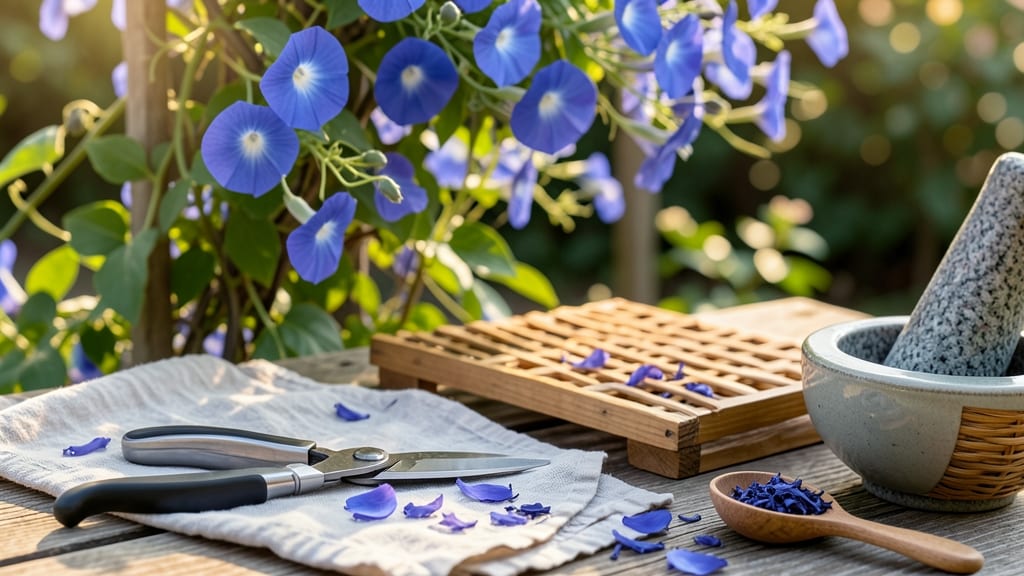
How to dry butterfly pea flower for tea—that first sip changes everything, as the vibrant blue-green hue shifts to purple with lemon. 🌿 The secret lies in drying the flowers just right, and I’ve perfected the method after years of trial (and a few moldy batches). Whether you’re growing organically or conventionally, proper drying unlocks the full magic of Clitoria ternatea—from its soothing earthy notes to its pH-sensitive color shifts.
You’ll need just three things: freshly picked flowers, a clean drying surface (screen or paper towels), and patience. Skip the oven—heat ruins the delicate petals and flavor. Instead, spread flowers in a single layer under direct sunlight for 3-5 days (or shade-dry for 7-10 days if humidity’s high).
The goal? Crisp, papery petals that crumble easily between fingers—no moisture left to breed mold.
Once dry, store them in airtight glass jars away from light. A single teaspoon steeped in hot water becomes a calming, antioxidant-rich brew—add lemon to watch the color dance. The flavor’s earthy with floral undertones, but if yours tastes bitter, you likely dried them too long.
Troubleshooting tip: Check for white fuzz (mold) or uneven color—these mean your drying conditions need adjustment.
This method works for both loose-leaf tea blends and culinary uses—think vibrant desserts or pH-sensitive cocktails. Start small, experiment with drying times, and soon you’ll have a pantry staple that’s as beautiful as it is functional. Ready to transform those blooms into liquid art?
📚 In This Guide
- What you need
- Instructions
- Tips and common mistakes
- Wrapping up and next steps
What you need
- ● Fresh butterfly pea flowers – At least 1 cup (about 20-30 flowers). Harvest them at peak freshness, just before they fully bloom for the best color and flavor.
- ● Clean, breathable cloth or paper towels – For gently patting flowers dry before drying.
- ● Baking sheet or drying tray – A wire rack or mesh screen works best for airflow. If using a baking sheet, line it with parchment paper.
- ● Air-dry space – A sunny, well-ventilated area (like a balcony, porch, or covered outdoor space) with indirect sunlight to prevent fading or burning.
- ○ Air-tight container – A glass jar or resealable bag with a silica gel packet (optional but recommended) to keep moisture out.
- ● Food dehydrator – Set to 95–115°F (35–46°C) for even drying if sunlight isn’t an option.
- ● Small fan or exhaust vent – Speeds up drying by improving airflow (especially useful in humid climates).
- ● Tweezers or tongs – For gently handling delicate petals when arranging them on the drying tray.
- ● Label and marker – To note the drying date and flavor profile (e.g., "mild," "intense blue").
Step-by-Step instructions for drying butterfly pea flowers for tea
Here's how I transform fresh butterfly pea blossoms into vibrant, pH-changing tea—no fancy equipment needed.
🌿 Step 1: Harvest Flowers at Peak Color
Pick flowers when they're fully open but still deep purple-blue—this ensures maximum anthocyanin content, the compound that creates the tea's signature color shift. Use clean, sharp scissors to snip stems just above the first set of leaves. Harvest in the early morning when dew has dried but temperatures are still cool, preserving freshness and preventing wilting.
Shake off any insects or debris, then give the flowers a quick rinse under cool water. Pat them dry gently with a paper towel or clean kitchen towel—never wring them, as moisture trapped in the petals slows drying and invites mold. Work in batches of about 2 cups of flowers at a time to keep the process manageable.
☀️ Step 2: Arrange for Even Sun Exposure
Spread flowers in a single layer on a clean, dry surface like a baking sheet or mesh screen. I use a light-colored cotton sheet or parchment paper to prevent color transfer from dark surfaces. Space them evenly with petals facing up—this ensures uniform drying and prevents clumping. If using a screen, lay it over a tray to catch falling petals.
Place the setup in a spot with indirect sunlight—direct sun can scorch petals and fade their vibrant hues. A covered porch, carport, or shaded balcony works perfectly. The goal is gentle warmth and airflow; think "dry sauna" rather than "oven blast." In humid climates, prop a small fan nearby to circulate air and speed up drying without damaging delicate petals.
⏰ Step 3: Dry for 3-5 Days Until Crisp
Turn the flowers every 8-12 hours to ensure even drying. You'll know they're ready when petals feel dry to the touch and crumble slightly when rubbed between your fingers. This typically takes 3-5 days, depending on humidity and airflow. If you're in a damp climate, drying may take longer—don't rush it, or the tea will taste bitter and muddy.
Test for doneness by picking up a single flower. If it feels light and dry with no moisture when pinched, the batch is ready. If any petals still feel damp or sticky, leave them out for another day. Store dried flowers in an airtight glass jar away from light and heat—they'll keep their potency for up to 6 months.
💧 Step 4: Store for Optimal Freshness
Once fully dried, transfer the flowers to a clean, dry glass jar with a tight-sealing lid. I like to add a small piece of unbleached parchment paper between layers to absorb any lingering moisture. Label the jar with the drying date—freshness matters for flavor and color intensity. Keep the jar in a cool, dark pantry or cupboard, not the fridge, as temperature fluctuations can degrade the delicate petals.
For tea preparation, use 1 teaspoon of dried flowers per 8 ounces of hot water. Steep for 5-7 minutes for a mild flavor or 10 minutes for stronger color effects. The tea's pH-sensitive color shift is most dramatic when mixed with lemon juice or vinegar—add these after steeping to preserve the vibrant blue-green hue.
Tips & tricks for perfect butterfly pea flower drying
Sunlight and patience are your best tools—here's how to maximize both for stunning results.
Anthocyanin Preservation: The vibrant blue-green hues come from anthocyanins, which are sensitive to moisture and heat. In Step 2, when arranging flowers on your drying surface, avoid overlapping petals—this prevents trapped moisture that can cause uneven drying and color fading. I've found that spacing flowers about 1 inch apart on a wire mesh screen gives me the most consistent color retention.
Temperature Monitoring: While the ideal drying range is 70-85°F, I've learned that afternoon sun can push temperatures higher. If you notice petals starting to yellow or feel crispy by mid-afternoon, move your drying setup to a slightly shaded area while maintaining airflow. This prevents scorch while still allowing proper drying—especially important if your local climate frequently exceeds 85°F.
Humidity Management: The 60% humidity threshold mentioned in Step 3 is critical but often overlooked. I keep a small hygrometer near my drying area to monitor levels. On humid days, I bring flowers indoors earlier than 60°F (sometimes as high as 70°F) to prevent mold. A simple dehumidifier near the drying area can work wonders if you're in a naturally humid climate.
Storage Extension: To maximize the 6-12 month shelf life mentioned in Step 4, I add a silica gel packet to each storage jar. This absorbs any residual moisture that could accelerate color fading. I also write the drying date on the jar lid with a permanent marker—this helps me track freshness and rotate my stock before older batches lose potency.
Pro Tips for Dry Butterfly Pea Flower For Tea
- Sunlight and patience are your best tools—here's how to maximize both for stunning results.
- Anthocyanin Preservation: The vibrant blue-green hues come from anthocyanins, which are sensitive to moisture and heat.
- Temperature Monitoring: While the ideal drying range is 70-85°F, I've learned that afternoon sun can push temperatures higher.
Frequently asked questions
Got questions about drying butterfly pea flowers for tea? You’re not alone! Here are some of the most common queries—and their answers—to help you brew the perfect batch.
How long does it take to dry butterfly pea flowers?
Drying time depends on your method:
- Sun-drying: 3–7 days (if humidity is low and airflow is good). Turn petals daily for even drying.
- Oven/food dehydrator: 2–4 hours at 95°F (35°C) or lower. Check frequently to avoid burning.
Can I speed up the drying process?
Yes! For faster results, try these tricks:
- Use a fan or dehydrator to circulate warm, dry air.
- Spread flowers on a wire rack instead of a flat surface for better airflow.
- Avoid high heat (above 110°F/43°C)—it can destroy delicate compounds like anthocyanins.
What if it rains or humidity is high?
Don’t let damp weather ruin your harvest! If rain is forecasted:
- Move flowers indoors to a cool, dark, and dry spot (like a mesh bag with silica gel).
- Use a dehydrator or low oven (below 100°F/38°C) to finish drying.
- Avoid plastic bags—they trap moisture and cause mold.
How do I store dried butterfly pea flowers for tea?
Keep your dried flowers fresh and potent with these steps:
- Store in an airtight glass jar or sealed container (away from light and heat).
- Add a silica gel packet or a bay leaf to absorb moisture.
- Label with the drying date—they stay best for 6–12 months.
What if my dried flowers lose color or smell?
Color and aroma fading usually means:
- Exposure to light/heat (store in a dark, cool place).
- Old age (replace after 12 months).
- Improper drying (too much heat or humidity).
Wrapping up and next steps
Drying butterfly pea flowers for tea is a simple yet rewarding process that unlocks a world of vibrant, health-boosting flavors. By following these steps—harvesting fresh blooms, choosing your drying method, and storing them properly—you’ll create a stunning blue-green tea with endless versatility.
Whether you’re a tea enthusiast or a curious beginner, your homemade brew is just a few sunlit days away! 🌿✨
Ready to take the next step? Experiment with infusions, pairings, or even gifting your dried flowers—your creativity is the only limit. Happy brewing! ☕💙