
Propagation
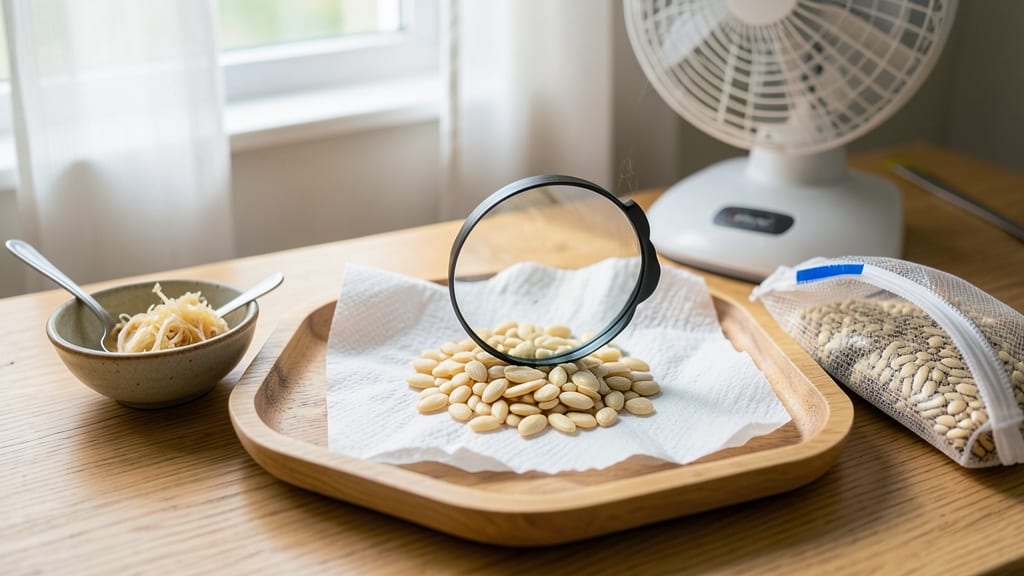
How to dry cantaloupe seeds properly means the difference between next year’s harvest and wasted effort. 🌱 After saving seeds from a ripe cantaloupe, I learned the hard way that rushing the drying process leads to moldy, unusable seeds—so I perfected a foolproof air-drying method that preserves viability for years.
The key is patience: spread seeds in a single layer on paper towels or a mesh screen, then let them cure in a warm, dry spot for 7-10 days. Avoid direct sunlight or heat sources, which can crack the seed coats.
Once fully dry, they’ll rattle when shaken and feel light in your palm—this is your cue they’re ready for storage.
When stored in a sealed envelope with a moisture absorber (like silica gel), these seeds stay viable for 3-5 years. The first time I pulled them out the following spring, I planted them straight into moist soil and watched 90% germinate within days—proof that proper drying works.
This method works for any melon seeds, including watermelon and honeydew. The same principles apply whether you’re saving seeds for heirloom varieties or just want to skip the seed rack next season. Ready to turn this year’s cantaloupe into next year’s garden?
📚 In This Guide
- What you need
- Instructions
- Tips and common mistakes
- Wrapping up and next steps
What you need
- ● Fresh cantaloupe seeds: Harvest seeds from fully ripe, organic cantaloupe (avoid store-bought melons treated with preservatives). Aim for 1–2 cups of seeds, depending on your drying needs.
- ● Paper towels or coffee filters: Use 2–3 sheets (unbleached, seed-free) for spreading seeds in a single layer.
- ● Fine-mesh sieve or colander: A small (6–8 inch) sieve with holes no larger than ¼ inch to strain seeds after soaking (if needed).
- ● Shallow tray or baking sheet: A rigid, flat surface (like a ceramic or glass tray) to hold seeds during drying. Avoid warping materials.
- ● Spray bottle with water: A fine-mist sprayer (like a plant mister) to lightly moisten seeds if needed.
- ● Air-dry environment: Consistent temperature: 65–75°F (18–24°C) with low humidity (30–50%).
- ● Good airflow: A well-ventilated space (e.g., a sunny windowsill, dehydrator, or fan-assisted area).
- ● Air-tight storage containers: Small jars or envelopes with desiccant packets (like silica gel) to keep seeds dry long-term.
- ● Dehydrator: Set to 95–115°F (35–46°C) for faster drying (3–6 hours).
- ● Food dehydrator trays: If using a dehydrator, line with parchment paper for easy cleanup.
- ● Fine brush or tweezers: For gently separating seeds from pulp or adjusting layers.
- ● Humidity monitor: A hygrometer to track moisture levels if drying in less-controlled spaces.
- ● Labeling supplies: Masking tape and markers to label containers with the date and variety of seeds.
Step-by-Step instructions for drying cantaloupe seeds
Here's my foolproof method for drying cantaloupe seeds—no fancy equipment, just patience and care.
🌱 Step 1: Extract Seeds from Ripe Cantaloupe
Cut the cantaloupe in half and scoop out the seeds along with the surrounding jelly-like pulp. Place them in a clean bowl and let them sit for 24 hours at room temperature. This allows the pulp to ferment slightly, which helps separate the seeds from the fibrous material.
After fermentation, rinse the seeds under cool water to remove any remaining pulp. Rub them gently between your fingers to clean away debris. You'll notice the seeds are now easier to handle and look cleaner. Drain them well in a fine-mesh strainer or colander.
💧 Step 2: Spread Seeds for Initial Drying
Line a baking sheet or tray with a single layer of paper towels or parchment paper. Arrange the seeds in an even layer, ensuring they don’t overlap. This prevents clumping and ensures each seed dries uniformly. Place the tray in a warm, dry location away from direct sunlight.
Let the seeds dry for 3-5 days, checking them daily. You'll know they're ready for the next step when they feel dry to the touch and the outer coating starts to harden slightly. If you notice any seeds still moist, leave them out a bit longer—they need to be completely dry to prevent mold.
☀️ Step 3: Layer and Air-Dry for Viability
Once the seeds are dry enough to handle, transfer them to a clean, dry envelope or small paper bag. Place the bag in a cool, dark, and well-ventilated area for 2-4 weeks. This extended drying period ensures the seeds reach optimal moisture levels for long-term storage.
Check the seeds weekly to ensure they aren’t absorbing moisture from the air. If your environment is particularly humid, you might need to add a small packet of silica gel to the bag to absorb excess moisture. The goal is to have seeds that are completely dry and crisp to the touch.
⏰ Step 4: Test and Store for Future Planting
After the final drying period, test a few seeds by placing them in a damp paper towel and sealing them in a plastic bag. Keep the bag in a warm spot and check for sprouting in 3-7 days. If the seeds sprout, they’re ready for storage. If not, they may need more drying time.
Store the viable seeds in an airtight container, such as a small glass jar or sealed envelope, in a cool, dark place. Label the container with the date and variety of cantaloupe. Properly dried seeds can stay viable for 3-5 years, giving you a steady supply for future gardens.
Tips & tricks for perfect cantaloupe seed drying
Here's what nobody tells you about getting those seeds just right—because patience is key.
Fermentation is Your Friend: That 24-hour fermentation in Step 1 isn't just sitting around—it's breaking down the fibrous material that clings to seeds. I learned this the hard way after struggling to clean seeds that hadn't fermented. If your cantaloupe is particularly fibrous, extend the fermentation to 36 hours (but don't exceed 48 hours, or you risk losing viability). The seeds should separate easily from the pulp when you rub them between your fingers.
Drying Uniformity Matters: In Step 2, when spreading seeds on paper towels, resist the urge to crowd them. Overlapping seeds trap moisture and create uneven drying. For best results, use a second baking sheet if needed—this is especially important if you're working with a large quantity of seeds. A fan on low setting can help with air circulation in humid climates.
Humidity is the Silent Enemy: If you live in a humid environment, don't skip the silica gel packet mentioned in Step 3. I've seen perfectly dried seeds absorb moisture within days, turning them mushy. Place the silica gel directly in the bag with seeds, and check it monthly—replace it if it turns pink. For extra protection, consider using a small glass jar with a tight lid instead of a paper bag.
Pro Tips for Dry Cantaloupe Seeds
- Here's what nobody tells you about getting those seeds just right—because patience is key.
- Fermentation is Your Friend: That 24-hour fermentation in Step 1 isn't just sitting around—it's breaking down the fibrous material that clings to seeds.
- Drying Uniformity Matters: In Step 2, when spreading seeds on paper towels, resist the urge to crowd them.
Frequently asked questions
How long does it take to dry cantaloupe seeds completely?
With proper air-drying, cantaloupe seeds typically take 3–7 days to fully dry, depending on humidity and airflow. Test readiness by crushing a seed—if it snaps crisply (not powdery), it’s dry! Avoid rushing with heat, as seeds need time to harden for optimal germination.
Can I speed up the drying process?
While patience is key, you can slightly speed things up by:
- Using a fan on low to circulate air.
- Placing seeds on a screen or mesh tray in a warm, dry spot (like a sunny windowsill).
- Avoiding direct sunlight or heat sources (like ovens), which can kill seeds.
What if my seeds mold or get damp again?
If seeds develop mold (fuzzy spots) or feel damp, discard them immediately—mold can ruin viability. To prevent this:
- Store seeds in a paper envelope or breathable container (not plastic).
- Keep them in a cool, dry place (like a seed jar in the pantry).
- Add a silica gel packet if humidity is high.
Can I use dried cantaloupe seeds for planting next season?
Yes! Properly dried seeds can last 2–4 years if stored correctly. For best results:
- Label them with the year and variety.
- Test germination by planting a few seeds—if 70%+ sprout, the rest are likely viable.
- Store in a cool (50–60°F), dark place with low humidity.
What if I don’t have cantaloupe seeds—what’s a good alternative?
If you’re missing seeds, try these easy alternatives:
- Buy heirloom seeds from a nursery or online (look for "open-pollinated" varieties).
- Save seeds from other melons like honeydew or muskmelon (drying methods are similar!).
- Start with seedlings from a local garden center if you’re impatient!
Wrapping up and next steps
Drying cantaloupe seeds properly is your first step toward growing vibrant, homegrown melons—no fancy equipment required! With just a little patience and the right conditions, you’ll unlock the potential for healthy germination and a thriving harvest.
Now that you’re armed with the know-how, why not take the next step? Grab those seeds, set up your drying station, and watch your green thumb grow!
🌱 Pro Tip: Once dried, store seeds in a cool, dry place for up to 5 years—because great things take time!