
Watering
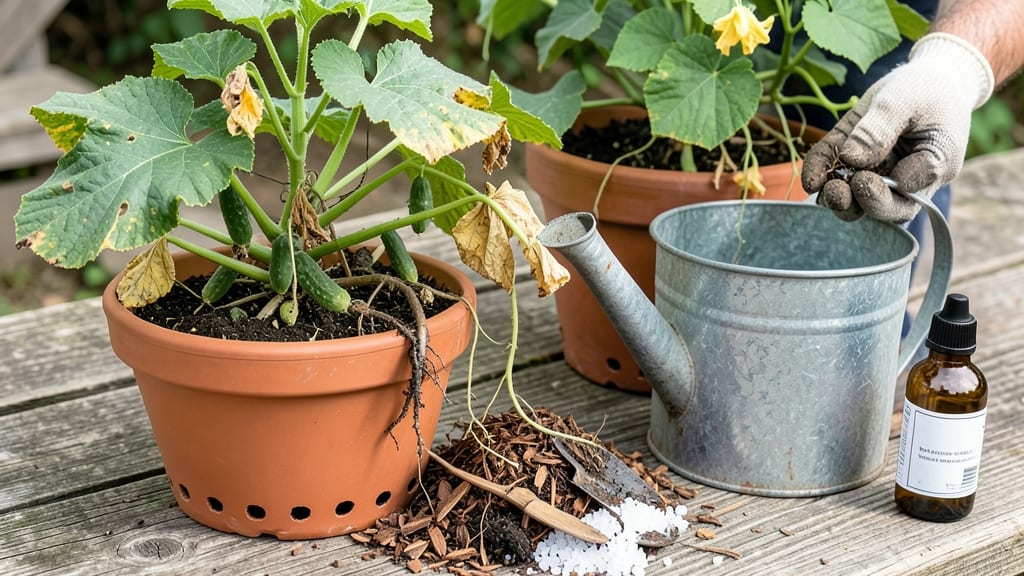
Your cucumber plant’s drooping leaves and yellowing vines aren’t a death sentence—how to fix an overwatered cucumber plant can turn things around in 24 hours. 🌱 I’ve nursed back more overwatered cucumbers than I’d like to admit, and the key is acting fast before root rot sets in.
The first step? Stop watering immediately and let the soil dry out completely—this is where most gardeners go wrong.
Start by checking the soil: if it’s soggy 2 inches down, you’ve got a drainage problem. Move the plant to a well-draining container or raised bed if it’s in the ground, and mix in sand or perlite to improve airflow.
For container plants, ensure pots have drainage holes and elevate them to prevent water pooling—this simple fix often saves the day.
Within 12-24 hours, you’ll see the plant perk up as roots recover. Trim any mushy, black roots you find (they’re rotten and won’t recover), and give the soil a light sprinkle of fungicide to prevent further issues.
The goal is to get the plant back to its happy, thirsty-but-not-drowned state.
Once the crisis is over, adjust your watering routine: water deeply 2-3 times a week instead of daily shallow drinks, and always check the top inch of soil before adding more.
Your cucumbers will bounce back stronger—and you’ll spot overwatering early next time. Trust me, your future plants will thank you.
📚 In This Guide
- What you need
- Instructions
- Tips and common mistakes
- Wrapping up and next steps
What you need
- ● Well-draining container or pot – If repotting, choose one with drainage holes (size depends on plant size, but 5–10 gallons works for most mature cucumbers).
- ● Fresh, lightweight potting mix – A blend labeled for vegetables or containers (avoid garden soil—it compacts and holds too much moisture). Quantity: Enough to fill the container 2/3 full (~3–5 gallons).
- ● Garden trowel or small shovel – For gently lifting roots without damaging them.
- ● Perforated tray or saucer – To catch excess water and prevent root rot from sitting in moisture.
- ● Hose or watering can with a fine spray nozzle – For rehydrating roots gradually (avoid pressure!).
- ○ Fungicide (optional but helpful) – A copper-based or neem oil solution (1 tsp neem oil per quart of water) to prevent mold or bacterial infections from overwatering.
- ● Pruning shears (sterilized) – To trim any mushy or blackened roots if needed.
- ● Rooting hormone – A gel or powder to encourage faster regrowth if roots are severely damaged.
- ● Mulch (straw or shredded leaves) – To retain even moisture after repotting and reduce evaporation.
- ● Humidity dome or plastic wrap – Creates a mini greenhouse effect to help stressed plants recover faster (remove once new growth appears).
- ● pH test kit – Ensures your soil is in the ideal range (6.0–6.8) for cucumbers.
- ● Epsom salt (magnesium sulfate) – A 1 tbsp per gallon of water spray can boost recovery by replenishing nutrients lost from overwatering.
Step-by-Step instructions for reviving overwatered cucumber plants
Here’s how I nurse struggling cucumbers back to health—fast—using just what you’ve got.
💧 Step 1: Stop Watering and Drain Excess Moisture Immediately
First, halt all watering—no more drops until you’ve fixed the problem. Overwatered cucumbers suffocate, and their roots need air to recover. If the plant is in a pot, move it to a dry, shaded spot away from direct sunlight. For in-ground plants, focus on the area around the base where water pools.
Gently loosen the top 2-3 inches of soil with your fingers or a small trowel to break up compacted, soggy layers. This helps excess water drain deeper into the soil instead of sitting around the roots. You’ll see the difference right away—the soil will feel lighter and less saturated.
✂️ Step 2: Prune Damaged Leaves and Roots
Inspect the plant for yellow or mushy leaves—these are the first signs of overwatering. Use clean, sharp scissors to snip off any leaves that feel soft or discolored. Don’t worry about losing foliage; the plant will redirect energy to healthier growth once the roots recover.
If the plant is in a pot, carefully tip it sideways and gently remove it from the container. Shake off excess soil to expose the roots. Trim any black, mushy, or slimy roots with sterilized scissors—these are dead and won’t recover. Healthy roots should be firm and white or light tan. Once pruned, set the plant aside for now.
🪴 Step 3: Repot or Replant in Well-Draining Soil
Fill a clean container with fresh, well-draining potting mix if the plant was in a pot. For in-ground plants, dig a small hole near the original spot and mix in a handful of perlite or coarse sand to improve drainage. This step is critical—cucumbers hate soggy feet, and fresh soil gives roots a clean slate to regrow.
Place the pruned plant back into the container or hole, ensuring the base sits at the same depth as before. Press the soil lightly around the roots to secure the plant without compacting it. Water lightly only if the soil feels bone-dry—you’re aiming for damp, not soaked.
☀️ Step 4: Adjust Light and Monitor Recovery
For the next 24 hours, keep the plant in bright, indirect light. Avoid direct sunlight, which can stress already weakened plants. If you’re using a grow light, position it 12-18 inches away and run it for 10-12 hours daily to encourage slow, steady recovery.
Watch for new signs of life in 3-5 days: fresh green leaves, firm stems, and perky growth. If the soil stays dry to the touch, you’re on the right track. If leaves continue yellowing, the plant may need more time—or it could be a sign of root rot that’s too severe to save.
⏰ Step 5: Resume Care with a Revised Watering Schedule
Once the plant shows signs of recovery, resume watering—but this time, use the finger test. Stick your finger 1 inch into the soil; if it feels dry, water deeply until moisture reaches 6 inches down. If it’s still damp, wait another day. Overwatering is the easiest mistake to repeat, so err on the side of underwatering for the next week.
Add a balanced, water-soluble fertilizer (half-strength) to the soil to give the plant a nutrient boost. Cucumbers are heavy feeders, and recovery mode means they need extra support. Keep an eye on the soil’s moisture level and adjust as needed—your cucumbers will thank you with vigorous new growth.
Tips & tricks for reviving overwatered cucumber plants
Real talk: Overwatering is the silent killer of cucumber plants, but these tricks will turn your soggy situation around fast.
Soil Aeration Tip: When loosening that top 2-3 inches of soil in Step 1, think of it like fluffing a pillow—you want to create air pockets. Use a small fork or your fingers to gently break up the compacted layers. If the soil feels like wet clay when you squeeze it, you've got work to do. This step is what actually lets those roots breathe again after drowning.
Root Inspection Secret: In Step 2, when you're checking those roots, healthy ones should snap slightly when bent—not squish like overcooked pasta. Black or mushy roots are beyond saving, but any firm white roots mean your plant still has a fighting chance. Don't be afraid to get your hands dirty—this is your plant's physical exam!
Lighting Strategy: That 24-hour bright indirect light period in Step 4 is non-negotiable. Direct sun during recovery acts like a sauna for already-stressed plants. If you don't have a shaded spot, fluorescent grow lights work perfectly—just keep them 12-18 inches away and run them for 10-12 hours daily. Think of it as plant physical therapy.
Watering Wisdom: After repotting, only water if the soil feels completely dry to the touch. The finger test in Step 5 is your new best friend—stick that finger in 1 inch deep. If it comes out clean, water until moisture reaches 6 inches down. This prevents the very overwatering you're trying to fix. Trust me on this: cucumbers are tougher than they look!
Pro Tips for Fix Overwatered Cucumber Plant
- Real talk: Overwatering is the silent killer of cucumber plants, but these tricks will turn your soggy situation around fast.
- Soil Aeration Tip: When loosening that top 2-3 inches of soil in Step 1, think of it like fluffing a pillow—you want to create air pockets.
- Root Inspection Secret: In Step 2, when you're checking those roots, healthy ones should snap slightly when bent—not squish like overcooked pasta.
Frequently asked questions
Got questions about saving your soggy cucumber plants? You’re not alone! Here are some of the most common concerns—and quick fixes—to get your vines back on track.
How do I know if my cucumber plant is actually overwatered?
Check for these red flags: yellowing leaves (especially lower ones), mushy stems, or roots that smell rotten. If the soil feels squishy or waterlogged (like a sponge), it’s overdone. Tap the soil—if water drips out, it’s too wet. Pro tip: Stick your finger 1–2 inches deep; if it’s damp, hold off on watering!
Can I fix an overwatered cucumber plant in just 24 hours?
Yes! With immediate action, you can often revive roots within a day. Drain excess water, improve airflow, and adjust future watering (morning sessions only!). Monitor for new growth—if leaves perk up by Day 2, you’re on the right track. Warning: Severe root rot may take longer to heal, so act fast!
What’s the best way to water cucumbers after fixing overwatering?
Switch to a consistent but light schedule: water deeply (1–2 inches per week) but only when the top inch of soil is dry. Use drip irrigation or a soaker hose to avoid wetting leaves, which prevents fungal diseases. Morning watering is key—it gives foliage time to dry before nighttime humidity sets in.
Should I prune yellow or mushy leaves from my cucumber plant?
Remove damaged leaves
to redirect energy to healthy growth and prevent rot from spreading. Use sterilized scissors to snip at the base of the leaf (not the stem). Avoid pruning more than 20–30% of the plant at once—this can stress it further. Bonus: Toss pruned leaves in the compost only if they’re disease-free!
Will my cucumbers still grow if the plant was overwatered?
Maybe! If you catch the issue early, your plant can recover and produce fruit. Focus on root health first—healthy roots = happy vines. However, if the plant is severely stunted or flowers drop off, yields may be smaller. Good news: Cucumbers are resilient—give it time and proper care, and you’ll still get a harvest!
Are there any natural fixes (like Epsom salt or hydrogen peroxide) to help?
Yes! For mild overwatering, a hydrogen peroxide spray (1 tbsp per gallon of water) can oxygenate roots and fight fungus. Epsom salt (1 tbsp per gallon) boosts magnesium, but use sparingly—it’s not a cure-all. For root rot, mix 1 part vinegar to 3 parts water (spray lightly) to lower pH and deter pathogens. Test soil pH afterward—aim for 6.0–6.8 for cucumbers.
Wrapping up and next steps
Reviving an overwatered cucumber plant is totally doable—just remember: drain, dry, and adjust! By acting fast, improving soil drainage, and tweaking your watering habits, you’ll give your plant the best shot at bouncing back. 🌱 Don’t let a little setback discourage you—your green thumb is still growing!
Now that you’re armed with the know-how, take action today. Check your plant’s roots, make those soil fixes, and watch it thrive in no time. Happy gardening! 🌿