
Pests
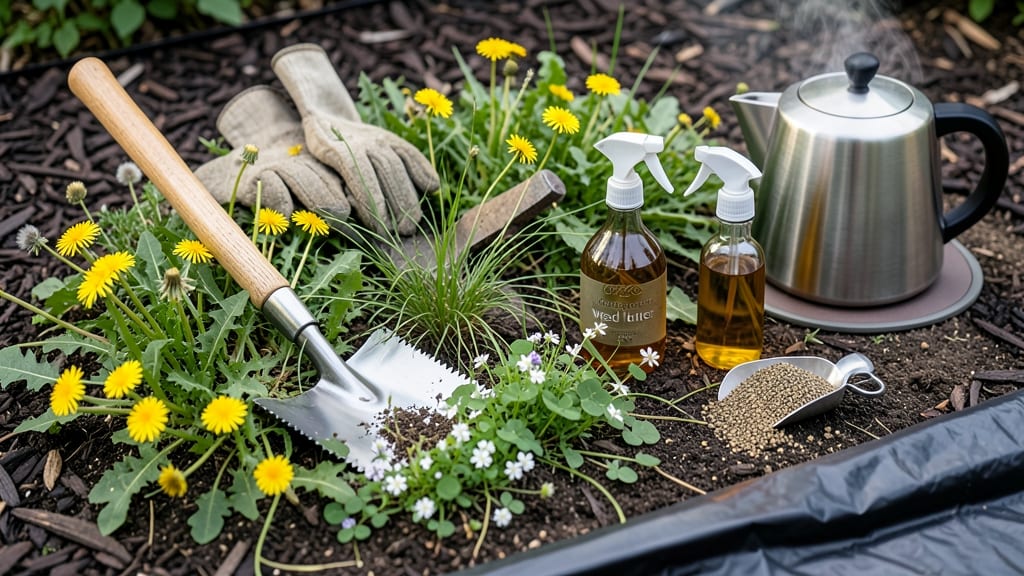
How to get rid of weeds instantly? Boiling water kills them down to the roots—permanently. 🌱 I’ve used this method for years to clear stubborn patches without chemicals, and it works better than pulling weeds by hand. The heat smothers roots permanently, stopping regrowth for good.
You’ll need a large pot, a kettle, or even a boiling water weed killer wand—whatever gets the job done. Pour the water directly onto weeds (avoid desirable plants), and watch them wilt within minutes. It’s fast, chemical-free, and works on dandelions, crabgrass, and other tough invaders.
This method is especially effective in cracks of driveways, sidewalks, and between pavers where weeds love to take hold. Just be careful—boiling water can damage nearby plants or surfaces, so use it precisely. For larger areas, a boiling water weed burner makes the job easier.
Best used in spring or fall when weeds are actively growing but before they go to seed. Pair it with mulch or vinegar spray for extra protection, and you’ll have a weed-free zone in no time.
The Hidden Triggers Behind Weeds
Weeds don’t just pop up out of nowhere—they thrive because of specific conditions that give them an unfair advantage over your lawn or garden. Understanding these triggers is the first step to outsmarting them.
Let’s break down the science behind why weeds take over, so you can target the real culprits.
Weeds love empty spaces. When your lawn or garden has bare patches—whether from poor planting, erosion, or foot traffic—weeds rush in to fill the gaps. Why? Because they’re opportunistic seeds that germinate quickly in disturbed or nutrient-poor soil.
Even a small crack in pavement or a thin layer of mulch can become a weed magnet.
The science: Weeds like dandelions and crabgrass release chemicals (allelopathy) that suppress grass growth, creating more bare spots. Meanwhile, their shallow roots outcompete deeper-rooted plants for water and sunlight.
Weeds thrive in soggy conditions because their seeds germinate faster in damp soil. Why? Many weed species, like nutgrass and moss, are adapted to wet environments, while your lawn grass may struggle to establish roots in waterlogged areas.
The science: Poor drainage creates anaerobic (oxygen-deprived) soil, which weakens grass roots and invites weeds. Some weeds, such as sedges, even prefer wetter conditions than turfgrass, making them dominant in low-lying areas.
Weeds adapt to light conditions that your desired plants can’t handle. Why? Some weeds, like clover, flourish in full sun, while others, such as moss, take over shady, damp spots where grass won’t grow.
The science:
- Sun-loving weeds: Purslane and spiny pigweed grow aggressively in open, sunny areas, often choking out grass.
- Shade-tolerant weeds: Creeping Charlie and ground ivy thrive under trees or dense shrubs, where turfgrass struggles to survive.
Uneven light exposure creates microclimates perfect for weeds to dominate.
Weeds often outcompete plants because they grow faster with fewer resources. Why? Many weeds are nitrogen-fast, meaning they absorb nutrients quickly, leaving your lawn starved. Others, like henbit, thrive in phosphorus-rich soil, which can happen if you over-fertilize.
The science: Weeds like chickweed and plantain have deep or widespread root systems that extract nutrients efficiently. If your soil lacks organic matter, weeds fill the void, creating a vicious cycle of poor lawn health.
Every time you till, aerate, or disturb soil—even for gardening—you create the perfect seedbed for weeds. Why? Buried weed seeds (which can stay dormant for years) get exposed to light and warmth, triggering germination.
The science: A single square foot of soil can hold 100,000+ weed seeds. Digging or loosening compacted soil gives these seeds the access they need to sprout. Even "weed-free" mulch can introduce seeds if not properly aged.
Now that you know why weeds take over, the next step is to starve them out with science-backed barriers—like boiling water—that smother their roots permanently. 🚀
Practical Solutions for Weed-Free Ground
Now that you understand why weeds take over, it’s time to tackle them—for good. The key is a mix of immediate action and long-term prevention. Below, we’ve mapped out cause-specific fixes with step-by-step instructions, plus pro tips to keep weeds from creeping back.
Why it works: Scalding water kills weeds at the root while creating a natural barrier to prevent regrowth.
What you’ll need:
- A large pot or kettle (5+ gallons)
- Boiling water
- A long-handled spoon or stick (for precision)
Steps:
- 🍳 Boil water – Fill your container with water and bring it to a rolling boil.
- 👨🍳 Pour strategically – Focus on the weed’s base, pouring 1–2 cups of boiling water directly onto the roots. Avoid healthy plants nearby.
- 🥘 Repeat for stubborn weeds – If the weed persists, reapply after 2–3 days.
- ⏰ Let it cool – The ground will steam for a few minutes—this is normal! Wait 24 hours before walking on it.
✨ Pro Tip: For a permanent barrier, pour boiling water along cracks in driveways or sidewalks. The heat seals gaps where weeds sprout.
Why it works: Vinegar’s acidity burns foliage, while salt disrupts root systems—but use sparingly (it can harm soil over time).
What you’ll need:
- 1 gallon white vinegar (5% acetic acid)
- 1 cup salt
- 1 tbsp dish soap (as a surfactant)
- A spray bottle
Steps:
- 🔪 Mix ingredients – Combine vinegar, salt, and soap in a spray bottle. Shake well.
- 🎯 Target weeds (not grass!) – Spray directly on leaves and stems on a sunny day (sun intensifies the effect).
- 🌡️ Wait 24 hours – Weeds will wilt within hours; pull dead roots after a day.
- 💡 Prevent re-sprouting – Reapply if new growth appears.
⚠️ Warning: Avoid spraying near desirable plants—vinegar can harm them too!
Why it works: Blocking sunlight and soil access stops weeds before they start.
What you’ll need:
- Organic mulch (wood chips, straw, or shredded leaves)
- Landscape fabric (optional, for high-weed areas)
- Garden gloves
Steps:
- 🌿 Clear existing weeds – Pull or treat weeds first (use methods above).
- 📊 Lay fabric (if needed) – For driveways or problem areas, lay fabric and secure edges with landscape staples.
- 🍎 Add mulch – Spread 3–4 inches of mulch over soil or fabric. Keep it 6 inches away from tree trunks to prevent rot.
- 🔄 Refresh annually – Top off mulch as it breaks down to maintain the barrier.
💡 Pro Tip: Cardboard + mulch is a budget-friendly alternative—lay flattened boxes under mulch to smother weeds naturally.
Why it works: The old-school method works best for young weeds or in flower beds.
What you’ll need:
- Garden gloves
- A hoe or trowel (for stubborn roots)
- A bucket of soapy water (to clean tools)
Steps:
- 🌧️ Water the soil first – Wet ground makes pulling easier (weeds slide out cleaner).
- 👩🌾 Grab & twist – Hold the weed at the base and pull upward with a sharp twist to break roots.
- 🔪 Check for root fragments – Even small pieces regrow! Dig deeper if needed.
- 🧼 Clean tools – Rinse your hoe/trowel in soapy water to prevent spreading seeds.
✨ Pro Tip: Pull weeds after rain—soil is softer, and you’ll remove more roots.
- 🌱 Plant densely – Crowd out weeds with ground covers, clover, or thick grass.
- 💧 Water deeply but less often – Shallow watering encourages weed seeds to germinate.
- 🌿 Mow high – Keep lawns at 3–4 inches to shade out weeds.
- 🧹 Remove weeds ASAP – Don’t let them go to seed!
- 🌿 Use corn gluten meal – A natural pre-emergent that blocks weed seeds from sprouting (apply in early spring).
Final Thought: The best approach depends on your space—boiling water for driveways, vinegar for gardens, and mulch for prevention. Pick your weapon, act fast, and say goodbye to weeds for good! 🚫🌱
Frequently asked questions about weed removal
Is boiling water safe for all types of weeds?
Boiling water works best on broadleaf weeds like dandelions and clover, but may require multiple applications for deep-rooted weeds like nutgrass. For stubborn weeds, combine boiling water with a follow-up of vinegar spray or manual pulling to ensure complete removal.
Can I use boiling water on my lawn without damaging grass?
No—boiling water will kill grass too! Use it only in cracks, driveways, or sidewalks. For lawns, opt for vinegar spray (targeted application) or corn gluten meal as a natural pre-emergent. Always spot-test in a small area first.
How often do I need to reapply boiling water for permanent results?
For most weeds, one treatment kills them permanently, but check for regrowth after 2–3 weeks. Reapply boiling water if any sprouts appear—this ensures roots are fully destroyed. For thick weed patches, repeat weekly until the area is clear.
What’s the best time of day to treat weeds with boiling water?
Early morning or late afternoon works best—weeds are less stressed from heat, and the water evaporates more slowly. Avoid midday when the sun intensifies, which can dry the soil too quickly and reduce effectiveness.
Will boiling water kill weeds in flower beds without harming plants?
Use extreme caution! Boiling water can damage nearby flowers. Instead, try a vinegar-salt mix (1:1 ratio) or manually pull weeds when soil is moist. For delicate plants, cover them with a lightweight tarp before applying boiling water nearby.