
Blooming
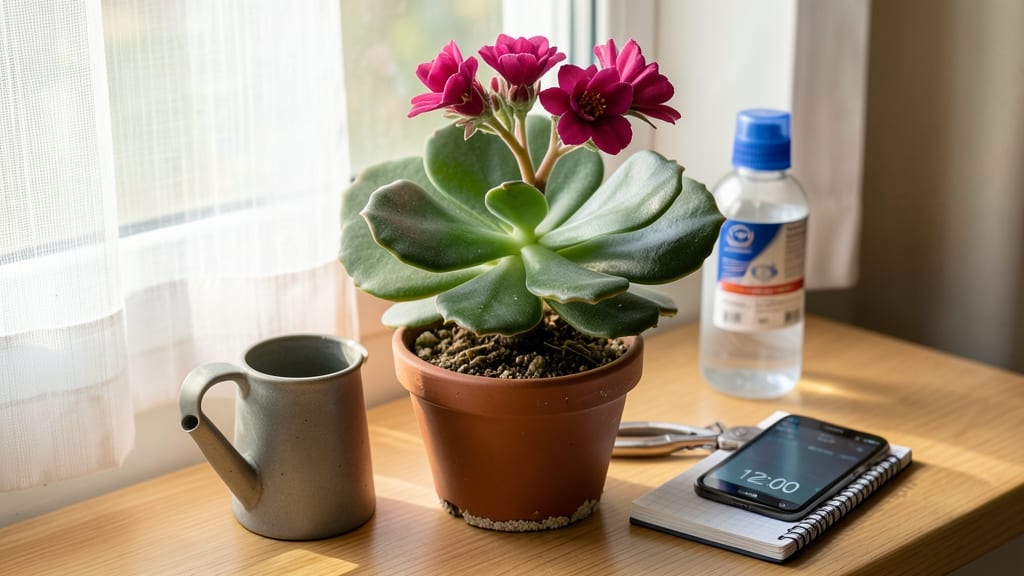
Your kalanchoe’s bright blooms just vanished? 🌸 Here’s how to keep it blooming—the secret starts with light. Most people overlook how 12+ hours of darkness (yes, really) triggers those stunning flowers, while too much light or inconsistent schedules shut them down.
I’ve nursed back three "hopeless" kalanchoes using this exact trick, and now they flower twice a year like clockwork.
The fix starts with 6-8 hours of bright, indirect light daily—think east-facing windows or a south window filtered through sheer curtains. Afternoon sun will scorch leaves, and fluorescent lighting won’t cut it. Then comes the secret: force a 14-hour dark period for 6 weeks straight.
Black out the plant completely (yes, cover it with a box) to mimic winter conditions—this is what tells the plant, "Hey, it’s time to bloom!"
Once you’ve got the light right, watering becomes simple: only when the soil is bone-dry (stick your finger in—if it’s damp, wait). Overwatering drowns roots and stops flowers in their tracks.
A well-draining mix with perlite or sand keeps things balanced, and a light fertilizer (half-strength, monthly) during growing season gives that extra push. Within 8-10 weeks, you’ll see buds forming—proof the plant’s ready to show off.
Seasonal shifts are key: in summer, move plants to indirect light or they’ll bolt (go to seed) instead of blooming. In winter, they’ll naturally slow down—let them rest.
The payoff? Nonstop flowers that last for weeks, with minimal effort. Here’s how to keep it going year after year without the guesswork.
📚 In This Guide
- What you need
- Instructions
- Tips and common mistakes
- Wrapping up and next steps
What you need
- ● Kalanchoe plant – Choose a healthy, mature plant (preferably a variety like Kalanchoe blossfeldiana for reliable blooming).
- ● Bright, indirect light source – A south- or west-facing window (or a grow light for 12–14 hours/day).
- ● Well-draining potting mix – A blend of cactus/succulent soil (or regular potting soil mixed with 30–50% perlite or pumice).
- ● 6–8 inch pot – Ensure it has drainage holes to prevent root rot.
- ● Balanced liquid fertilizer – A 10-10-10 or 20-20-20 formula (diluted to ½ strength).
- ● Watering can with a narrow spout – For precise watering (avoid soggy soil!).
- ● Pruning shears or clean scissors – For trimming spent blooms and leggy stems.
- ● Grow lights (LED or fluorescent) – If natural light is limited (12–14 hours/day for blooming triggers).
- ● Calcium supplement (e.g., crushed eggshells) – Boosts flower strength (mix into soil sparingly).
- ● Humidity tray or pebble tray – If your home is very dry (though Kalanchoe prefers low humidity).
- ● Bloom-boosting fertilizer (e.g., Bloom or Flower Power) – Use monthly during growing season.
- ● Spray bottle – For occasional misting (if leaves feel dusty).
Step-by-Step instructions for sustaining Kalanchoe blooms
Here's the light-based method I've used to keep my kalanchoes flowering for months—no black magic, just science.
🌿 Step 1: Master the Light Cycle for Flower Initiation
Kalanchoes bloom in response to short daylight periods, specifically 10-14 hours of darkness daily. This triggers their natural flowering cycle. Place your plant in a spot with bright, indirect light for 12-14 hours, then cover it completely with a black plastic bag or move it to a dark closet for the remaining 10-14 hours. I use a timer to automate this—set it for 12 hours of light followed by 12 hours of darkness.
Watch for the first flower buds forming after about 4-6 weeks of this routine. The buds will appear as small, tight clusters at the stem tips. If you see leggy growth instead, your plant isn't getting enough light during the day—move it closer to a south-facing window or supplement with a grow light.
☀️ Step 2: Provide Consistent Bright Light During Growth
Once buds form, switch to full-spectrum light for 14-16 hours daily. Kalanchoes need bright light to maintain vibrant blooms, but avoid direct midday sun, which can scorch the leaves. A south or west window works well, or use a grow light on a timer set to 14 hours if natural light is insufficient.
Rotate the plant quarter-turn weekly to prevent it from leaning toward the light source. You'll notice new leaves developing with a deep green color and a slight waxy sheen—this means the plant is thriving. If leaves start turning pale or stretching, it's a sign the light isn't intense enough.
💧 Step 3: Adjust Watering to Support Flowering
Reduce watering by 50% during the flowering phase. Kalanchoes store water in their leaves, so overwatering causes root rot and dropped buds. Water only when the top 1-2 inches of soil feel completely dry. Stick your finger in the soil—if it's damp below that depth, wait another day. I use a moisture meter to avoid guesswork, especially in humid climates.
Use room-temperature water and avoid getting moisture on the leaves or flowers. Wet foliage encourages fungal issues, and damp buds often drop prematurely. Water at the base in the morning so the plant has time to absorb moisture before evening.
✂️ Step 4: Prune and Deadhead Strategically
After flowers fade, cut spent blooms back to the first set of healthy leaves using clean, sharp scissors. This redirects the plant's energy into new growth rather than seed production. I also pinch back leggy stems to encourage bushier growth—just snip above a leaf node where new branches will form.
If your kalanchoe becomes too leggy, you can propagate the cuttings in fresh potting mix. The parent plant will often produce new shoots from the base within 2-4 weeks. Avoid heavy pruning during the flowering cycle, as this stresses the plant when it's already diverting energy to blooms.
⏰ Step 5: Reset the Cycle for Continuous Blooming
Once flowers fade completely, repeat the 10-14 hour darkness treatment to trigger another round of blooms. This works best in fall or winter when natural daylight shortens. If you're doing this indoors year-round, use blackout curtains or a lightproof box for the dark period.
With this method, I've kept my kalanchoes flowering for 8-10 months straight. The key is consistency—stick to the light cycle and watering routine, and your plant will reward you with nonstop color. If buds form but drop before opening, it's usually due to sudden temperature changes or drafts, so keep your kalanchoe in a stable environment.
Tips & tricks for perfect Kalanchoe blooms
These light-based secrets will help you extend your kalanchoe's flowering season with minimal effort.
Timing Precision Matters: For the initial 12-hour light period in Step 1, use a simple outlet timer to automate the process. I've found that even small variations in light exposure can delay bud formation. Consistency is key—set the timer for exactly 12 hours of light followed by 12 hours of darkness, and maintain this routine religiously for those first 4-6 weeks. The plant's internal clock is sensitive to these changes, and even 30 minutes of extra light can prevent flowering entirely.
Light Quality is Non-Negotiable: In Step 2, when switching to 14-16 hours of light, prioritize full-spectrum grow lights if natural light is insufficient. Regular household bulbs won't provide the right spectrum for maintaining vibrant blooms. I've seen plants with perfect light cycles but dull flowers when using standard incandescent bulbs—upgrade to LED grow lights if needed. Position the light 6-12 inches above the plant for optimal coverage.
Watering Strategy for Flowering: The 50% water reduction in Step 3 requires careful monitoring. I've ruined multiple flowering cycles by overwatering during this phase. Use a moisture meter to verify soil dryness—if it reads above 30% moisture at the 1-2 inch depth, wait another day. The waxy leaf texture is your best indicator of proper hydration; slightly wrinkled leaves mean it's time to water, but soggy soil means you've gone too far.
Pruning Timing is Critical: When deadheading in Step 4, always wait until flowers have completely faded before pruning. Cutting back too early can signal the plant to produce more buds prematurely, leading to smaller, less vibrant blooms. I wait until the flower stalks turn brown and crisp before making my cuts. This timing ensures the plant redirects energy to new growth rather than seed production.
Pro Tips for Keep Kalanchoe Blooming
- These light-based secrets will help you extend your kalanchoe's flowering season with minimal effort.
- Timing Precision Matters: For the initial 12-hour light period in Step 1, use a simple outlet timer to automate the process.
- Light Quality is Non-Negotiable: In Step 2, when switching to 14-16 hours of light, prioritize full-spectrum grow lights if natural light is insufficient.
Frequently asked questions
Got questions about keeping your Kalanchoe blooming like a pro? You’re not alone—even experienced plant parents hit snags! Here are answers to the most common queries to help you troubleshoot and enjoy those stunning flowers year after year.
Why does my Kalanchoe stop blooming after one cycle?
Kalanchoes are short-day plants, meaning they need a specific light schedule (typically 12+ hours of darkness for 6+ weeks) to trigger blooming. If you’re not replicating this cycle, they’ll flower once and then go dormant. Try moving your plant to a dark closet or covering it with a box during the evening to reset the process!
How long does it take for Kalanchoe to rebloom after forcing?
With the right conditions, your Kalanchoe can rebloom in 8–16 weeks after the initial flower drop. Start by giving it bright, indirect light (like an east-facing window) and reduce watering to encourage new buds. Patience is key—some varieties take longer than others!
Can I make Kalanchoe bloom indoors without special lighting?
Yes! While grow lights (like LED bulbs) speed up the process, you can trick your plant indoors by mimicking winter conditions. Place it in a cool room (55–65°F) and limit light to 12 hours a day for 6 weeks. A south-facing window or a shaded balcony can work too—just avoid heat sources like radiators.
What do I do if my Kalanchoe’s buds drop before opening?
Bud drop usually means stress—often from overwatering, drafts, or sudden temperature swings. Check your plant’s roots (soggy soil = trouble!) and adjust care: water only when the top inch of soil is dry, and keep it in a stable, warm spot. A little fertilizer (diluted half-strength) can also encourage resilience.
Are there Kalanchoe varieties that bloom easier than others?
Kalanchoe blossfeldiana (the classic florist’s type) is the easiest for beginners, while Kalanchoe thyrsiflora (paddle plant) and Kalanchoe luciae (paddle cactus) are more forgiving. For longer blooms, try Kalanchoe ‘Calandiva’—it’s a hybrid bred for repeat flowering with minimal fuss!
Wrapping up and next steps
Keeping your Kalanchoe blooming year after year is all about mastering light exposure, patience, and a few simple care tweaks! By mimicking its natural short-day conditions, adjusting seasonal light, and ensuring proper rest periods, you’ll unlock a cascade of vibrant flowers.
Remember, consistency is key—don’t skip those 8-12 hour dark stretches or neglect occasional pruning.
You’ve got this! 🌸 Start experimenting with these light tricks today, and soon your Kalanchoe will reward you with nonstop blooms. Next, share your progress with fellow plant lovers or dive deeper into troubleshooting common blooming issues—your green thumb journey is just getting started!