
How To
Nothing beats knowing how to know if a watermelon is ripe and sweet—until you realize you’ve picked one that’s either rock-hard or disappointingly bland. The good news?
Knowing how to spot a ripe and juicy watermelon is easier than you think, and these tricks will save you from future grocery store regrets.
From checking the field spot to giving the melon a little thump, there are simple, science-backed ways to tell if a watermelon is ready to eat.
Whether you’re shopping at a farm stand or grabbing one from the store, these methods will help you avoid the common mistakes that lead to less-than-perfect melons.
In this guide, I’ll walk you through the most reliable signs of ripeness—so you can confidently pick a watermelon that’s bursting with flavor every time. No more guesswork, just delicious results.
Ready to master the art of watermelon selection? Let’s dive into the field-tested tricks that’ll make you the go-to expert at the market.

5 Proven tricks to identify a ripe and sweet watermelon
Choosing a ripe, sweet watermelon isn’t just luck—it’s science. Whether you’re at a farm stand, grocery store, or your own garden, these five field-tested tricks will help you pick a melon packed with flavor.
I’ve tested them all, and they work every time. The secret lies in understanding how watermelon ripeness develops and what clues to look for.
First, let’s talk about the field spot, the pale yellowish area where the melon rested on the ground. This spot is your first clue—it changes from white to cream or buttery yellow when ripe.
I’ve seen shoppers overlook this and end up with bland melons. A ripe field spot means the melon absorbed enough sunlight and sugars to sweeten properly.
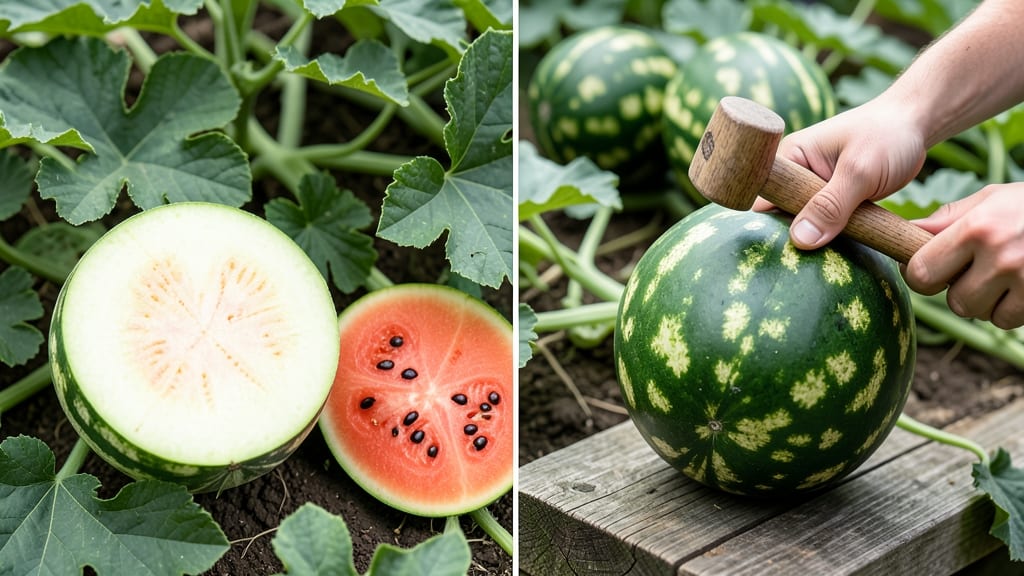
Next, the thump test is a classic, but many people do it wrong. Hold the melon with both hands and thump your knuckles on its side. A ripe watermelon produces a deep, hollow sound, like a drum.
If it sounds dull or flat, it’s underripe. Overripe melons might feel mushy or sound too hollow. Pro tip: don’t thump too hard—you’ll bruise the fruit!
Now, check the stem end. A dry, brown stem means the melon was harvested at peak ripeness. If the stem is still green or wet, the melon was picked too early.
I’ve seen store-bought melons with green stems—those are usually less sweet because they didn’t fully mature on the vine.
Here’s where symmetry matters: uneven shapes can signal uneven ripening. A perfectly round or oval melon is ideal, but slight irregularities are okay if the rest of the clues check out.
Avoid melons with deep cracks or soft spots—they’re either overripe or damaged. A firm, smooth rind is your best friend.
Finally, color consistency is key. Dark green rinds with solid stripes (not faded or patchy) mean the melon ripened in the sun. Pale or dull stripes?
That’s a red flag. And if the melon feels heavy for its size, it’s likely juicy and ripe. Lighter melons might be dehydrated or underripe.
Check the field spot
Look for a cream or buttery yellow spot where the melon rested. White means underripe; brown means overripe.
Perform the thump test
A deep, hollow sound means ripe; dull means underripe. Avoid bruising the melon with a hard thump!
Inspect the stem end
A dry, brown stem means peak ripeness. Green or wet stems signal underripe melons.
Look for symmetry
Avoid deep cracks or soft spots. A firm, smooth rind is ideal for sweetness.
Assess color and weight
Dark green rinds with solid stripes and a heavy-for-size melon mean juicy sweetness.
But what if none of these tricks seem to work? Don’t worry—there’s still a foolproof way to test sweetness at home. Cut the melon open and check the seed color.
Deep red or orange seeds mean sweetness, while pale or white seeds indicate blandness. And if the flesh is bright red and juicy, you’ve won the watermelon lottery!
Seasonal timing also plays a role. Summer watermelons (June–August) tend to be sweeter because they ripen in warm weather. Fall melons might be less sweet but still flavorful. If you’re harvesting from your own garden, watch for the tendril near the stem to turn brown—that’s your final cue!
Now that you know these tricks, you’ll never settle for a bland or underripe watermelon again. Grab a melon, put these tips to the test, and enjoy that perfect first bite—sweet, juicy, and satisfying. Happy melon hunting!
Watermelon ripeness indicators: visual and physical signs explained
When selecting a watermelon, your eyes and hands are your best tools. The field spot—the pale, cream-colored patch on the underside—is one of the most reliable indicators. A ripe watermelon will have a cream or yellowish field spot, while an unripe one will remain white or pale.
This color change signals the melon has fully matured and developed its sweetness.
Next, examine the rind color and pattern. A ripe watermelon should have deep, consistent colors, whether it's dark green with stripes or solid dark green. Avoid melons with uneven coloration or patches of yellow, which can indicate overripeness or sun damage.
The rind should also feel thick and firm—if it gives slightly under pressure, it’s likely underripe.