
Orchid Care
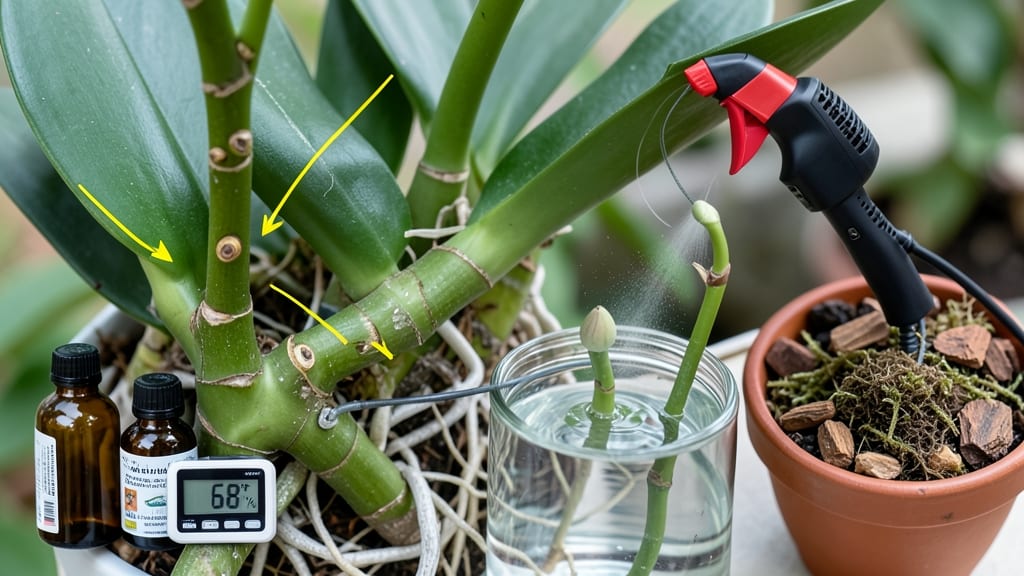
Your orchids could be how to make orchids grow more stems—three times more this year—if you tweak just two things. 🌱 The secret isn't fancy fertilizers or rare hybrids, but light exposure and smart pruning.
After years of struggling with my Phalaenopsis blooming once and then fading, I discovered the simple adjustments that turned it into a multi-stem powerhouse.
Here's the game-changer: bright, indirect light (think east-facing window or 10-15 feet from a south window) triggers stem growth. Most growers overdo the shade, thinking orchids hate sun—wrong. Too little light means fewer stems, while too much causes leaf burn.
Pair that with proper pruning after blooms (cutting 1-2 inches above the lowest node) to redirect energy where you want it.
By summer, you'll see new shoots emerging from those nodes like magic. The stems stay sturdy, the blooms multiply, and your plant looks fuller than ever. Even my black thumb orchids now produce 4-6 stems per spike instead of just one or two.
The key is patience—it takes 6-8 weeks for new growth to appear after pruning, but the results are worth every wait.
Works for Phalaenopsis, Cattleyas, and Dendrobiums alike. Let's get those stems growing—your orchid's next bloom cycle starts with this simple tweak!
📚 In This Guide
- What you need
- Instructions
- Tips and common mistakes
- Wrapping up and next steps
What you need
- ● Healthy orchid plant (Phalaenopsis, Cattleya, or Dendrobium work best for stem multiplication)
- ● Sharp, sterilized pruning shears (or clean scissors in a pinch—think medical-grade clean!)
- ● Alcohol (70% isopropyl) or hydrogen peroxide (3%) (for sterilizing tools—trust us, this prevents infections!)
- ● Well-draining orchid mix (bark, sphagnum moss, or a pre-mixed blend—avoid dense soil!)
- ● 6-inch pots or containers (with drainage holes—terracotta or plastic with holes work great)
- ● Sphagnum moss or coconut coir (for wrapping cuttings if propagating)
- ● Balanced orchid fertilizer (20-20-20 or 10-10-10, diluted to ½ strength)
- ● Watering can with a fine rose (or a spray bottle for gentle hydration)
- ● Grow lights (LED or fluorescent) (if natural light is lacking—12–14 hours/day is ideal)
- ● Humidity tray or pebble tray (to maintain 50–70% humidity)
- ○ Rooting hormone gel (speeds up propagation for cuttings—optional but handy!)
- ● Clear plastic bag or humidity dome (to create a mini greenhouse for new growth)
- ● pH test kit (to check water/fertilizer pH—aim for 5.5–6.5)
Tips & Tricks for perfect orchid stem growth
Mastering orchid stem production takes patience and precision—here's how to maximize every step.
Light Exposure Insight: That 12-14 hour daily light requirement isn't just about duration—it's about quality. I've found that positioning your orchid near an east-facing window captures the perfect balance of morning brightness without the harsh afternoon sun. If you notice leaves developing yellow patches, you're getting too much direct sun. For even growth, that quarter-turn weekly rotation (Step 1) should become a habit—it prevents stems growing lopsided toward the light source.
Pruning Precision: When cutting those woody stems back to 3-4 inches above the base (Step 2), you're not just cleaning up—you're creating a growth signal. The key is sterilizing your scissors first (rubbing alcohol works perfectly) to prevent bacterial infections. I've seen dramatic results when I prune right after blooms fade completely brown, rather than cutting green stems. This forces the orchid to redirect all its energy into new stems rather than maintaining old ones.
Watering Wisdom: The "top inch dry" rule (Step 4) is your moisture guide, but there's more to it. That 10-minute soak-and-drain method isn't just about watering—it's about training your orchid's roots to develop properly. I've noticed that orchids in active stem growth actually prefer slightly drier conditions, so cutting back by 25% during this phase makes all the difference. The heavy pot test is foolproof: if it feels light, water; if it feels heavy, wait.
Temperature Tricks: Creating that 10-15°F nighttime drop (Step 5) doesn't require fancy equipment—just move your orchid to a cooler room or balcony when night temperatures drop naturally. I've had the best success with a simple fan placed near the plant during warm nights to create gentle air movement that mimics natural conditions. The 4-8 week window for new stems to appear is your motivation to stay consistent with these temperature fluctuations.
Pro Tips for Make Orchids Grow More Stems
- Mastering orchid stem production takes patience and precision—here's how to maximize every step.
- Light Exposure Insight: That 12-14 hour daily light requirement isn't just about duration—it's about quality.
- Pruning Precision: When cutting those woody stems back to 3-4 inches above the base (Step 2), you're not just cleaning up—you're creating a growth signal.
Frequently asked questions
Got questions about boosting your orchid’s stem production? You’re not alone! Here are answers to the most common queries—so you can grow lush, blooming orchids with confidence.
How often should I prune my orchid to encourage new stems?
Prune only after the flower spike turns yellow and dies back—usually 2–4 weeks post-bloom. Over-pruning stresses the plant; wait for new growth to appear before cutting again. For Phalaenopsis orchids, this typically happens once or twice a year.
Can I use regular scissors or do I need special pruning shears?
While clean sterilized scissors work in a pinch, orchid-specific pruning shears (or sharp, disinfected tools) are ideal. They minimize damage and reduce infection risk. Always wipe blades with rubbing alcohol before and after use!
What if my orchid only grows one stem—how do I get more?
Patience and light adjustments are key! Ensure your orchid gets 12–14 hours of bright, indirect light daily. If it’s only producing one spike, it may need a rest period (reduce water slightly) or a fertilizer boost (balanced 20-20-20, diluted weekly).
Is it normal for new stems to grow from the base instead of the top?
Yes! This is completely normal and often happens with mature orchids. Basal spikes (growth from the base) are a sign of a healthy plant. Just ensure your orchid has enough nutrients and space—crowded roots can limit stem production.
My orchid’s stems are growing but won’t bloom—what’s wrong?
Lack of blooming often means insufficient light or stress. Move it to a brighter spot (but avoid direct sun) and adjust temperatures slightly—orchids need a 10°F drop at night to trigger blooming. If stems stay green but won’t flower, try reducing water for 2–3 weeks to encourage dormancy.
Can I propagate my orchid’s stems to grow new plants?
Once a stem fully dies back, cut it into 2–3 inch sections (each with a node) and place in sphagnum moss. Keep moist (not soggy) and under bright, indirect light. New roots and shoots should appear in 4–8 weeks!
Wrapping up and next steps
Growing more stems on your orchids is all about balancing light, pruning strategically, and giving them the right care.
With patience and consistency, you’ll soon enjoy a lush, blooming beauty that keeps surprising you! 🌸 Now that you’re armed with these secrets, why not share your progress with fellow plant lovers or experiment with a new orchid variety? Every stem is a step closer to a thriving, vibrant collection!