
Picking
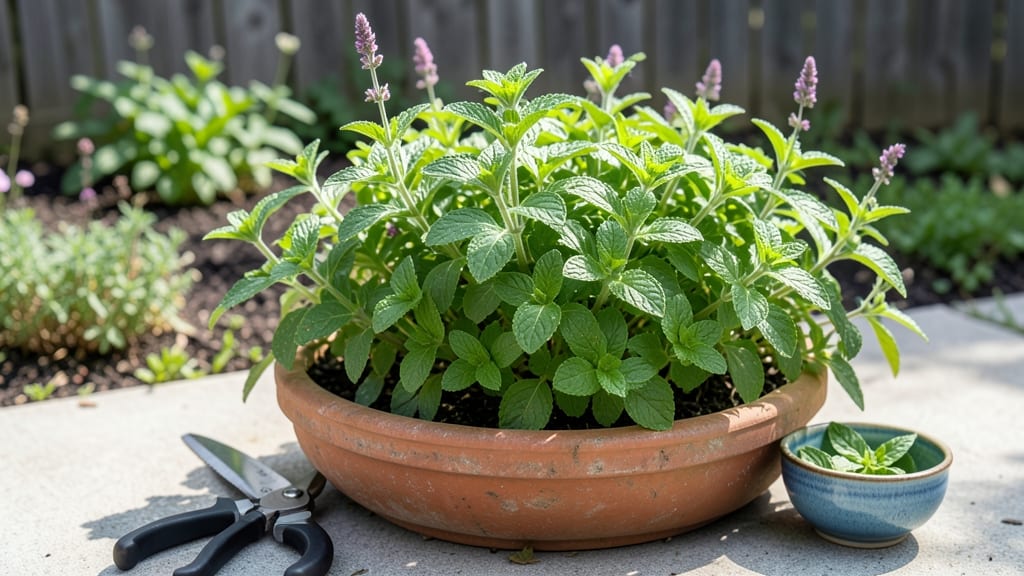
How to pick mint leaves so it keeps growing—your plant can stay productive all season if you prune it right. ✂️ I’ve learned the hard way that snipping randomly leads to leggy, sparse growth, but the right technique turns mint into a leaf-producing machine. The secret? Cutting stems properly and timing your harvests to encourage bushier regrowth.
Start by harvesting early in the morning when leaves are fully hydrated. Use clean, sharp scissors to snip just above a set of leaves (where new growth appears), never pulling individual leaves—this prevents damage and encourages branching.
Aim to cut one-third of the plant at a time, leaving plenty of foliage behind to fuel regrowth.
After harvesting, give your mint a boost by watering at the base (avoid wetting leaves to prevent fungus) and placing it in a spot with 4-6 hours of sunlight daily. Within 1-2 weeks, you’ll see fresh, vibrant growth sprout from the cut stems—proof that your plant is thriving.
Repeat this method every 4-6 weeks to keep your mint lush and productive.
For extra vigor, pinch off any flower buds as soon as they appear—they drain energy from leaf production. If your mint starts looking sparse, trim it back by half to encourage a fuller, bushier shape.
With this approach, your mint will stay abundant, fragrant, and ready for harvest all season long.
📚 In This Guide
- What you need
- Instructions
- Tips and common mistakes
- Wrapping up and next steps
What you need
- ● Sharp pruning shears or scissors – Choose clean, sterilized shears (rubbing alcohol works!) to avoid spreading disease. Size: 4-6 inches (for precision cuts).
- ○ Gloves (optional but recommended) – Protect your hands from mint’s strong oils and potential skin irritation. Type: Lightweight gardening gloves.
- ● Container or bowl – A shallow tray or bowl to collect freshly picked leaves. Size: Large enough to hold at least 1 cup of leaves.
- ● Mint plant (healthy and established) – Ensure your plant has at least 6-8 inches of growth before pruning for the first time.
- ● Watering can or spray bottle – For post-pruning hydration. Tip: Use room-temperature water to avoid shocking the plant.
- ● Antiseptic spray – Spray shears between cuts to prevent bacterial spread.
- ● Labeling tags – If harvesting for different uses (e.g., cooking vs. tea), label your containers.
- ● Pruning saw (for large mint bushes) – Only needed if your mint has grown into a dense, woody base.
- ● Compost bin – For disposing of trimmings (mint can be invasive—never compost in garden soil!).
Step-by-Step instructions for pruning mint to encourage continuous growth
Here’s how to harvest mint leaves without stunting growth—keeping your plants lush and productive.
🌿 Step 1: Identify the Right Leaves to Pick
Focus on the outer leaves of the plant, where they’ve reached 3-4 inches long. These mature leaves are fully developed and won’t harm the plant when removed. Avoid the inner, tender growth—those are the plant’s future leaves, and pruning them slows down production.
I like to pinch off leaves with my fingers rather than cutting, as it reduces stress on the plant. If you notice leggy stems with sparse leaves, those are signals to prune more aggressively—but always leave at least two sets of leaves per stem to maintain energy production.
✂️ Step 2: Prune Strategically for Bushier Growth
Cut just above a pair of leaves (about ½ inch above) to encourage branching. This is where new shoots will emerge, creating a fuller, denser plant. If you’re harvesting stems, trim them back to just above a leaf node—never at the base, as this can kill the stem.
For established plants, I aim to remove no more than ⅓ of the plant’s foliage at once. Mint is resilient, but over-pruning stresses it. If you’re harvesting frequently, space out cuts by 2-3 weeks to let the plant recover and regrow.
💧 Step 3: Water and Fertilize After Pruning
After harvesting, give the plant a deep watering to replenish moisture lost during pruning. Mint has shallow roots, so water until it drains from the bottom of the pot or soil. Avoid soggy soil, though—damp but not waterlogged is ideal.
If your mint is in a container, I recommend adding a balanced liquid fertilizer (like 10-10-10) diluted to half-strength every 4-6 weeks after pruning. This gives the plant the nutrients it needs to bounce back quickly and produce new growth.
☀️ Step 4: Monitor Light and Space for Optimal Regrowth
Mint thrives in partial shade to full sun, but too much direct sun can stress the plant after pruning. If your mint is in a sunny spot, watch for wilting or yellowing leaves—this means it needs a little more shade until it recovers. Move it to a spot with morning sun and afternoon shade if needed.
If your mint is crowded, now’s the time to thin out overgrown stems to improve airflow. Good circulation prevents fungal issues and helps the plant focus its energy on regrowing leaves rather than fighting disease.
⏰ Step 5: Repeat the Process for Continuous Harvesting
Once you see new growth emerging from the leaf nodes (usually within 1-2 weeks), you can repeat the harvesting process. The key is consistency—prune regularly rather than waiting until the plant is overgrown. This keeps mint bushy, productive, and healthy.
I harvest my mint every 2-3 weeks during the growing season, and it never stops producing. The more you prune, the more it grows—just remember to never take more than ⅓ of the plant at once, and always leave those critical leaf pairs behind.
Tips & tricks for pruning mint to keep it thriving
Here's what nobody tells you about keeping mint lush and productive after pruning.
Leaf Selection Strategy: When harvesting those 3-4 inch outer leaves in Step 1, look for leaves that are fully expanded with vibrant green color. Yellowing or brown edges indicate mature leaves ready for harvest, while leaves with a slight purple tint are still developing. I always check the underside for crisp texture—any leaves feeling soft or mushy should stay on the plant. This ensures you're only removing leaves that have completed their growth cycle.
Pruning Precision: In Step 2, that ½-inch cut above the leaf pair is critical. Use clean, sharp scissors or pruning shears to make clean cuts—ragged edges can invite disease. For stems, angle your cut slightly away from the leaf node to encourage water runoff. I've found that using a small notepad to mark pruning dates helps track regrowth cycles, especially when harvesting every 2-3 weeks as mentioned in Step 5.
Recovery Ritual: After pruning, the deep watering in Step 3 should be your first priority. I've learned that mint plants actually absorb water more efficiently through their leaves after pruning, so I often give them a light misting spray in addition to the deep watering. For container plants, I like to add a handful of compost to the soil after fertilizing to give the roots an extra nutrient boost during recovery.
Light Management: When monitoring light in Step 4, pay special attention to the plant's response within 24-48 hours after pruning. If leaves start curling upward during the day but flatten at night, that's a sign of too much direct sun. I've had success moving plants to filtered light situations by placing them near sheer curtains or under a sheer fabric shade cloth during peak afternoon sun hours.
Pro Tips for Pick Mint Leaves So It Keeps Growing
- Here's what nobody tells you about keeping mint lush and productive after pruning.
- Leaf Selection Strategy: When harvesting those 3-4 inch outer leaves in Step 1, look for leaves that are fully expand...
- Pruning Precision: In Step 2, that ½-inch cut above the leaf pair is critical. Use clean, sharp scissors or pruning s...
Frequently asked questions
Got questions about keeping your mint thriving while harvesting? You’re not alone! Here are some of the most common concerns—and their solutions—to help you master the art of sustainable mint pruning.
How often should I pick mint leaves to encourage regrowth?
For optimal growth, harvest mint every 4–6 weeks during the growing season (spring to fall). Avoid over-picking—never take more than 1/3 of the plant at once, or it may struggle to recover. In winter, reduce harvesting to avoid stressing the plant.
Can I pick mint leaves in the morning or at night?
The best time to harvest is in the morning after the dew has dried but before the heat of the day. This ensures the leaves are fresh, flavorful, and hydrated. Avoid picking at night, as leaves may be damp, increasing the risk of mold or rot.
What if my mint plant stops growing after I pick it?
If your mint stops growing, it’s likely under stress from over-harvesting, poor soil, or pests. Revive it by:
- Trimming back healthy stems to encourage bushier growth.
- Ensuring it gets 6+ hours of sunlight and well-draining soil.
- Fertilizing lightly with balanced organic fertilizer (e.g., fish emulsion).
Can I pick mint leaves from a potted plant without killing it?
Yes! Potted mint is highly resilient—just follow the same rules as outdoor plants. Key tips:
If roots get root-bound, repot every 1–2 years to prevent stunted growth.
Is it okay to pick mint leaves that are yellow or wilted?
No—always remove only healthy, green leaves. Yellow or wilted leaves signal overwatering, disease, or pests. Trim them off immediately to prevent spread. For a revival boost, snip back 1/4 of the plant to redirect energy to new growth.
Wrapping up and next steps
Picking mint leaves the right way doesn’t have to be tricky—just prune regularly, use clean tools, and avoid over-harvesting.
With these simple steps, your mint plant will thrive, growing bushier and more vibrant than ever! 🌿 Now that you’re armed with the know-how, why not share your newfound skills? Try gifting a small pot to a friend or experimenting with mint in your favorite recipes—your green thumb is about to shine! 💚