
Picking
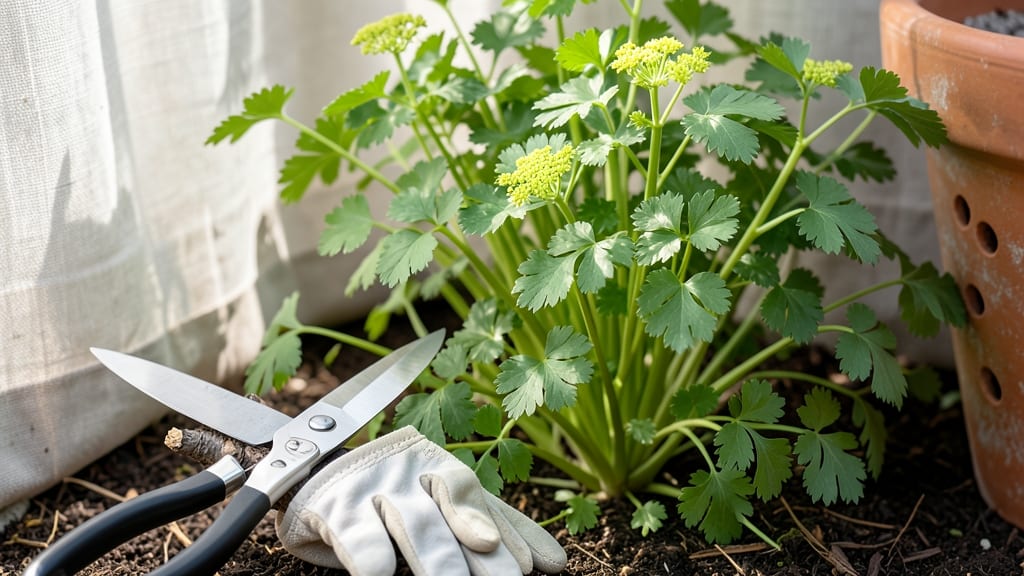
Here’s how to pick parsley so it keeps growing—the trick is precision, not brute force. ✂️ The secret lies in precision cutting—always snipping above leaf nodes, never below. I’ve learned this the hard way after watching my parsley turn into a sad, leggy shadow after aggressive harvests.
Start by harvesting outer stems when they reach 4-6 inches tall, leaving at least 2-3 inches of growth. Use clean scissors or pruners to avoid crushing stems, and never take more than one-third of the plant at once. This keeps the root system strong for regrowth.
After harvesting, water deeply to help the plant recover. Within 2-3 weeks, you’ll see fresh growth from the base, and the plant will stay lush and productive for months. The key is consistency—harvest regularly but never overdo it.
Common mistakes include cutting too close to the base or harvesting too much at once. Avoid these, and your parsley will thrive all season. Now, grab those scissors and let’s keep that parsley growing!
📚 In This Guide
- What you need
- Instructions
- Tips and common mistakes
- Wrapping up and next steps
What you need
- ● Fresh parsley plant(s) – Choose healthy, well-established plants (biennial or annual varieties work best).
- ● Sharp, clean pruning shears or scissors – A pair of small, sharp scissors (like felco pruners) works best to avoid crushing stems. Disinfect with rubbing alcohol before use!
- ● Watering can or hose with a gentle spray nozzle – For post-harvest hydration.
- ○ Gloves (optional but recommended) – Protects your hands from sap and dirt, especially if your parsley is near the ground.
- ○ Compost or mulch (optional but helpful) – A light layer of compost or mulch (like straw) to retain moisture and nutrients.
- ● Balanced liquid fertilizer (e.g., fish emulsion or 10-10-10) – A diluted dose after harvesting encourages regrowth.
- ● Plant markers or labels – If you’re growing multiple herbs, keep track of your parsley!
- ● Kitchen twine or plant ties – Helps support tall parsley stems if they flop over.
- ● Rainwater collection container – For eco-friendly watering if you’re in a dry climate.
Step-by-step instructions for harvesting parsley without stunting growth
Here's how to keep your parsley bushy and productive—no more puny regrowth after snipping.
✂️ Step 1: Wait Until Stems Are Mature but Still Tender
Harvest parsley when the stems reach about 6-8 inches tall but before they flower. You'll see the leaves fully unfurled and the stems firm but not woody. Pinch off the outer leaves first—these are the oldest and won't regrow as vigorously. I always check for three sets of mature leaves on a stem before cutting; this ensures the plant has enough energy to regenerate.
Use clean, sharp scissors or pruning shears to avoid crushing stems. A clean cut prevents disease entry and encourages faster regrowth. If you're unsure, run your thumb along the stem—it should feel slightly springy, not brittle. Avoid harvesting in the heat of the day; morning cuts give the plant the rest of the day to recover.
🌿 Step 2: Cut at the Right Angle and Location
Make your cut just above a leaf node, where new growth emerges. The node is that small bump or joint on the stem—this is where fresh leaves will sprout. Angle your cut slightly upward to prevent water from pooling on the stem, which can rot it. I like to make my cuts about ¼ inch above the node to give the new shoot room to develop without competition.
Never take more than one-third of the plant at once. Parsley is resilient, but aggressive harvesting stresses it. If you're harvesting flat-leaf parsley, focus on the outer stems first—they're more mature and won't affect the plant's center as much. Curly parsley is more delicate, so limit yourself to a few outer leaves per harvest to keep the plant's shape intact.
💧 Step 3: Water and Fertilize Immediately After Harvesting
Give your parsley a deep drink right after cutting to replenish lost moisture. Water until the soil is damp 6 inches down—you'll know it's enough when water runs out the drainage holes. Mulch around the base with 1 inch of compost or straw to retain moisture and protect roots. I always fertilize lightly after harvesting using a balanced liquid fertilizer (10-10-10) diluted to half strength. This gives the plant a quick nutrient boost to support new growth.
If your parsley is in a container, water thoroughly and let it drain completely before returning it to its spot. Overwatering after a harvest can lead to root rot, especially if the plant is already stressed. In hot climates, provide afternoon shade for 3-5 days post-harvest to help the plant recover without wilting.
☀️ Step 4: Monitor Light and Space for Optimal Regrowth
Parsley needs 4-6 hours of sunlight daily to regrow properly. If your plant starts looking leggy or sparse after harvesting, it's not getting enough light. Move it to a sunnier spot or supplement with a grow light for 6-8 hours daily. You'll see new leaves emerge within 2-3 weeks if light conditions are right—watch for the first sign of fresh green growth near the cut stems.
Thin out any crowded stems to improve airflow and reduce disease risk. If your parsley is flowering, pinch off the bloom stalks immediately—they divert energy away from leaf production. Regular harvesting actually encourages bushier growth because the plant focuses on producing more stems to compensate for what you've removed.
⏰ Step 5: Establish a Consistent Harvesting Schedule
Harvest parsley every 2-3 weeks during the growing season to maintain its vigor. This regular routine prevents the plant from bolting (going to seed) and keeps the leaves tender. I mark my calendar with reminders because consistency is key—skipping harvests leads to bitter, tough leaves and fewer regrowth opportunities.
In late summer, reduce harvesting frequency as the plant prepares for dormancy. If you're in a mild climate, you can keep harvesting lightly through fall, but avoid heavy cuts after the first frost. Store any excess parsley in the freezer or dry it for winter use—this way, you won't be tempted to over-harvest when the plant is already stressed.
Tips & tricks for perfect parsley harvesting
These insider techniques will help you maintain a thriving parsley plant that keeps producing fresh leaves all season long.
Leaf Node Identification: The secret to continuous regrowth lies in those tiny leaf nodes—those small bumps where leaves attach to stems. I always trace my finger along the stem to find the highest visible node before making my cut. This ensures new shoots emerge just below where you snip. For flat-leaf parsley, these nodes are more pronounced, while curly parsley requires closer inspection. A magnifying glass can help if you're unsure—just don't press too hard on delicate stems.
Seasonal Adjustment Strategy: During spring and fall when your parsley is most vigorous, stick to the 2-3 week harvesting schedule from Step 5. But in summer's peak heat, extend this to every 4 weeks. I've learned this the hard way—over-harvesting in summer can shock the plant into bolting (flowering) prematurely. Watch for the plant's energy levels: if leaves look wilted even after watering, it's telling you to take a break from harvesting.
Post-Harvest Recovery Protocol: After your harvest, I recommend this three-step recovery routine: First, give that deep watering (6 inches down) immediately. Then, within 24 hours, apply a light foliar spray of diluted fish emulsion (1 teaspoon per quart of water) for a quick nutrient boost. Finally, move the plant to partial shade for 3-5 days if temperatures exceed 85°F. This combination has reduced my parsley's recovery time from 4 weeks to just 2 weeks between harvests.
Pro Tips for Pick Parsley So It Keeps Growing
- These insider techniques will help you maintain a thriving parsley plant that keeps producing fresh leaves all season...
- Leaf Node Identification: The secret to continuous regrowth lies in those tiny leaf nodes—those small bumps where lea...
- Seasonal Adjustment Strategy: During spring and fall when your parsley is most vigorous, stick to the 2-3 week harves...
Frequently asked questions
Got questions about keeping your parsley thriving after harvest? You’re not alone! Here are some of the most common queries—plus quick, actionable answers to keep your herb garden lush and productive.
How often can I pick parsley without killing it?
You can harvest parsley every 2–3 weeks during its growing season (spring to fall). For flat-leaf parsley, avoid cutting more than ⅓ of the plant at once—this ensures it has enough energy to regrow. Curly parsley is more delicate, so limit harvests to 10–15% of the plant per session.
Should I wait until parsley is fully grown before picking?
Nope! You can start harvesting parsley when it reaches about 6–8 inches tall. Pinching off just the outer leaves (or a few sprigs) encourages bushier growth. Just avoid cutting into the central stem—this can stunt regrowth. Think of it like a haircut: small trims keep it healthy!
What’s the best time of day to pick parsley?
Morning is ideal! Harvest parsley in the early morning after dew has dried but before the heat of the day. This ensures the leaves are hydrated, flavors are most concentrated, and the plant is less stressed. Avoid picking in the afternoon when soil is dry or during extreme heat.
My parsley isn’t regrowing after cutting. What went wrong?
If your parsley seems sluggish, check these fixes:
- Overcrowding: Thin out nearby plants or seedlings—parsley needs space to thrive.
- Underwatering: Keep soil consistently moist (but not soggy). Mulch helps retain moisture.
- Nutrient deficiency: Feed with a balanced fertilizer or compost every 4–6 weeks.
- Pests/disease: Inspect for aphids, spider mites, or fungal spots. Treat with neem oil or insecticidal soap if needed.
Can I pick parsley in winter? What about frost?
Parsley is a hardy biennial, so it can survive light frosts (down to 20–25°F). However, avoid harvesting in freezing temps—it can damage the leaves. If your region gets heavy frost, mulch heavily or move potted parsley to a sheltered spot. In mild winters, you can still snip lightly, but growth will slow.
Wrapping up and next steps
Picking parsley the right way is all about timing, technique, and care—so you can enjoy fresh, vibrant herbs all season long!
By harvesting outer stems, avoiding over-picking, and giving your plants the love they need, you’ll encourage lush regrowth that keeps coming back stronger. Remember: patience and consistency are your best friends in the garden!
Now that you’re armed with these tips, grab those shears and get snipping! 🌱 Try experimenting with different varieties or even share your newfound knowledge with fellow gardeners. Happy harvesting—and may your parsley always stay plentiful and perky!