
Tools
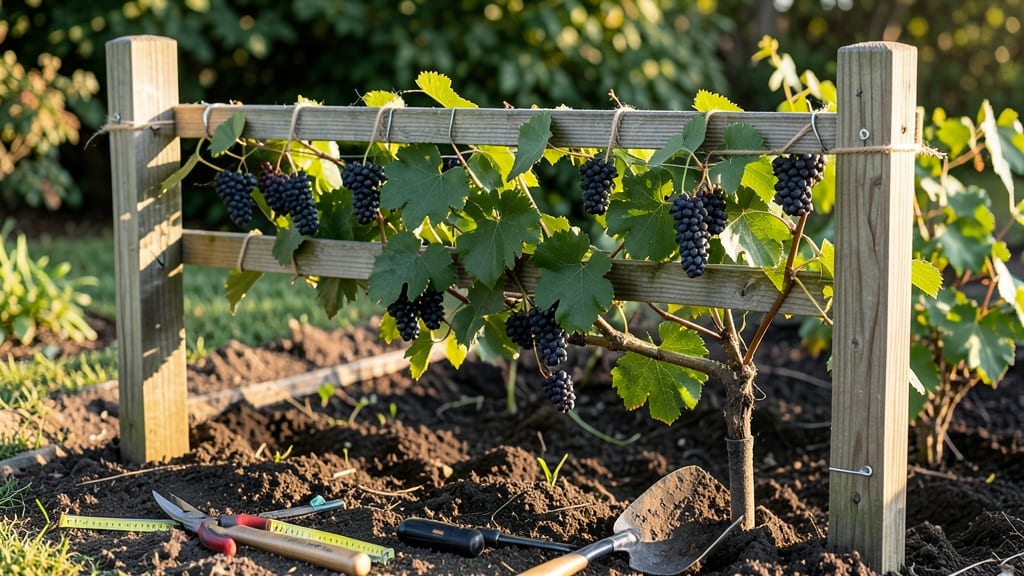
Building a muscadine trellis changed how I grow these heavy vines—no more broken branches or hidden fruit. ✨ The right support system turns sprawling muscadines into a manageable, high-yielding feature that produces sweeter grapes with better airflow.
My first attempt with flimsy stakes failed spectacularly, but this method holds up under the weight of ripe clusters while keeping vines organized and easy to harvest.
You’ll need 4x4 posts for corners, heavy-duty wire (12-gauge or thicker), and sturdy crossbeams—think utility-grade materials, not flimsy garden stakes. Muscadines need 8-10 feet of vertical space to climb properly, and the trellis should span at least 6-8 feet wide for mature vines.
I use a T-trellis design because it distributes weight evenly and makes pruning a breeze, but wire arbors work too if you prefer a more decorative look.
Once built, you’ll see the difference immediately: vines grow straighter, fruit ripens evenly, and pests have fewer places to hide. The first year, my harvest doubled because I could actually reach every cluster without crushing them.
Plus, the trellis lasts 10+ years with minimal maintenance—just tighten wires annually and replace any rusted hardware. No more wrestling with tangled vines or losing grapes in the grass.
This works for both small backyards and larger orchards—just scale the dimensions. The key is matching the trellis height to your muscadine variety’s growth habit. For aggressive growers like 'Scuppernong', go taller; for bushier types, a slightly shorter frame suffices.
Either way, you’ll end up with a system that makes harvesting feel like a five-star experience instead of a chore.
📚 In This Guide
- What you need
- Instructions
- Tips and common mistakes
- Wrapping up and next steps
What you need
- ● T-posts or concrete anchors: 6–8 pieces (6-foot tall, 2x2-inch or 2x3-inch pressure-treated lumber). Pro tip: 💡 Use T-posts for easier installation in soil, or set posts in concrete for extra stability.
- ● Horizontal support beams: 2–4 pieces of 4x4-inch pressure-treated lumber (8–10 feet long, depending on trellis width).
- ● Trellis wire or heavy-duty nylon rope: 1–2 spools of 12–14-gauge galvanized wire (or ½-inch thick rope) for vertical and horizontal support.
- ○ Cross-braces (optional but recommended): 2x4-inch lumber (cut into 3–4 foot lengths) for added reinforcement.
- ● Screws or lag bolts: 3-inch deck screws or ½-inch lag bolts (galvanized or stainless steel to prevent rust).
- ○ Post caps (optional): 4-inch metal or plastic caps to protect post tops from weather.
- ● Post hole digger or auger (for digging holes 12–18 inches deep).
- ● Measuring tape and level.
- ● Drill/driver with screw bits.
- ● Hammer or mallet.
- ● Pliers or wire cutters (for securing wire/rope).
- ● Concrete mix (if using concrete anchors) + wheelbarrow.
- ● Safety gear: gloves, goggles, and ear protection.
- ● Clear the trellis area of debris, rocks, or weeds (muscadines thrive in well-drained soil!).
- ● Check local building codes if your trellis exceeds 6 feet in height (some areas require permits).
- ● Plan your trellis layout: Muscadines need 10–15 feet of horizontal space per vine for optimal growth.
- ● Consider soil testing if your area has poor drainage (muscadines hate soggy roots!).
Step-by-step instructions for building a muscadine trellis
Here's the method I've used for years to create strong, long-lasting trellises that handle muscadine vines' weight and aggressive growth.
🪴 Step 1: Choose and Prepare Your Trellis Location
Muscadines need full sun and space to sprawl, so select a location with at least 6-8 feet of clear ground between the trellis and any structures or trees. I always place mine near a fence line or along the property edge to maximize sunlight exposure and minimize future vine encroachment.
Clear the area of weeds and rocks, then mark the trellis footprint with stakes and string. For a 4-plant setup, space the posts 8-10 feet apart in a straight line. Muscadines develop heavy canopies, so wider spacing prevents the trellis from sagging under fruit weight. Test the ground for firmness—if it feels soft, dig post holes 12 inches deep to ensure stability.
🌱 Step 2: Assemble the Support Frame
For each post, use 4x4 pressure-treated lumber cut to 8 feet tall. Set the posts in the holes and fill with gravel up to 6 inches below ground level, then pack the remaining space with native soil. I use 2x4 horizontal supports at 3 feet and 6 feet heights to create three levels for vine training.
Secure the horizontal supports with ½-inch galvanized lag screws into the posts. For extra stability, add diagonal braces from the top of each post to the center support. This creates a triangle structure that resists vine weight and wind. Double-check that all connections are tight—muscadine vines will test your trellis' strength as they mature.
✂️ Step 3: Install the Vine Training System
Attach ½-inch diameter rope or nylon cord horizontally between posts at each support level. Space the ropes 12-18 inches apart vertically. For a 4-plant trellis, use 4 separate ropes per level, one for each vine. I prefer rope over wire because it's gentler on the vines and easier to adjust as they grow.
Leave 6-8 inches of slack between the ropes and the horizontal supports. This allows the vines to weave through without binding. At the bottom of each post, install a 12-inch vertical rope section to create a "leader" for the main vine stem. Muscadines grow aggressively—this system gives them room to spread while keeping the fruit accessible for harvesting.
💧 Step 4: Plant and Train the Vines
Plant muscadine vines 12-18 inches away from the trellis to give roots room to establish before training begins. Water deeply after planting to encourage root growth. Once the vine reaches 3-4 feet tall, gently tie the main stem to the vertical rope leader using soft plant ties. Avoid metal or plastic ties—they can cut into the bark as the vine thickens.
As lateral shoots develop, weave them through the horizontal ropes at the 3-foot level first. Muscadines produce fruit on new wood, so focus on training the current year's growth. Prune any shoots growing below the 3-foot mark to direct energy upward. You'll know you're on the right track when the vine starts climbing naturally—it should look like a ladder with the ropes as rungs.
Tips & tricks for sturdy muscadine trellis construction
Real talk: Building a trellis that actually holds up to muscadines' aggressive growth requires attention to detail. Here's what I've learned after years of trial and error with these heavy vines.
Post Placement Precision: When marking your 8-10 foot spacing for a 4-plant setup, use a laser level or string line to ensure perfect alignment. I've seen trellises collapse when posts weren't perfectly vertical—muscadines will test your structure's integrity as they mature. For soft ground, consider adding concrete footings instead of just gravel, especially if you experience heavy winds in your area.
Rope Selection Matters: The ½-inch diameter rope specification isn't arbitrary—thinner rope will stretch under the weight of muscadine fruit clusters, while thicker rope can damage tender vines. I recommend UV-resistant nylon cord that's specifically marketed for fruit tree trellises. You'll notice the difference when harvesting heavy fruit without the ropes breaking or the vines getting pinched.
Training System Flexibility: That 6-8 inch slack recommendation in Step 3 is crucial for vine health. Too tight, and you'll restrict growth; too loose, and the vines won't stay trained. I use a simple trick: after installing the ropes, gently pull each one to see if you can fit two fingers between it and the support—this gives you that perfect balance of support and flexibility. The vertical leader rope should be just snug enough to guide the vine upward without constricting it.
Seasonal Consideration: If you're building this trellis in late winter or early spring, wait to plant your vines until after the last frost date in your area. Muscadines are tender when young, and cold snaps can damage newly planted vines. I've seen gardeners rush this step and end up with stunted growth—patience here pays off with stronger vines that handle the trellis system better.
Pro Tips for Build A Muscadine Trellis
- Real talk: Building a trellis that actually holds up to muscadines' aggressive growth requires attention to detail.
- Post Placement Precision: When marking your 8-10 foot spacing for a 4-plant setup, use a laser level or string line to ensure perfect alignment.
- Rope Selection Matters: The ½-inch diameter rope specification isn't arbitrary—thinner rope will stretch under the weight of muscadine fruit clusters, while thicker rope can damage tender vines.
Frequently asked questions
Got questions about building the perfect muscadine trellis? You’re not alone! Here are some of the most common concerns—plus quick, practical answers to keep your project on track.
What’s the best time of year to build a muscadine trellis?
Plant your trellis before the growing season (early spring) or after harvest (fall). This gives vines time to establish roots and climb without competing with heavy fruit loads. If you’re retrofitting an existing vineyard, late winter is ideal—just avoid freezing temps!
Can I use wood scraps or repurposed materials for a muscadine trellis?
Pressure-treated lumber, cedar, or even sturdy metal pipes work well. Just ensure materials are rot-resistant and treated to last 5–10+ years. Avoid untreated wood near soil to prevent decay—muscadine vines are heavy, so prioritize durability over cost.
How do I prevent the trellis from sagging under muscadine weight?
Muscadine grapes are heavy—use 4x4 posts buried 2–3 feet deep or anchored with concrete. Space trellis wires (3–4 rows) 18–24 inches apart and add diagonal bracing for extra support. Pro tip: Prune vines regularly to distribute weight evenly!
Do muscadine vines need a specific trellis design?
While T-trellises or kniffin systems work best, creativity counts! Vertical shoot positioning (VSP) trellises maximize airflow and sunlight. Avoid overcrowding—muscadines thrive with 6–12 inches between vines on the trellis for optimal fruit quality.
How do I keep pests (like birds or deer) off my trellis?
Use netting (fine mesh) to deter birds, and place trellises near fences or barriers to block deer. For squirrels, wrap lower wires in hardware cloth. A light spray of peppermint oil can also discourage critters—just reapply after rain!
Wrapping up and next steps
Building a sturdy muscadine trellis is all about patience, planning, and a little elbow grease—but the payoff is worth it! 🌱 With the right materials, a solid design, and careful assembly, you’ll create a supportive structure that elevates your vines, boosts airflow, and makes harvest day a breeze.
Whether you’re a seasoned gardener or a beginner, this project is totally doable, and soon, you’ll be savoring homegrown muscadines with pride.
Now that your trellis is ready, the next step? Plant those vines! 🌿 Research the best spacing, pruning tips, and seasonal care to keep your muscadines thriving. Happy growing—and enjoy the sweet rewards of your hard work!