
Pruning
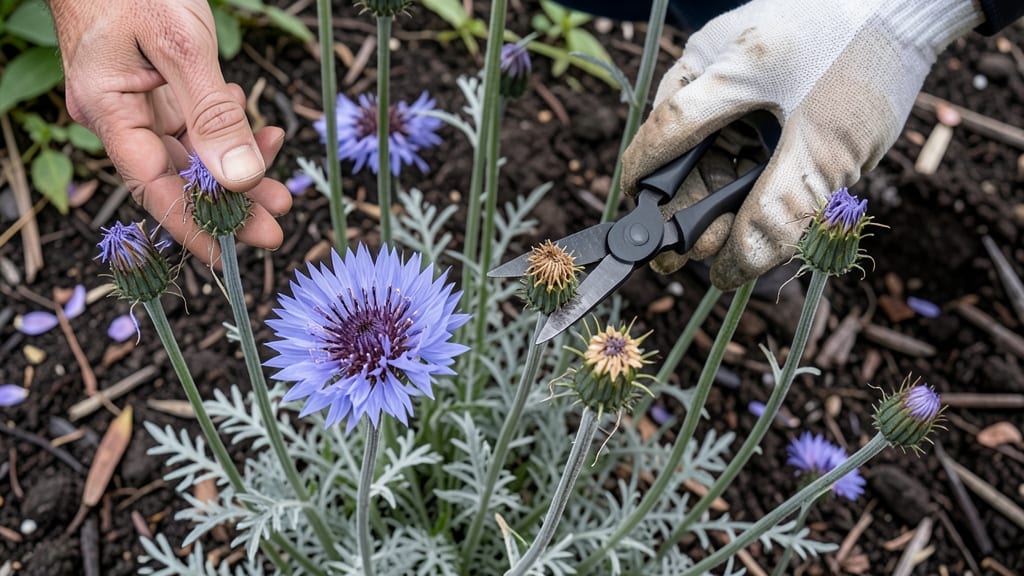
Your cornflowers could bloom nonstop this summer—just snip the right way. ✂️ Deadheading isn’t just about looks; it tricks these cheerful blue stars into producing fresh flowers instead of wasting energy on seed heads.
I’ve watched my own cornflowers go from a single flush of blooms to months of continuous color just by spending 10 minutes a week with sharp scissors.
The secret? Cut just above the next set of leaves (about ½ inch down the stem), not at the base. This prevents ugly stubs while encouraging new side shoots to form. Use clean, bypass pruners—dull blades crush stems—and work in the morning when flowers are crisp.
Over-pruning weakens the plant, but a little strategic snipping keeps them bushier and fuller than you’d expect.
By late summer, you’ll have sturdy stems packed with buds instead of leggy, seed-filled stalks. Toss the spent blooms into your compost pile—they’ll break down quickly, and the roots will thank you for the extra nutrients.
The trade-off? Cornflowers won’t self-seed as aggressively, but the trade is worth it for that endless summer display.
Pro tip: If your plants start looking tired by August, give them a light trim—cut back ⅓ of the oldest stems to refresh growth. Just don’t go overboard; cornflowers are tough but not indestructible.
With this method, your garden will stay vibrant until the first frost, and your neighbors will be asking for cuttings.
📚 In This Guide
- What you need
- Instructions
- Tips and common mistakes
- Wrapping up and next steps
What you need
- ● Pruning shears or sharp scissors: A clean, sharp pair (sterilized with rubbing alcohol) to make precise cuts—avoid dull tools that crush stems! 🔪
- ○ Gloves (optional but recommended): Lightweight garden gloves to protect your hands from thorns or prickly stems. Look for breathable, nitrile-coated ones for grip.
- ● Bucket or garden bag: A 5-gallon bucket or mesh bag to collect spent blooms and debris (prevents pests from nesting in your prunings!).
- ○ Water spray bottle (optional): A 16-oz spray bottle with water to mist stems before cutting—helps reduce sap oozing and keeps tools clean.
- ● Choose the right time: Deadhead on a dry, sunny morning (after dew has evaporated) to minimize stress on plants and reduce fungal risks.
- ● Identify spent blooms: Look for wilted petals or seed pods forming—these are your targets! 🎯
- ● Know your cornflower variety: Some types (like Centaurea cyanus) may self-seed aggressively; adjust deadheading frequency if you want more blooms or fewer volunteers next year.
Step-by-step instructions for deadheading cornflowers
Here's how I keep my cornflowers blooming like clockwork—no fancy tools, just a few simple cuts.
✂️ Step 1: Wait for Blooms to Fade Naturally
Let each flower head fully open and begin wilting before you touch it. Cornflowers follow their own rhythm—cutting too early removes the next bud's energy source. I watch for 2-3 days of browning petals before acting. This ensures the plant redirects nutrients to fresh blooms instead of wasted seed production.
Real talk: Don't deadhead in the morning heat. Wait until late afternoon when stems are firm and less likely to snap. You'll see the center of the flower turn from vibrant blue to a dull, papery brown—that's your cue.
✂️ Step 2: Cut at the Right Angle and Spot
Use clean, sharp pruners or even your fingers to pinch stems at a 45-degree angle, about ½ inch above the next set of leaves or side buds. This angle prevents water from pooling on the cut, which could rot the stem. I always make my cuts just above a leaf node where new growth emerges—this encourages branching and more flowers.
Never cut into woody stems. If the stem feels hard or woody, you've waited too long. Focus on the softer, green growth where new blooms form. You'll know you're doing it right when you see fresh side shoots emerging within 2-3 weeks.
✂️ Step 3: Remove Only the Wilted Flowers
Don't over-prune! Remove just the faded flower head, not the entire stem. The plant needs those lower leaves to photosynthesize and fuel new blooms. I like to work in sections—start with the oldest flowers and move toward the center of the plant. This keeps the plant balanced and prevents it from becoming top-heavy.
If your cornflowers are growing in a cluster, you might need to cut back ⅓ of the oldest stems completely to encourage new growth from the base. This is especially true if the plant looks leggy or crowded. You'll see fresh, vibrant foliage emerge within 10-14 days.
🌿 Step 4: Maintain Regular Deadheading Through the Season
Cornflowers bloom continuously from early summer until frost if you stay on top of deadheading. I set a reminder to check my plants every 5-7 days—this keeps the blooms coming without overwhelming me. The key is consistency. One missed cycle won't ruin your plant, but skipping regularly leads to fewer flowers and more seed pods.
Here's the thing—cornflowers reward patience. If you see seed pods forming, it's not too late. Simply remove the entire stem back to the base, and the plant will bounce back with new growth. You'll still get blooms, just slightly later in the season.
Tips & tricks for perfect cornflower deadheading
These simple techniques will keep your cornflowers blooming like crazy all season—no gardening degree required.
Timing Secret: The 2-3 days of browning petals is your golden window—this is when the plant has fully exhausted energy in that bloom and is ready to redirect nutrients. I've found that waiting until the very last petal turns papery brown (not just slightly wilted) gives me the most dramatic rebound in new blooms within 7-10 days. Trust me on this: cutting too soon removes the energy source for the next bud, leaving you with fewer flowers overall.
Precision Cutting: That 45-degree angle and ½-inch cut above the leaf node isn't just arbitrary—it's about water management and growth signals. The angled cut prevents water from pooling on the stem (which would cause rot), while cutting just above a leaf node sends the plant's growth hormones into action. I've seen cornflowers produce three new side shoots from a single cut when done this way, compared to just one when cut straight across.
Seasonal Strategy: The 5-7 day maintenance schedule works because cornflowers bloom in waves. By deadheading every week, you're essentially resetting the plant's bloom cycle to match its natural rhythm. In my experience, plants that get spotty deadheading (like every 10-14 days) end up with more seed pods and fewer flowers overall. Think of it like pruning roses—consistency is everything.
Recovery Tip: When you see those seed pods forming, don't panic! Simply removing the entire stem back to the base gives the plant a fresh start. I've revived plants that looked completely spent by doing this in late summer—new growth emerges within 10-14 days, and you'll still get a few more blooms before frost. It's like hitting the reset button on your cornflowers' bloom cycle.
Pro Tips for Deadhead Cornflowers
- These simple techniques will keep your cornflowers blooming like crazy all season—no gardening degree required.
- Timing Secret: The 2-3 days of browning petals is your golden window—this is when the plant has fully exhausted energ...
- Precision Cutting: That 45-degree angle and ½-inch cut above the leaf node isn't just arbitrary—it's about water mana...
Frequently asked questions
Got questions about deadheading cornflowers? You’re not alone! Here are some of the most common concerns—and their simple solutions—to keep your cornflowers blooming like crazy all season.
When is the best time to deadhead cornflowers?
Deadhead cornflowers as soon as their blooms start to fade—usually in the morning when flowers are still fresh. This prevents spent blooms from seeding and redirects energy to new growth. For maximum blooms, do it weekly or biweekly during peak flowering (late spring to early fall).
How often should I deadhead cornflowers?
Check your cornflowers every 3–5 days during their blooming season. If you’re busy, aim for once a week—just focus on removing fully wilted blooms. Over-deadheading (like trimming too aggressively) can stress the plant, so balance is key!
What if I forget to deadhead? Will my cornflowers still bloom?
Don’t worry! Cornflowers are hardy and may still produce a few blooms even if you skip deadheading. However, you’ll likely see fewer flowers and more seed pods. If you’re late, just snip the faded blooms and focus on keeping the plant healthy—it’ll bounce back!
Can I use deadheaded cornflower stems for anything?
Remove the blooms and use the stems in bouquets (they last longer than you’d think!), add them to compost, or even propagate new plants from healthy cuttings. Just avoid over-trimming—leave at least half the stem to support regrowth.
What if my cornflowers stop blooming after deadheading?
If blooms taper off, check for these fixes:
- Light: Ensure they get 6+ hours of sunlight daily—cornflowers need plenty!
- Water: Keep soil consistently moist but not soggy.
- Fertilizer: A light dose of balanced fertilizer (like 10-10-10) can boost growth.
- Pests: Inspect for aphids or spider mites—treat with neem oil if needed.
Can I deadhead cornflowers in containers or hanging baskets?
Yes! Deadheading works the same way for potted cornflowers. Just use small scissors or pruners to avoid damaging nearby blooms. For hanging baskets, trim spent flowers carefully to maintain shape—this keeps the plant compact and encourages more flowers to spill over the edges.
Wrapping up and next steps
Deadheading your cornflowers is a simple yet powerful way to keep your garden vibrant all season long!
By removing spent blooms regularly, you’ll encourage longer-lasting flowers and healthier plants—plus, you’ll save time on cleanup later. 🌸 With just a few minutes of care, you’ll be rewarded with a nonstop parade of color that turns heads (and maybe even your neighbors’ envy!)
Ready to take your garden to the next level? Grab your shears and start pruning today! For even more tips, check out our guide on extending the bloom season—your garden will thank you! 🌻