
How To
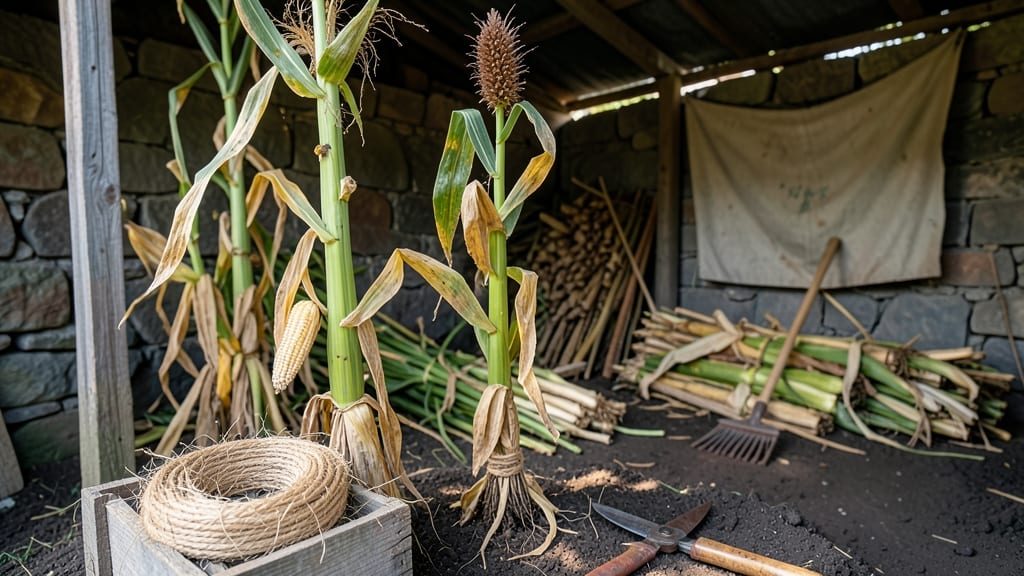
Dry corn stalks by bundling them upright in a well-ventilated area with 30-50% humidity, leaving 6-12 inches above ground. Hang bundles upside down or lay flat in a dry, shaded spot for 2-4 weeks, checking moisture levels weekly. Avoid direct sunlight or damp conditions to prevent mold or rot.
Drying corn stalks properly preserves their structural integrity for long-term use in crafts, animal bedding, or even compost.
The key is maintaining a consistent 10-15% moisture level—any higher risks mold, while too low can make them brittle. 🔥 I've found that indoor drying with fans works best in humid climates, while outdoor methods in dry regions speed up the process naturally.
The 6-12 inch clearance above ground prevents moisture absorption from damp soil, and checking weekly with a moisture meter ensures you catch issues early.
For even drying, bundle stalks in groups of 10-15 using plastic-coated wire instead of twine—it holds better and allows airflow. If you notice uneven drying, flip bundles halfway through the process. Hanging upside down prevents moisture buildup at the tips, while laying flat works well for larger batches.
Remember, the first week is critical—this is when most moisture loss occurs, so monitor closely to avoid spoilage.
💡 In This Article
- Optimal Conditions for Drying Corn Stalks Efficiently
- Tools and Techniques for Fast, Even Corn Stalk Drying
Optimal conditions for drying corn stalks efficiently
The science behind drying corn stalks revolves around achieving a 10-15% moisture content, which prevents both mold and brittleness. At this level, the cellulose fibers in the stalks stabilize without degrading.
Too much moisture (above 15%) creates the perfect environment for fungal growth, while too little (below 10%) makes the stalks prone to cracking under stress. Think of it like baking bread—too much steam ruins it, but too little leaves it dry and crumbly.
Temperature plays a crucial role too. Ideal drying conditions range from 60-80°F, where evaporation occurs steadily without accelerating microbial activity. Above 85°F, the stalks dry too quickly on the surface while remaining damp inside, creating hotspots for mold.
Humidity control is equally vital—keeping levels between 30-50% ensures moisture leaves efficiently. A dehumidifier indoors or choosing dry, breezy days outdoors makes all the difference. For example, I once dried stalks in a barn with 65% humidity and ended up with moldy bundles after just 10 days.
Airflow is the unsung hero of stalk drying. Stalks need 3-4 inches of space between bundles to allow air circulation, which carries moisture away. In indoor setups, position fans to create cross-ventilation—this mimics natural wind patterns. Outdoor drying works best in open areas where wind naturally agitates the air.
The trade-off? Indoor methods give you more control over humidity and temperature, while outdoor methods leverage free solar energy. For instance, in Arizona's dry climate, stalks dry in 10-14 days outdoors, while in Florida's humidity, it can take twice as long.
Light exposure matters too—direct sunlight causes uneven drying and can bleach the stalks, making them less attractive for crafts. Instead, choose shaded areas or use 50% shade cloth if drying outdoors. The stalk tips are particularly vulnerable; leaving 6-12 inches above ground prevents moisture wicking from damp soil.
This simple adjustment can extend drying time by 3-5 days in humid conditions. The first week is the most critical—this is when most moisture loss occurs, so check weekly with a moisture meter or by snapping a stalk (it should break cleanly at 10-15% moisture).
Pest control is another factor often overlooked. Rodents and insects are drawn to damp stalks, so store dried bundles in mesh bags or elevated racks. I've seen entire batches ruined by mice in just two nights.
The key is combining proper drying conditions with smart storage—once stalks reach the ideal moisture level, seal them in airtight containers with silica gel packets to maintain dryness long-term. This two-step process ensures your stalks stay usable for crafts, bedding, or compost for months.