
How To
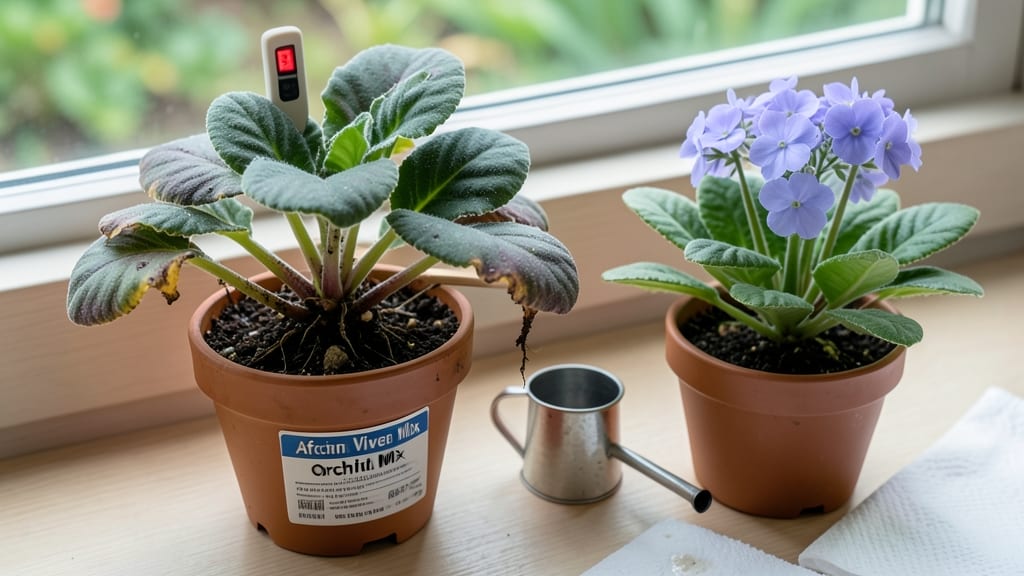
How to fix an overwatered African violet—your plant might look like it's drowning, but there's still hope. 💚 I've nursed back plants that looked completely done for, and with the right approach, you can too. The key is acting fast before root rot sets in permanently.
First, stop watering immediately and gently remove the plant from its pot. If the soil smells sour or the roots look mushy and black, you're dealing with root rot.
The good news? You can still save it by trimming away the damaged roots with clean scissors and repotting in fresh, well-draining soil.
Once repotted, place your violet in bright, indirect light and only water when the top inch of soil feels completely dry. Within 2-3 weeks, you'll see new growth pushing through, and those familiar purple blooms will return—stronger than ever.
This method works for both soil-grown and hydroponic violets, and the same principles apply whether you're dealing with a single plant or a whole collection. Prevention is easier than fixing, but when overwatering happens, this is your go-to revival plan.
Root Causes of Overwatered African Violets
African violets are delicate beauties that thrive in balance—but when the scales tip too far toward moisture, their health plummets. Understanding why this happens is the first step to saving your plants. Here’s a breakdown of the most common culprits, backed by science and actionable insights.
African violets (Saintpaulia spp.) are epiphytes, meaning they naturally grow in humid, well-draining environments. However, their roots are highly sensitive to waterlogging—a condition where soil remains saturated for prolonged periods. When you water too often (e.g., every 1–2 days), several issues arise:
- Oxygen deprivation: Roots need oxygen to respire and absorb nutrients. Soggy soil displaces oxygen, suffocating roots and triggering anaerobic respiration, which produces toxic ethanol and hydrogen sulfide. 🧪 Result: Root rot sets in within 24–48 hours.
- Fungal invasions: Wet conditions create a playground for pathogens like Phytophthora and Pythium. These fungi clog root cells, blocking water and nutrient uptake. 🍄 Symptom: Yellowing leaves despite "wet" soil.
- Nutrient leaching: Overwatering flushes soluble nutrients (like nitrogen and potassium) out of the soil before roots can absorb them. 🌱 Outcome: Stunted growth and weak stems.
Pro Tip: Stick your finger 1 inch into the soil—if it’s damp, wait. African violets prefer the "top inch dry" method, not bone-dry soil. 💡
Even with perfect watering habits, African violets sink if their pots lack drainage. Here’s why:
| Problem | Scientific Impact | Visual Clues |
|---|---|---|
| No drainage holes | Water pools at the bottom, creating a hydrostatic pressure that forces roots to drown. Roots also can’t "breathe" in compacted, waterlogged soil. | Mushy, black roots; soil stays clumpy even after watering. |
| Compacted or heavy soil | Clay or garden soil repels air pockets, trapping water. African violets need 50–60% porosity in their mix to thrive. | Soil cracks when dry but stays dense when wet; roots appear gnarled. |
| Improper pot material | Terracotta "breathes," but plastic or glazed pots trap moisture. Capillary action in plastic draws water upward, keeping roots wet longer. | Condensation inside plastic pots; roots smell sour. |
Fix It: Use terracotta or fabric pots with holes, and amend soil with perlite or orchid bark (20–30%) to improve aeration. ✨
African violets hate extremes, and humidity plays a sneaky role in overwatering. Here’s how:
- High humidity (>60%) + poor airflow: Moisture lingers on leaves and soil, mimicking a rainforest—but without sunlight to evaporate excess water. 🌧️ Result: Fungal diseases like Botrytis (gray mold) thrive, clogging stomata and preventing transpiration.
- Cold drafts or AC vents: Cool temperatures slow evaporation, keeping soil damp longer. Roots in the 60–75°F range absorb water efficiently; below 55°F, they shut down, trapping excess moisture.
- Low light + overwatering: In dim conditions, plants transpire less, so water accumulates in the soil. Rule of thumb: Less light = less water.
Pro Tip: Place violets near east-facing windows (bright, indirect light) and use a small fan on low to mimic airflow in their native habitat. 🌿
African violets despise "roomy" pots or nutrient-dense mixes. Here’s why:
- Oversized containers: Large pots hold excess water for days. Roots in a 4–6 inch pot dry out faster than in a 12-inch one. 📏 Math: Volume ↑ = drying time ↑.
- Peat-heavy or synthetic soils: Pure peat retains water like a sponge, while coconut coir can compact over time. Ideal mix: 40% peat, 30% perlite, 30% vermiculite.
- No wicking layer: Some pots lack a wicking fabric or gravel layer at the bottom, causing water to pool against roots instead of draining.
Action Step: Repot in a slightly snug pot (1 inch larger than the root ball) with a chunky, airy mix. 🔄
Revive Your African Violet Now
Overwatering can feel like a death sentence for your African violets, but with the right steps, you can nurse them back to health—even if they look sad and soggy. The key is acting fast, diagnosing the damage, and applying targeted fixes.
Below, we’ll map the most common overwatering symptoms to practical solutions, plus prevention tips to keep your violets thriving long-term.
Cause: Soggy soil suffocates roots, causing leaves to turn yellow or mushy. Fix:
- Remove the plant gently from its pot and inspect the roots. Healthy roots are firm and white; mushy or black roots are rotten.
- Trim the damage 🔪 with sterilized scissors, cutting away only the affected sections.
- Repot in fresh soil 🌱—use a well-draining African violet mix (or add perlite/pumice for aeration).
- Let it dry out ⏰ for 2–3 days before watering again. Place the pot on a tray to catch excess moisture.
Prevention Tip: 💡 Water only when the top inch of soil feels dry. Stick your finger in—if it’s damp, wait!
Cause: Overwatering disrupts nutrient uptake, making leaves limp or curled. Fix:
- Assess root health 👨🔬—if roots are slimy or black, they’re drowning. Healthy roots should be firm and pale.
- Rinse the roots 🚿 under lukewarm water to remove old soil and inspect for rot.
- Repot in a slightly larger container (but not too big—African violets hate excess space). Use a terracotta pot (it dries faster than plastic).
- Water lightly 💦 only after the soil is bone-dry. Bottom-watering (placing the pot in a tray of water for 10 mins) helps avoid over-saturation.
Pro Tip: ✨ Never let violets sit in saucers of water—this is a fast track to root rot!
Cause: Overwatering flushes out nutrients but leaves behind salt deposits, which crisp edges. Fix:
- Flush the soil 🚰 by watering thoroughly with distilled or rainwater (tap water can add salts).
- Wipe leaves 🧼 with a damp cloth to remove dust or mineral buildup.
- Adjust watering habits—use room-temperature water and avoid getting leaves wet (they rot easily).
- Boost humidity 🌡️ by placing the pot on a tray of pebbles with water (ensure the pot isn’t sitting in it).
Prevention Tip: 🎯 Rotate your violets weekly so all sides get even light—uneven growth stresses plants.
Cause: Excess moisture invites fungal growth (like gray mold or powdery mildew). Fix:
- Remove moldy leaves ❌ immediately with clean scissors.
- Sterilize the pot 🧴 by wiping it with a 1:10 bleach-water mix (rinse well).
- Repot in fresh, sterile soil and avoid watering until the topsoil is dry.
- Improve airflow 🌬️ by spacing plants apart and placing a fan nearby (on low setting).
Emergency Fix: 💪 For stubborn fungus, spray leaves with neem oil solution (1 tsp neem oil + 1 quart water)—reapply weekly until gone.
Cause: Overwatered violets often stop blooming due to stress or nutrient loss. Fix:
- Fertilize lightly 🌱 after 4–6 weeks of recovery with a balanced African violet fertilizer (diluted to half strength).
- Ensure bright, indirect light ☀️ (east or north-facing windows are ideal).
- Pinch off dead flowers 🌸 to redirect energy to new growth.
- Water consistently but sparingly—violets bloom best when soil is evenly moist, not soggy.
Bloom Boost Tip: 💡 Rotate the pot weekly so all sides get equal light, preventing lopsided growth.
To keep your African violets happy and healthy:
- Pot size: Use containers 4–6 inches wide (too big = water traps).
- Soil mix: 60% peat/perlite + 40% vermiculite for perfect drainage.
- Watering routine: Bottom-watering (place pot in a tray of water for 10 mins, then drain).
- Light check: No direct sun—south windows can scorch leaves.
- Humidity control: 40–50% is ideal (use a hygrometer if unsure).
Remember: African violets are resilient! With these fixes, your plant can bounce back in 4–8 weeks. The key is patience and consistency—don’t drown them again! 🌿
Frequently asked questions
How do I know if my African violet is overwatered?
Check for these telltale signs: yellowing leaves, mushy stems, or soil that smells sour. Healthy roots should be firm and white, while overwatered roots turn black and mushy. If the leaves feel limp or the plant wobbles easily, it's a red flag.
Can I save an African violet with completely black roots?
Yes, but you must act fast! Trim away all black, mushy roots with clean scissors, then repot in fresh, well-draining soil. Use a terracotta pot to help prevent future issues. Keep the soil dry for a few days while the plant recovers.
What's the best way to water African violets after overwatering?
Switch to the bottom-watering method: Place the pot in a tray of water for 10-15 minutes, then drain completely. This prevents over-saturation while keeping roots hydrated. Always check soil moisture before watering again.
How long does it take for an overwatered African violet to recover?
With proper care, you'll typically see new growth in 2-4 weeks. Full recovery may take up to 8 weeks depending on how severe the damage was. Be patient and maintain consistent care during this time.
Can I use hydrogen peroxide to help revive my overwatered violet?
Yes! Mix 1 part 3% hydrogen peroxide with 4 parts water and use it to water your plant. This helps kill harmful bacteria and fungi while providing oxygen to the roots. Use it every 2-3 days until the plant shows signs of recovery.