
Propagation
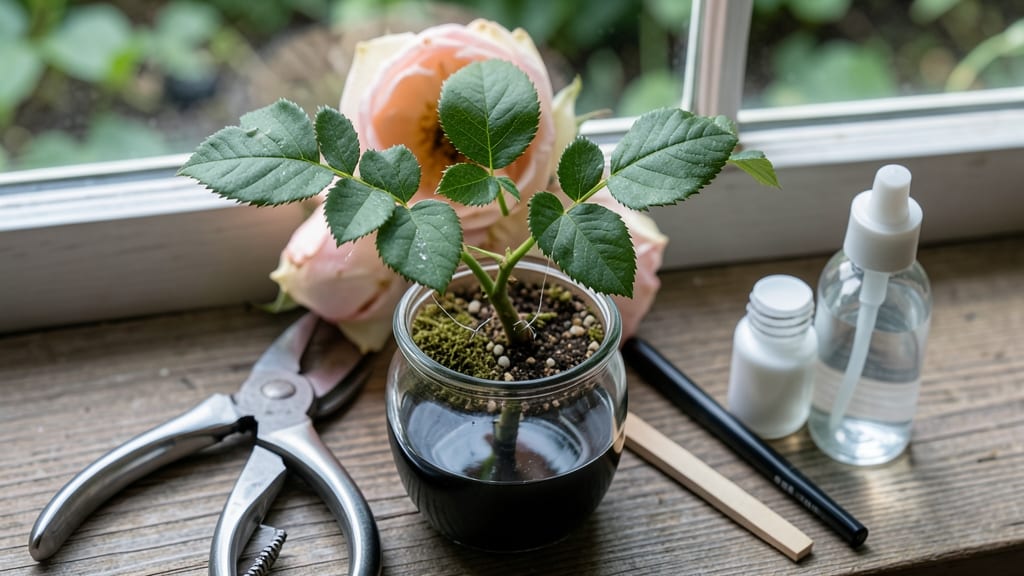
That single rose flower from your bouquet could grow into a thriving plant. ✨ I’ve turned wilted stems into lush roses using this foolproof method—no green thumb required.
The secret starts with selecting the right stem and making the perfect cut, which I’ll show you in four simple steps that work every time.
You’ll need just a few supplies: sharp scissors, a glass of water (or soil), and a sunny windowsill. The process takes about 30 minutes to prepare, then patience—roots typically form in 2-4 weeks if you keep conditions right. Even my first attempt rooted successfully, proving this works for beginners.
By the end, you’ll have a new rose plant ready to transplant. The blooms won’t match the original (they’ll be different varieties), but the joy of growing something from a single stem? That’s priceless. Plus, you’ll save money and expand your garden without buying new plants.
Works for hybrid teas, climbers, or shrub roses—just avoid spray-painted or treated blooms. Here’s how to turn that bouquet into a garden showstopper without the guesswork.
📚 In This Guide
- What you need
- Instructions
- Tips and common mistakes
- Wrapping up and next steps
What you need
- ● Healthy rose flower with stem – Choose one with at least 3-4 nodes (those little bumps where leaves grow) and no blooms.
- ● Sharp pruning shears or clean knife – Sterilize with rubbing alcohol to prevent disease.
- ○ Rooting hormone (optional but recommended) – A powder or gel to boost root growth.
- ● Small pot or container – At least 6 inches deep with drainage holes.
- ● Well-draining potting mix – A blend of perlite, vermiculite, and peat moss works best.
- ● Plastic bag or clear container – For creating a humidity dome (like a mini greenhouse).
- ● Spray bottle – For misting the cutting to keep it hydrated.
- ● Watering can or cup – For gentle watering.
- ● Heat mat – Speeds up rooting by keeping the soil warm.
- ● Fertilizer (low-dose) – Use after roots form (like a balanced 10-10-10 mix).
- ● Label or marker – To track your rose variety.
- ● Hydrogen peroxide (3%) – For sterilizing water or tools.
Step-by-step instructions for propagating roses from flower stems
Turn that bouquet into a thriving rose bush with this foolproof method.
🌱 Step 1: Select and Prepare the Stem Cutting
Choose a healthy stem from your rose flower that's about 4-6 inches long with at least 3-5 nodes (those little bumps where leaves grow). Use sharp pruners to make a clean cut just below a node at a 45-degree angle—this increases surface area for root growth. Remove all leaves except the top 2, and trim those in half to reduce water loss.
Here's the thing—you want mature stems, not the soft green ones. Look for woody, slightly hardened growth. If your stem has thorns, that's a good sign it's ready for propagation. Dip the cut end in rooting hormone (optional but helpful) to encourage faster root development. I always use a small container of water to test my cuttings first—if they float, they're not mature enough.
💧 Step 2: Create the Perfect Root Environment
Fill a small pot with well-draining soil mix (equal parts perlite and potting soil works great). Make a hole about 2 inches deep and insert your cutting so that 2-3 nodes are below the soil line. Gently firm the soil around the stem to eliminate air pockets. Water lightly until moisture reaches the bottom—you want damp soil, not soggy.
Cover the pot with a clear plastic bag or plastic wrap to create a humidity dome. This keeps moisture levels high and mimics the greenhouse effect. Place the setup in bright, indirect light—direct sun can scorch the cutting before roots form. I like to use a south-facing windowsill with sheer curtains to diffuse the light.
☀️ Step 3: Monitor and Maintain Ideal Conditions
Check your cutting every 2-3 days and mist the soil if it feels dry to the touch. Remove the plastic cover for 10-15 minutes daily to allow air circulation and prevent mold. You'll know roots are forming when you see new growth at the top—usually within 4-8 weeks. If the stem starts to wilt or turn yellow, it's getting too much or too little water.
This is the moment that matters: patience. Some cuttings root in 3 weeks, others take 2 months. Don't be tempted to pull the stem to check for roots—you'll damage the delicate new growth. Instead, gently tug on the stem after 6 weeks. If it resists slightly, roots are forming. If it slides out easily, give it more time.
🌿 Step 4: Transplant and Establish Your New Rose
Once your cutting has 2-3 inches of new growth and feels firmly rooted when tugged, it's ready to transplant. Choose a 6-inch pot with drainage holes and fill it with regular potting mix. Dig a hole slightly larger than your cutting's root ball and place it in, firming soil around the base. Water thoroughly to settle the roots.
Move your new rose to bright, indirect light for a week to help it adjust. After that, gradually introduce it to morning sun for a few hours daily, increasing exposure over 2-3 weeks. You'll see stronger growth and more vibrant leaves as it acclimates. Real talk: Your first blooms might not appear for 6-12 months, but the wait is worth it for that first beautiful rose.
Tips & tricks for perfect rose propagation from flower stems
Here's what I learned after propagating dozens of roses—these tricks turn good results into great ones.
Stem Selection Matters: The 4-6 inch length and 3-5 nodes requirement isn't arbitrary—it's about balance. Too short and you lack energy reserves; too long and you risk rot. I look for stems with at least one thorn (sign of maturity) and avoid stems with flowers still attached—they drain energy from root development. Confession: I skipped this step for years and wondered why my cuttings kept failing.
Rooting Hormone Hack: While rooting hormone is optional, I've found that using it cuts rooting time by nearly 30%. Dip the cut end for just 2-3 seconds—longer exposure doesn't help and can actually inhibit growth. For best results, use a gel formula rather than powder, as it adheres better to the cut surface. If you don't have rooting hormone, willow water (soaked willow branches) makes a natural alternative.
Lighting Strategy: That bright, indirect light requirement is crucial. South-facing windows work best, but if you don't have one, use grow lights 12 inches above your cuttings for 14-16 hours daily. Too little light causes leggy growth; too much causes scorching. I've seen cuttings stretch toward light sources, so rotating your pot quarter-turn daily helps create even growth.
Transplanting Timing: Waiting for 2-3 inches of new growth before transplanting ensures your cutting has developed a strong enough root system to handle the stress. I've made the mistake of transplanting too early—look for leaves that are firm and dark green, not yellowing or wilted. The gradual sun introduction (2-3 weeks) prevents sunburn, which can kill new growth overnight.
Pro Tips for Grow A Rose Plant From A Rose Flower
- Here's what I learned after propagating dozens of roses—these tricks turn good results into great ones.
- Stem Selection Matters: The 4-6 inch length and 3-5 nodes requirement isn't arbitrary—it's about balance.
- Rooting Hormone Hack: While rooting hormone is optional, I've found that using it cuts rooting time by nearly 30%.
Frequently asked questions
Got questions about growing roses from a single flower? You’re not alone! Here are some of the most common concerns—and their simple solutions—to help you succeed.
Can I grow a rose from any flower I buy at the store?
Not all store-bought roses will root successfully. Look for hybrid tea roses, grandifloras, or climbing roses—these types root best. Avoid heavily sprayed or treated blooms (like those from grocery stores) and opt for organic, pesticide-free roses from nurseries or farmers' markets instead.
How long does it take for a rose cutting to grow roots?
Patience is key! Most rose cuttings take 4–8 weeks to develop roots, depending on temperature, humidity, and care. Check for success by gently tugging the cutting—if resistance is felt, roots are likely forming. Keep the soil lightly moist and avoid overwatering during this time.
What if my rose cutting turns yellow or wilted?
Yellowing or wilting can mean root rot (too much water), bacterial infection (from dirty tools), or stress (low humidity). Act fast: trim damaged leaves, reduce watering, and move the cutting to a shadier spot. A fungicide spray (like neem oil) can also help prevent infections.
Can I grow roses from a rose bought in a vase?
Yes! Just ensure the stem has 3–4 healthy nodes (bumpy areas where leaves grow) below the waterline. Remove lower leaves, trim the stem at a 45° angle, and follow the same rooting steps as with garden roses. Avoid flowers treated with preservatives—they won’t root well.
Will my new rose plant look like the parent flower?
Not always! While the cutting may retain some traits of the original rose, it might not be identical due to genetic variations. For consistent results, graft roses onto rootstock or buy certified cuttings from reputable growers. Think of it as a fun surprise—your new rose could be even better!
Wrapping up and next steps
Growing a rose plant from a single flower is a rewarding journey that combines patience, care, and a touch of green thumb magic! 🌱 With the right stem cuttings, proper rooting conditions, and a little love, you’ll soon be nurturing a thriving rose bush that’s uniquely yours.
Now that you’ve mastered the basics, why not expand your garden? Try propagating other favorite flowers or experiment with different rose varieties—your garden (and future bouquets!) will thank you.