
Size
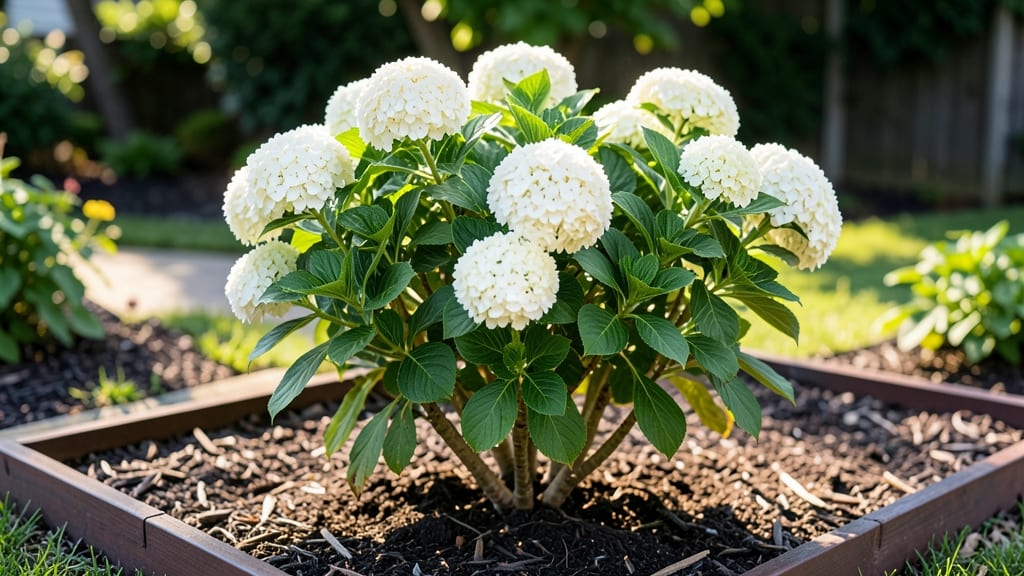
How to grow an Annabelle hydrangea turns summer gardens into dreamy white clouds. 🌿 I’ve grown them for years, and their bold, 12-inch blooms require almost no fuss once you get the basics right—sunlight, soil, and a little patience. The secret? They bloom on old wood, so pruning is simple (no complicated timing or cutting back to buds). Most people overwater or plant them in too-shady spots, which leads to floppy stems or sparse flowers. These plants thrive in morning sun with afternoon shade, well-draining soil, and consistent moisture—not soggy roots. Once established, they’re nearly drought-tolerant and handle heat better than you’d expect. By late summer, you’ll have showstopping clusters that last for weeks, even after cutting for bouquets. The best part? They keep getting bigger each year with minimal effort. Here’s how to set yours up for success without the guesswork.
Start with part-sun exposure (4–6 hours of morning light) and moist, slightly acidic soil (pH 5.5–6.5). Amend heavy clay with compost to improve drainage—waterlogged roots are the #1 killer of Annabelle hydrangeas. Plant in spring or early fall, spacing bushes 3–4 feet apart to give them room to grow.
Water deeply once a week (more in extreme heat) and mulch around the base to retain moisture. Fertilize lightly in spring with a balanced formula—too much nitrogen means fewer flowers. The key to those iconic white blooms?
Prune right after flowering (late summer) to remove dead stems and shape the plant.
Yellowing leaves usually mean overwatering or poor drainage, while small blooms often signal too much shade or nitrogen. Move plants to sunnier spots if flowers stay tiny, and prune back 1/3 of the oldest stems every few years to encourage new growth.
With the right care, your Annabelle will reward you with garden-center-worthy blooms for decades.
📚 In This Guide
- What you need
- Instructions
- Tips and common mistakes
- Wrapping up and next steps
What you need
- ● Annabelle hydrangea plant – Choose a healthy Hydrangea arborescens 'Annabelle' from a nursery (bare-root or potted).
- ● Well-draining potting mix or garden soil – A mix of 60% topsoil, 30% compost, and 10% perlite or sand works best.
- ● Garden gloves – To protect your hands while planting or pruning.
- ● Trowel or shovel – For digging planting holes (6–8 inches wide and deep).
- ● Watering can or hose with a gentle spray nozzle – Annabelle hydrangeas love consistent moisture.
- ● Organic mulch (shredded bark or pine straw) – Apply a 2–3 inch layer around the base to retain moisture and regulate soil temperature.
- ● Balanced, slow-release fertilizer (10-10-10 or 20-20-20) – Use sparingly (follow package instructions).
- ● Pruning shears – For shaping in early spring (though Annabelle hydrangeas require minimal pruning!).
- ● Soil pH test kit – Annabelle hydrangeas thrive in neutral to slightly acidic soil (pH 6.0–7.0).
- ● Plant support (stake or cage) – If your hydrangea grows tall, a lightweight stake can provide stability.
- ● Rain gauge or moisture meter – Helps monitor watering needs (aim for 1–1.5 inches per week).
Step-by-step instructions for growing Annabelle hydrangea
Here's how to cultivate these classic bloomers with effortless care and stunning results.
🌱 Step 1: Choose the Perfect Planting Location
Annabelle hydrangeas thrive in partial shade, receiving morning sun and afternoon shade in hot climates. I always look for a spot with dappled sunlight—think under deciduous trees or along a north-facing wall. These plants tolerate full shade but may produce fewer blooms.
The ideal location also has well-draining soil with a slightly acidic pH (5.2-6.0). Test your soil with a simple kit—if it's too alkaline, amend with sulfur or peat moss before planting. Avoid low spots where water pools, as soggy roots lead to root rot and floppy stems.
🪴 Step 2: Plant in Early Spring or Fall
Dig a hole twice as wide as the root ball but only as deep as the container's base. Gently remove the plant from its container and loosen any circling roots with your fingers. Place it in the hole so the top of the root ball sits level with the surrounding soil—burying too deep suffocates the plant.
Backfill with native soil mixed with 2-3 inches of compost to improve fertility. Water deeply to settle the soil and eliminate air pockets. Mulch with 2-3 inches of organic mulch (like shredded bark) to retain moisture and regulate soil temperature. Keep mulch 2-3 inches away from the stem to prevent rot.
☀️ Step 3: Water Consistently for Established Blooms
Annabelle hydrangeas need 1-1.5 inches of water weekly, either from rainfall or irrigation. I water deeply twice a week during dry spells, aiming for moist but not soggy soil. Check moisture by sticking your finger 2 inches deep—if it feels dry, it's time to water.
These plants are drought-tolerant once established, but consistent moisture is key for large blooms. Yellowing leaves often signal underwatering, while brown, crispy edges mean too much sun exposure. Adjust your watering schedule based on your local climate—container-grown plants need more frequent watering than in-ground specimens.
✂️ Step 4: Prune Strategically for Year-Round Health
Annabelle hydrangeas bloom on old wood, so pruning is minimal. The only time I prune is right after flowering in late summer or early fall. Remove dead, damaged, or crossing branches with clean cuts just above a leaf node. Never prune back into old wood—you'll sacrifice next year's blooms.
If your plant grows leggy, you can lightly trim back overgrown stems by one-third in early spring. This encourages bushier growth but won't affect flowering. Always use sterilized pruners to prevent disease spread, and dispose of pruned material promptly.
🌿 Step 5: Fertilize for Vibrant Blooms
Feed your Annabelle hydrangea once in early spring with a balanced, slow-release fertilizer (10-10-10). I avoid high-nitrogen fertilizers—they promote leafy growth at the expense of blooms. Instead, I opt for a hydrangea-specific fertilizer or one formulated for flowering shrubs.
For an organic approach, work 2-3 inches of compost into the soil around the base in spring. Avoid fertilizing in late summer or fall, as new growth won't harden off before winter. Over-fertilizing leads to weak stems and smaller blooms, so follow package instructions precisely.
Tips & tricks for perfect Annabelle hydrangea cultivation
Took me years to perfect these simple secrets—your Annabelle hydrangea will thank you with bigger blooms and fewer headaches.
Soil Prep Secret: Before planting, mix 2-3 inches of compost directly into the bottom of the hole (not just around the roots) to create a nutrient-rich zone where roots will spread. This mimics their natural understory habitat and gives them an instant energy boost. I also add a handful of sulfur granules if my soil test shows pH above 6.0—this ensures that slightly acidic range (5.2-6.0) right from day one.
Watering Wisdom: The 1-1.5 inches weekly guideline works for established plants, but newly planted Annabelle hydrangeas need deep watering every 3-4 days until they're fully rooted (about 6-8 weeks). Use a moisture meter or dig down 4-6 inches to check—roots should be moist but not soggy. Container-grown plants dry out faster, so I water mine daily during summer heatwaves, even if it's not on the schedule.
Pruning Precision: When trimming back leggy stems by one-third in early spring, always cut just above a leaf node where new growth will emerge. I use sharp, sterilized pruners and make cuts at a 45-degree angle about 1/8 inch above the node. This angle helps water run off the cut and prevents rot. Never trim more than one-third—this plant's beauty comes from its established wood structure.
Fertilizer Timing: That single spring feeding with 10-10-10 fertilizer is non-negotiable, but here's the pro move: split it into two applications. Use half when you plant in spring, then the other half 6-8 weeks later when you see new growth. This staggered approach prevents nutrient burn while still giving your plant the boost it needs for that second flush of blooms in late summer.
Pro Tips for Grow Annabelle Hydrangea
- Took me years to perfect these simple secrets—your Annabelle hydrangea will thank you with bigger blooms and fewer headaches.
- Soil Prep Secret: Before planting, mix 2-3 inches of compost directly into the bottom of the hole (not just around the roots) to create a nutrient-rich zone where roots will spread.
- Watering Wisdom: The 1-1.5 inches weekly guideline works for established plants, but newly planted Annabelle hydrangeas need deep watering every 3-4 days until they're fully rooted (about 6-8 weeks).
Frequently asked questions
Got questions about growing Annabelle hydrangeas? You’re not alone! Here are answers to the most common concerns—from pruning puzzles to pest problems—so you can enjoy those iconic globes of blooms with confidence.
How do I know if my Annabelle hydrangea is getting enough sun?
Annabelle hydrangeas thrive in partial shade (4–6 hours of sunlight daily). Too much sun (especially in hot climates) can scorch leaves or cause blooms to fade. If leaves look crispy or flowers wilt, move it to a spot with morning sun and afternoon shade. Yellowing leaves? It might need more shade.
When should I prune my Annabelle hydrangea, and how much?
Prune in late winter or early spring (before new growth starts). Cut back dead or weak stems to the ground and trim others by ⅓ to ½. Avoid pruning in fall—it removes next year’s flower buds! Pro tip: Never prune after July, or you’ll sacrifice blooms.
What pests or diseases should I watch for, and how do I treat them?
Common issues include:
- Spider mites: Tiny webs on undersides of leaves? Spray with water or use neem oil.
- Powdery mildew: White dust on leaves? Improve airflow and apply fungicide.
- Leaf spot: Brown spots? Remove infected leaves and avoid overhead watering.
Prevent pests with mulch and regular watering (keep soil moist but not soggy).
Why aren’t my Annabelle hydrangeas blooming?
No blooms? Check these fixes:
- Pruned too late (after July)? Next year’s buds are gone!
- Not enough sun? Move to a brighter spot (but avoid harsh afternoon sun).
- Over-fertilized? Too much nitrogen = leafy growth, no flowers. Use a balanced bloom booster in spring.
- Young plant? Annabelles often take 2–3 years to reach full bloom potential.
Can I grow Annabelle hydrangeas in containers? If so, what size pot do I need?
Yes! They adapt well to containers. Choose a pot at least 18–24 inches wide and deep with drainage holes. Use well-draining potting mix and fertilize monthly in growing season. Move pots to protected shade in winter if temps drop below 10°F.
Wrapping up and next steps
Growing an Annabelle hydrangea is a rewarding journey that brings bold, lush blooms to your garden with minimal fuss! 🌸 With the right location, soil, and care, this low-maintenance beauty thrives even for beginners. Remember: patience pays off—your hydrangea will reward you with stunning, snowball-like flowers year after year.
Now that you’re armed with the know-how, roll up your sleeves and get planting! 🌱 Start by selecting a sunny spot, prepping the soil, and giving your Annabelle the love it deserves.
Before you know it, your garden will be the talk of the neighborhood—one bloom at a time.