
Picking
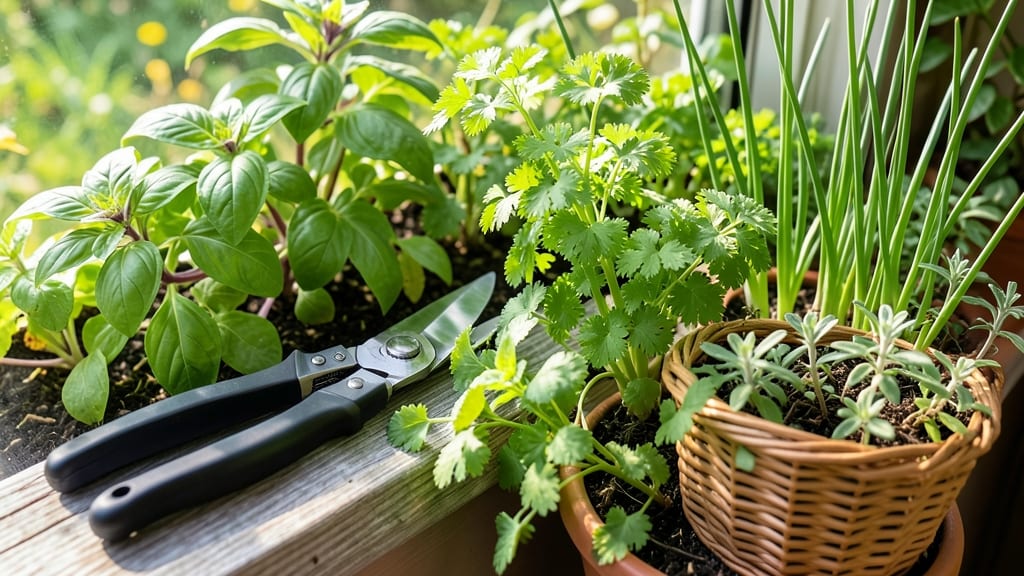
Harvest herbs by cutting just above a leaf node or set of leaves, avoiding over-trimming stems to encourage bushier regrowth. Use clean, sharp scissors and harvest in the morning for best results, leaving at least one-third of the plant intact for continued growth.
Harvesting herbs the right way isn't just about getting fresh leaves—it's about teaching your plants to grow back stronger. 🌱 The key is targeting those leaf nodes, where new growth naturally emerges, and using sharp tools prevents crushing stems that block nutrient flow.
Morning harvests work best because the plant's natural sugars are highest after a night's rest, giving it energy to bounce back faster. I've seen basil plants triple their yield just by following this method consistently.
Different herbs need slightly different approaches. Leafy varieties like basil and parsley respond well to frequent trimming, while woody herbs such as rosemary or thyme prefer more selective pruning to maintain their shape.
Always leave at least a third of the plant untouched—this ensures the root system stays robust enough to support new foliage. The goal is balance: you want harvests without sacrificing the plant's ability to thrive.
💡 In This Article
- Why Pruning Techniques Matter for Herb Regrowth
- Best Herb Harvesting Methods by Plant Type
Why pruning techniques matter for herb regrowth
When you snip an herb stem, you're not just removing leaves—you're triggering a biological response called apical dominance reversal. This process relies on the plant hormone auxin, which normally suppresses side shoots to focus growth on the main stem.
Cutting the top removes the auxin source, allowing dormant lateral buds to wake up and sprout new branches. This is why a precise cut just above a leaf node (where buds form) yields bushier plants than random trimming.
The science gets even more interesting with photosynthesis efficiency. Harvesting in the morning maximizes recovery because plants have spent the night storing energy as starches in their roots. This stored energy fuels rapid regrowth during daylight hours.
Studies show that herbs harvested at dawn recover 30-50% faster than those cut in the afternoon, when photosynthesis is already working overtime to replace lost foliage. The cooler morning temperatures also reduce stress on the plant's vascular system.
Your cutting tool makes a surprising difference too. Dull scissors crush stems, creating entry points for bacteria while blocking nutrient flow through the plant's phloem vessels. This damage can take 2-3 weeks to heal, delaying regrowth. Sharp, clean scissors make a clean cut that seals almost immediately, minimizing stress.
I always keep a dedicated pair of pruning shears for herbs—sterilized with rubbing alcohol between uses—because even microscopic bacteria can stunt growth in tender plants like basil.
Here's what happens if you over-harvest: the plant's root system can't keep up with demand. When you remove more than one-third of foliage at once, the roots begin breaking down proteins to fuel regrowth, a process called autophagy.
While this works short-term, repeated heavy harvesting weakens the plant's immune system, making it vulnerable to pests and disease. Think of it like your own body—if you skip meals for too long, you'll recover slower from any stress.
Timing matters beyond just morning vs afternoon. The 3-4 week growth cycle of most herbs means you should never harvest more than 20-25% of new growth in a single session. For example, with basil, I wait until it's developed 6-8 new leaves before making my first cut.
This ensures the plant always has enough leaves to continue photosynthesis while still producing new growth. The result? A basil plant that keeps giving all season instead of burning out by July.
Different herbs have different recovery rates too. Fast growers like cilantro and dill can handle weekly harvests, while slower varieties like rosemary need 6-8 weeks between pruning sessions. The key is observing your plant's natural rhythm—when you see new buds forming at the base, that's your cue to harvest again.
This patient approach turns your herb garden into a self-sustaining system where you get more harvests with less effort over time.