
Blooming
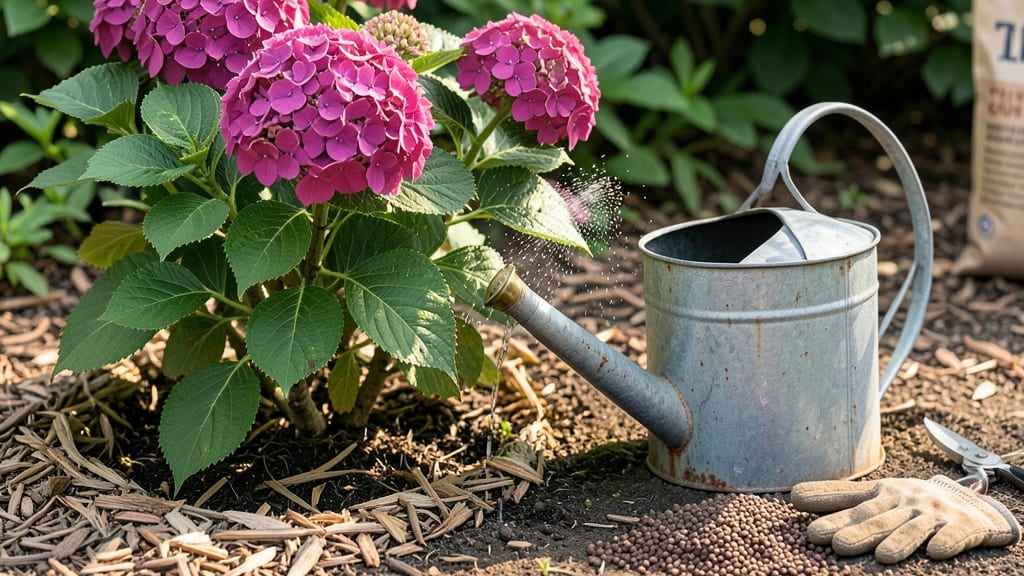
Here’s how to keep hydrangeas blooming all summer—until frost—if you fix these three mistakes. 🌸 The secret isn’t just water or fertilizer, but understanding how acidic soil and pruning timing work together.
I’ve had hydrangeas fade by July for years until I cracked the code: the right soil pH, precise pruning, and seasonal adjustments that keep them flowering nonstop.
The biggest blooming killer? Pruning at the wrong time. Cut back last year’s stems in late winter (not spring), and you’ll trigger fresh growth that blooms all summer.
Most people overwater too—hydrangeas hate soggy roots. Aim for 1-1.5 inches of water per week, and use mulch to lock in moisture without drowning them.
By adjusting your soil’s acidity (aim for 5.0-5.5 pH), you’ll unlock deeper colors and longer bloom seasons. A simple soil test kit solves this mystery—no guesswork. The payoff? Clusters of blooms from June through October, even in hot summers when others fade.
This works for bigleaf, panicle, and oakleaf varieties. The key is consistency: check soil moisture weekly, prune once a year, and feed with acid-loving fertilizer in early spring. No more sad mid-summer wilting—just lush, continuous color that makes your neighbors jealous.
📚 In This Guide
- What you need
- Instructions
- Tips and common mistakes
- Wrapping up and next steps
What you need
- ● Hydrangeas: Choose mophead or lacecap varieties (they bloom on old wood and new growth). Quantity: 1-3 plants per desired cluster.
- ● Acid-loving fertilizer: Look for a balanced, acidic formula (e.g., 10-10-10 or 16-4-8 with sulfur). Quantity: 1 lb per 10 sq ft of soil.
- ● Peat moss or pine bark: For amending soil. Quantity: 2-3 gallons per plant.
- ● Sphagnum peat or sulfur: To lower soil pH (aim for 5.0–5.5). Quantity: 1 lb per 10 sq ft.
- ○ Slow-release granules (optional but helpful): Osmocote or Alfalfalfa meal for steady nutrients. Quantity: 1 cup per plant.
- ● Watering can or hose with a gentle spray nozzle: Hydrangeas hate soggy roots but need consistent moisture.
- ● Pruning shears: Bypass-style (sharp and clean) for trimming. Quantity: 1 pair.
- ● Mulch (pine straw or shredded bark): To retain moisture and acidity. Quantity: 2–3 inches per plant.
- ● pH test kit: Digital or liquid strips to monitor soil acidity. Quantity: 1 kit.
- ● Gloves and knee pads: For comfortable soil work! Quantity: 1 pair each.
- ● Epsom salt (magnesium sulfate): Boosts blooms if leaves look yellow between veins. Quantity: 1 tbsp per gallon of water.
- ● Composted manure (leaf or worm castings): Adds organic matter without altering pH drastically.
- ● Drip irrigation system: Automates watering for busy gardeners.
- ● Aluminum sulfate: For quick pH adjustments (use sparingly—follow package instructions!).
- ● Plant stakes or rings: Supports heavy blooms (especially for mophead varieties).
Tips & tricks for perfect season-long hydrangea blooms
Between us, these small adjustments will transform your hydrangeas from occasional bloomers to summer-long showstoppers.
Soil Depth Matters: When watering, don't just wet the surface—aim for moisture that reaches 6 inches deep in the soil. I use a long screwdriver to check: push it in after watering. If it comes out dry, water again. This deep hydration is what triggers those continuous blooms, not just surface sprinkles. The 20-minute soaker hose sessions I recommend create the perfect moisture zone without waterlogging.
Pruning Precision: That 1/3 of oldest stems rule in Step 4 is non-negotiable for Bigleaf types. I mark the stems with a ribbon before cutting to visualize which ones to remove—this prevents over-pruning. For panicle varieties, wait until after flowering to prune, but don't skip the 5-leaf node guideline. This targeted approach maintains next year's blooms while encouraging fresh growth.
pH Consistency Hack: The 6-8 week soil testing window is your secret weapon. I set phone reminders for testing days to avoid pH drift. For blue blooms, I keep a small bag of sulfur on hand—just sprinkle 1/4 cup around the base every 3 months. The color change happens gradually, so patience pays off with those vibrant blues you're dreaming of.
Fertilizer Timing: That 12-4-8 acidic fertilizer should go down in early spring and mid-summer, but here's what nobody tells you: split the second application into two half-doses—one in June and one in August. This prevents nutrient overload that can stress the plant between blooming cycles. The magnesium boost from Epsom salt in spring is also crucial—don't skip it!
Pro Tips for Keep Hydrangeas Blooming All Summer
- Between us, these small adjustments will transform your hydrangeas from occasional bloomers to summer-long showstoppers.
- Soil Depth Matters: When watering, don't just wet the surface—aim for moisture that reaches 6 inches deep in the soil.
- Pruning Precision: That 1/3 of oldest stems rule in Step 4 is non-negotiable for Bigleaf types.
Frequently asked questions
Why aren’t my hydrangeas blooming even after adjusting soil pH?
Hydrangeas need three key things: acidic soil (pH 5.2–6.0), consistent moisture, and balanced fertilizer. Check for overwatering (root rot) or underwatering (stress). Also, some varieties (like mopheads) bloom on old wood, so prune after flowering. If blooms are sparse, try a slow-release, acid-loving plant fertilizer in spring.
Can I still adjust soil pH mid-summer to revive blooms?
Yes, but act fast! Amend soil with sulfur or peat moss (for acidity) or lime (sparingly) if pH is too high. Water deeply to help roots absorb changes. Avoid drastic shifts—aim for a gradual adjustment over 4–6 weeks. Pair this with regular watering (1–2 inches/week) to prevent stress. For instant color, try a hydrangea-specific bloom booster with micronutrients like iron.
How often should I water hydrangeas to keep them blooming?
Hydrangeas thrive on consistent moisture—aim for 1–1.5 inches of water per week, including rainfall. Mulch heavily (2–3 inches) to retain moisture and regulate soil temp. During heatwaves, water early morning or evening to reduce evaporation. Yellowing leaves? Often a sign of underwatering or overwatering—check soil moisture 2 inches down with your finger.
Are there low-maintenance hydrangea varieties that bloom all summer?
Try these hardy, long-blooming varieties:
- ‘Endless Summer’ mophead: Blooms on new and old wood—prune anytime!
- ‘Limelight’ panicle: Heat-tolerant, disease-resistant, and fragrant.
- ‘Annabelle’ smooth hydrangea: Drought-tolerant once established.
- ‘Little Lime’ panicle: Compact, reblooms, and thrives in partial sun.
What should I do if my hydrangeas get pests or diseases?
Common culprits:
- Slugs/snails: Set out beer traps or use copper barriers.
- Spider mites: Spray with neem oil or water leaves to deter them.
- Powdery mildew: Improve air circulation, avoid overhead watering, and apply baking soda spray (1 tsp baking soda + 1 quart water + drop of soap).
- Root rot: Reduce watering, ensure well-draining soil, and trim affected roots.
Wrapping up and next steps
Keeping your hydrangeas blooming all summer is totally within reach—just remember: acidic soil, consistent care, and a little patience are your best friends! 🌸 With the right soil pH, balanced watering, and smart pruning, you’ll enjoy vibrant blooms from spring to fall.
Now that you’re armed with these secrets, go ahead and give your hydrangeas the love they deserve—they’ll reward you with a showstopping garden all season long.
Ready to take the next step? Grab your soil pH kit and start testing today! Your future hydrangea paradise awaits. 🌿