
How To
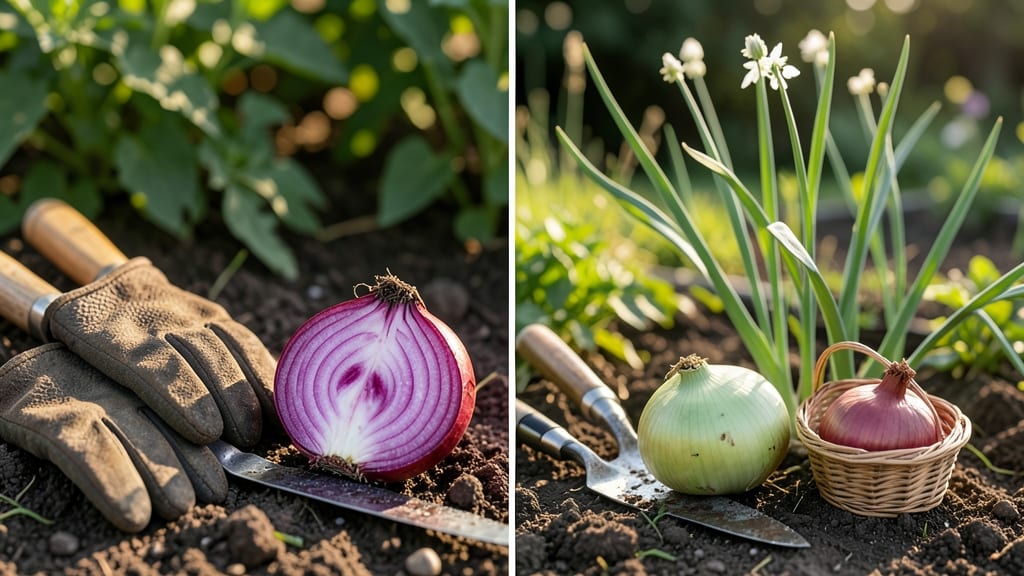
How to know when to harvest red onions 🧅 can mean the difference between a sweet, flavorful harvest and a bitter, disappointing one. Too early, and you’ll miss peak sweetness; too late, and they’ll split or rot in the ground.
Most gardeners wait around 120 days after planting, but timing varies based on your climate and growing conditions. The key is watching for three telltale signs: when the tops yellow and flop, the bulbs feel firm, and the neck thickens to about half an inch in diameter.
In Zone 6a, where spring planting happens between March and April, you’ll likely harvest between July and September. But don’t rely solely on the calendar—these simple field tests will give you the confidence to pull them at just the right moment.
Once you master these cues, you’ll never second-guess your harvest again. Let’s break down the exact steps to ensure your red onions are perfect every time.


3 Field-ready tests to determine perfect red onion harvest time
Timing your red onion harvest correctly ensures sweet, flavorful bulbs that store well. The key is watching for three simple visual cues that indicate maturity. These tests require no special tools—just your eyes and hands. I’ve used these methods for years in my garden, and they’ve never failed me.
First, let’s tackle the most reliable indicator: the leaf pull test. This method helps you assess bulb development without digging. Simply grasp a few outer leaves near the base and gently tug upward.
If the bulb resists and feels firm, it’s ready. If it slides out easily, it’s still growing.
Next, pay attention to the bulb size vs. neck ratio. Mature red onions develop a thick neck where the bulb meets the green tops. When this neck measures about ½ to ¾ inch in diameter, the bulb is typically ready.
Use a ruler or even a pencil for a quick check—this is my go-to trick for precision.
The third test focuses on color and dryness. As onions mature, their outer skins turn from green to a papery, dry texture. The green tops should also begin turning yellow and flopping over. This signals the bulb has stopped growing and is ready for harvest.
Combining these three tests gives you the most accurate harvest timing. For example, I once harvested a batch of red onions based solely on the leaf pull test, only to find they were still soft inside.
The next time, I waited until the neck ratio and color changes aligned, and the results were perfect: sweet, firm, and storable.
Regional climate can slightly alter these cues. In hot, dry areas like Zone 9 or 10, onions may mature faster, so watch for the color change more closely.
Conversely, in cooler climates like Zone 5 or 6, the neck ratio might take longer to develop. Adjust your timing based on local conditions.
Once you’ve confirmed all three tests, it’s time to harvest. Use a garden fork to gently loosen the soil around the bulb, then lift it carefully to avoid damaging the outer skins.
Let the onions cure in a dry, shaded spot for a few days before storing. This step is crucial for extending shelf life and flavor.
If you’re unsure whether your onions are ready, err on the side of waiting. Overripe onions become pithy and lose their sweetness, while underripe ones won’t store well. Trust the tests, and you’ll always harvest at peak flavor.
For extra peace of mind, mark a few test plants when you first notice the neck ratio reaching ½ inch. This gives you a baseline to track maturity in the rest of your crop. It’s a small effort that pays off with consistent, high-quality harvests.
3 Field-ready tests to determine perfect red onion harvest time
Knowing exactly when to harvest red onions can transform your garden from mediocre to outstanding. The key lies in three simple, no-tools-required tests that reveal whether your onions have reached their peak flavor and storage potential.
These methods work for both spring-planted and fall-planted varieties, ensuring you never miss the window.
First, focus on the leaf color and growth habit. Mature red onions send you a clear signal: their green tops turn yellow and begin to flop over. This isn't just a sign of age—it's nature's way of telling you the bulb below has reached its optimal sugar content.
If you see this, your onions are ready within 24-48 hours.
Here are the three foolproof tests I rely on every season to guarantee perfect red onions:
Don't ignore the bulb firmness—this is your quality control step. Press a mature-looking onion gently with your thumb. It should feel solid and round, like a small baseball. Soft spots mean the onion is overripe or diseased, while overly firm bulbs might still need time to sweeten.
Pro tip: Harvest in the morning after dew dries for the best flavor. This gives bulbs time to dry slightly before storage, preventing rot. I've found that red onions harvested this way keep for 3-4 months in a cool, dark place—far longer than those picked at the wrong time.
Regional variations matter too. In hot climates, onions mature faster (60-90 days), while cooler zones may need up to 120 days. Always adjust your tests based on local weather patterns—don't let a heatwave trick you into harvesting too early!