
How To
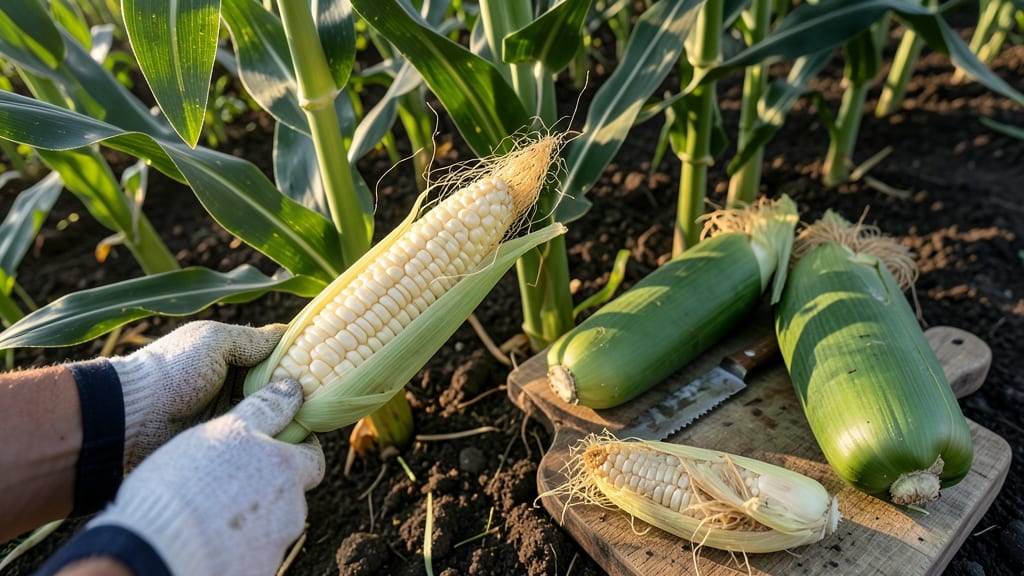
Knowing how to know when sweet corn 🌽 is ready to harvest can turn a disappointing meal into a sweet, juicy triumph—here's how to get it right every time.
Most gardeners wait too long, ending up with tough, starchy kernels instead of the creamy perfection we crave. The secret lies in two simple clues: the color of those silky threads and the feel of the kernels when you test them.
I'll show you exactly what to look for, so you never miss the sweet spot again.
From the moment those silks first appear to the day they turn completely brown, there's a 20-day window where timing makes all the difference. We'll cover the visual cues, the telltale milk stage, and even how to do the classic "squeeze test" like a pro.
Trust me, your taste buds will thank you.
Whether you're growing Silver Queen or another favorite variety, these tips work for any sweet corn in zone 6a or warmer. Let's make sure your next harvest is the sweetest yet!


Sweet corn ripeness guide: silk color & kernel size test
Sweet corn reaches its peak sweetness at a very specific moment—missing it means sacrificing that buttery texture and sweet flavor. The two most reliable indicators are the silk color and kernel development.
Most varieties take 20–25 days after pollination to mature, but environmental factors like heat stress or drought can delay ripening. Paying attention to these visual cues ensures you harvest at the perfect time.
Start by checking the silks—those long, thread-like strands at the top of the ear. When they first appear, they’re bright green and moist, signaling pollination. As the kernels develop, the silks gradually dry out and turn brown.
This is your first green light that the ear is nearing maturity. However, don’t rush to harvest just because the silks are brown—kernel development is the final confirmation.
| Stage | Silk Color | Kernel Appearance | Action |
|---|---|---|---|
| Pollination | Bright green | Small, translucent | Wait 20–25 days |
| Early Development | Green turning brown | Plumping, opaque | Check kernel firmness |
| Peak Ripeness | Completely brown | Plump, milky liquid | Harvest immediately |
| Overripe | Dry, brittle | Hard, starchy | Discard or cook |
🌽 Pro Tip: Use a sharp knife to test kernels—if they release milky liquid, it's ready!
The kernel size and color are your final clues. When the husk peels back easily, you’ll see kernels that are plump and opaque white—not translucent or pale. A good rule of thumb is that the ear should feel heavy for its size, indicating fully developed kernels.
If you’re unsure, do the squeeze test: press a kernel between your thumb and forefinger. It should give slightly but not feel mushy.
One common mistake is harvesting based solely on silk color. While brown silks signal the ear is close to maturity, some varieties (like super sweet hybrids) may need an extra day or two.
Always double-check the kernels to avoid starchy disappointment. I’ve learned this the hard way—overripe corn is tough and bland, while perfectly ripe corn is pure sweetness.
Environmental factors can also throw off your timing. Hot weather can speed up ripening, while cool temperatures may delay it. Keep an eye on your plants and adjust your harvest schedule accordingly.
For example, if your area experiences a sudden heatwave, check your corn more frequently—it might be ready faster than expected.
Finally, don’t forget to harvest in the morning. Corn continues to convert sugars to starch after picking, so harvesting early preserves that sweet flavor.
Use a sharp knife to cut the stalk about 1 inch below the ear, and avoid pulling the husks back too far—this can expose the kernels to sunlight and speed up starchy conversion.
With these visual cues and a little practice, you’ll be harvesting perfectly ripe sweet corn like a pro. The first time you bite into an ear you’ve picked at just the right moment, you’ll understand why timing is everything.
Sweet corn ripeness guide: silk color & kernel size test
Sweet corn reaches its peak sweetness at a very specific moment—missing it means sacrificing that buttery texture and sweet flavor. The two most reliable indicators are the silk color and kernel development.
Most varieties take 20–25 days after pollination to mature, but environmental factors like heat stress or drought can delay ripening. Paying attention to these visual cues ensures you harvest at the perfect time.
Start by checking the silks—those long, thread-like strands at the top of the ear. When they first appear, they’re bright green and moist, signaling pollination. As the kernels develop, the silks gradually dry out and turn brown.
This is your first green light that the ear is nearing maturity. However, don’t rush to harvest just because the silks are brown—kernel development is the final confirmation.