
Pruning
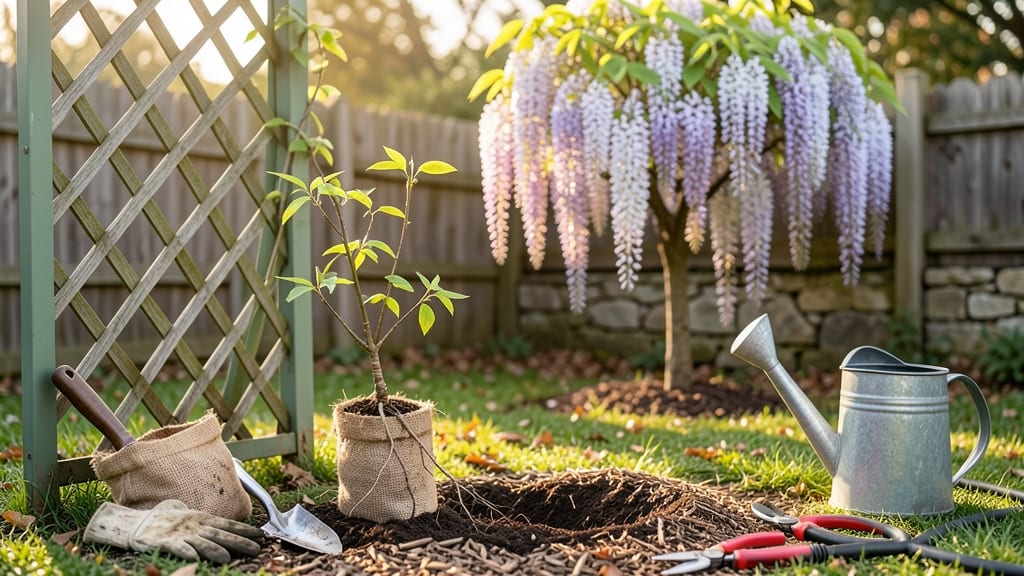
Creating a wisteria tree from scratch means decades of fragrant purple cascades—if you do it right. 🌿 I’ve watched mine struggle through years of impatient pruning before finally understanding the secret: wisteria doesn’t bloom on old wood.
It needs patience, strategic cuts, and a support system that won’t snap under 50-pound vines. The right variety matters too. American wisteria (Wisteria frutescens) flowers earlier and grows slower than its aggressive Asian cousin (Wisteria sinensis).
Start with a 2-3 year old grafted plant—seeds take 5+ years just to flower. Plant in full sun with well-draining soil, and install a sturdy arbor or trellis immediately. Those vines will test your structure’s limits. By year 3, you’ll see your first flowers—if you’ve been pruning correctly.
The key is late winter cuts: remove last year’s growth to encourage new, flowering stems. Summer pruning keeps the plant manageable, while winter shaping defines its tree form. Just don’t rush it; wisteria rewards those who wait with 10-foot-long flower racemes by summer.
This isn’t a quick project, but the payoff—scented blooms from May through June—makes every pruning session worth it. The real magic happens when you step back and watch those vines transform a plain fence into a living tapestry of color. Let’s get those cuttings growing!
📚 In This Guide
- What you need
- Instructions
- Tips and common mistakes
- Wrapping up and next steps
What you need
- ● Wisteria Plant: 1-2 Wisteria sinensis or Wisteria floribunda plants (for best blooms, choose established 1-2 year old saplings from a nursery).
- ○ Optional: Seeds (if starting from scratch—note: slower growth and less reliable blooms).
- ● Soil & Fertilizer: Well-draining, slightly acidic soil (pH 6.0-7.0).
- ● Compost or aged manure (5-10 gallons for planting).
- ● Balanced 10-10-10 fertilizer (1 lb per tree at planting).
- ○ Optional: Slow-release phosphorus granules (to encourage root growth).
- ● Support Structure: Strong trellis, arbor, or pergola (8-12 ft tall, 3-inch diameter posts for stability).
- ● Galvanized metal or plastic ties (10-15 ft roll).
- ● Pruning Tools: Bypass pruners (sharp, 7-8 inch blades).
- ● Loppers (for thicker branches, 20-inch cutting capacity).
- ● Hand saw (for stubborn branches, 8-inch blade).
- ● Gloves (heavy-duty, cut-resistant).
- ● Disinfectant (70% isopropyl alcohol or 10% bleach solution for sterilizing tools).
- ● Watering Supplies: Hose with adjustable nozzle or watering can (5+ gallons capacity).
- ○ Optional: Drip irrigation system (for consistent moisture).
- ● Location: Full sun (6+ hours daily) and space (wisteria spreads 10-15 ft wide and climbs 20+ ft).
- ● Climate: Hardy in USDA Zones 5-9 (cold-hardy varieties like Wisteria frutescens for Zone 4).
- ● Patience: Wisteria takes 3-5 years to bloom fully—consistent care is key!
- ● Pro Tip: 💡 Test your soil before planting to adjust nutrients (many nurseries offer kits for ~$20).
Step-by-step instructions for cultivating a wisteria tree
Here’s how I transform wisteria from a wild, sprawling vine into a stunning tree—with pruning as the secret weapon.
🌱 Step 1: Choose the Right Cultivar and Planting Site
Start with a dwarf or standard wisteria cultivar like Wisteria sinensis or Wisteria floribunda—these grow well as trees when properly trained. Plant in full sun (at least 6 hours daily) with well-draining soil. Wisteria roots spread aggressively, so dig a hole twice as wide as the root ball and mix in compost to improve fertility.
I always plant mine near a support structure (like a sturdy post or trellis) because young stems need guidance to grow upward. The deeper you bury the root ball, the stronger the tree will establish—aim for the top of the root ball sitting 2 inches below soil level. Water deeply right after planting to settle the soil and eliminate air pockets.
✂️ Step 2: Prune New Growth to Encourage a Tree Form
The first critical pruning happens when the plant is dormant (late winter or early spring). Remove all but 3-4 main stems at ground level, cutting just above a bud that faces outward. This forces the plant to focus energy on developing a strong central trunk rather than sprawling vines.
Here’s the thing—wisteria grows fast, and if you skip this step, you’ll end up with a tangled mess. In the first growing season, pinch back new growth when it reaches 6-8 inches to encourage branching. You’ll see compact, bushier growth within weeks—that’s your first sign the pruning is working.
☀️ Step 3: Train and Prune for a Balanced Canopy
Once the tree reaches 3-4 feet tall, start tying the main stems to a central support (like a wooden stake or metal trellis). This prevents the plant from growing in multiple directions. Every spring, prune back the previous year’s growth by one-third to keep the tree manageable and encourage heavier blooming on new wood.
Watch for suckers (shoots growing from the base)—remove them immediately. These sap-suckers drain energy from your tree. Thin out crowded branches inside the canopy to improve airflow and reduce disease risk. The goal is a pyramid-shaped tree with open centers—this lets sunlight reach all blooms for maximum fragrance.
⏰ Step 4: Summer Pruning for Year-Round Blooms
After the first flush of flowers fades (usually late spring), prune spent flower clusters back to the nearest leaf. This redirects energy to late-summer blooms, extending your flowering season. I also lightly trim leggy growth to maintain shape—never cut more than one-third of the plant’s height in a single season.
Here’s a pro tip: Prune after blooming (not before) to preserve next year’s flowers. If you cut too early, you risk removing flower buds that haven’t formed yet. In fall, do a final cleanup—remove dead, diseased, or crossing branches to keep the tree healthy and open.
🪴 Step 5: Winter Care for Long-Term Health
Wisteria is hardy to USDA Zone 5, but young trees benefit from winter protection. Wrap the trunk with burlap if your winters dip below 10°F to prevent sunscald. Avoid heavy mulching—3 inches of organic mulch (like shredded bark) is enough to insulate roots without suffocating them.
This is also the best time to fertilize lightly with a balanced 10-10-10 formula. Wisteria is a heavy feeder, but too much nitrogen leads to leafy growth at the expense of flowers. Water deeply once a month during dormancy to keep roots hydrated without encouraging rot. A well-pruned, winter-hardened wisteria tree will reward you with decades of fragrant blooms.
Tips & tricks for perfect wisteria tree pruning
Transforming wisteria into a stunning tree takes patience—but these tricks make all the difference. I've learned the hard way that skipping even one step can turn your dream tree into a tangled mess.
Pruning Timing: The dormant season (late winter/early spring) is your best window for shaping the tree's foundation. If you prune too early, you risk cutting off next year's flower buds. I always check for swollen buds before making cuts—this tells me the plant is ready. For the first pruning, remove all but 3-4 main stems at ground level, cutting just above an outward-facing bud. This creates that strong central trunk we want.
Support Structure Secrets: Don't underestimate the importance of your support system! I've seen beautiful wisteria trees collapse because their supports weren't sturdy enough. Use a metal trellis or thick wooden post that can handle the plant's weight as it grows. The deeper you bury the support (about 2 feet), the more stable it will be. Tie the main stems loosely with soft garden twine—tight enough to guide growth but not so tight it girdles the stems.
Summer Pruning Strategy: After the first flush of flowers fades in late spring, prune spent clusters back to the nearest leaf. This might seem counterintuitive, but it's what triggers those beautiful late-summer blooms. I always make these cuts on a dry day when the plant has had a good drink of water—this helps prevent disease entry. Remember the one-third rule: never remove more than one-third of the plant's height in any single season.
Winter Protection: When temperatures drop below 10°F, your young wisteria tree needs extra care. Wrap the trunk with burlap to prevent sunscald damage—this is especially important for newly planted trees. I've found that a light layer of mulch (just 3 inches) around the base helps regulate soil temperature without smothering the roots. And here's a trick I learned: if you're in a particularly cold climate, consider using a tree wrap that's breathable but blocks harsh winds.
Pro Tips for Make A Wisteria Tree
- Transforming wisteria into a stunning tree takes patience—but these tricks make all the difference.
- Pruning Timing: The dormant season (late winter/early spring) is your best window for shaping the tree's foundation.
- Support Structure Secrets: Don't underestimate the importance of your support system!
Frequently asked questions
Got questions about growing and shaping your wisteria tree?
You’re not alone! Here are answers to the most common queries—from planting to pruning—so you can keep those stunning blooms coming year after year.
Can I grow wisteria from seed, or should I buy a grafted plant?
While wisteria can grow from seed, it’s a slow process (years for blooms!) and results are unpredictable. For faster, reliable growth with vibrant flowers, opt for a grafted plant from a nursery. Grafted varieties also resist diseases better and bloom sooner—usually within 2–3 years.
When is the best time to plant a wisteria tree?
Plant your wisteria in early spring or fall when temperatures are mild. Avoid extreme heat or frost, as these can stress the roots. If planting in spring, do it before new growth starts; for fall, aim for 4–6 weeks before the first frost. This gives roots time to establish before dormancy.
How do I prune wisteria to encourage more flowers?
Prune wisteria right after blooming (late spring/early summer) to shape the plant and promote next year’s flowers. Cut back last year’s growth by about one-third, focusing on strong, healthy stems. Avoid heavy pruning in fall—this can stimulate weak growth that may not survive winter. Never prune in late winter before buds swell!
Why isn’t my wisteria blooming, even after years of growth?
Wisteria needs patience, sunlight, and proper pruning to bloom. Common culprits:
- Too much shade: Plant in full sun (6+ hours daily).
- Over-pruning: Heavy cuts in winter can remove flower buds.
- Young age: Some varieties take 3–5 years to bloom.
- Poor nutrition: Test soil for phosphorus (key for blooms) and amend with compost.
Can I grow wisteria in a container, or does it need to be planted in the ground?
Wisteria can grow in containers, but it’s challenging due to its aggressive root system and need for space. If you try it:
- Use a large pot (20+ gallons) with drainage holes.
- Plant in well-draining soil and fertilize regularly.
- Expect limited blooms—ground-planted wisteria thrives better.
- Move containers indoors in winter if temperatures drop below 20°F (-7°C).
What should I do if my wisteria leaves turn yellow or drop?
Yellow leaves or defoliation often signal overwatering, underwatering, or nutrient deficiencies. Check these first:
- Watering: Wisteria prefers consistent moisture but hates soggy soil. Water deeply 1–2 times per week (adjust for climate).
- Nutrients: Yellow leaves can mean iron or nitrogen deficiency. Test soil and amend with compost or a balanced fertilizer.
- Pests/disease: Look for aphids, powdery mildew, or root rot. Prune affected areas and treat with neem oil or fungicide if needed.
Wrapping up and next steps
Growing a stunning wisteria tree with year-round blooms is entirely within your reach—it just takes patience, the right tools, and a little pruning know-how! 🌸 By mastering selective pruning, structural training, and seasonal care, you’ll transform a wild vine into a breathtaking, well-behaved centerpiece for your garden or patio.
Now that you’re armed with the secrets, roll up your sleeves and start shaping your wisteria—one careful cut at a time.
Ready to see those cascading flowers in full glory? Bookmark this guide and revisit it as you prune, or share it with fellow gardening enthusiasts to spread the love (and blooms)! 🌿✨