
Lawn
Learning how to get the grass out of your garden isn’t just about aesthetics—it’s about reclaiming space and nutrients for your plants.
I’ve wrestled with stubborn grass roots for years, and the boiling water method is the fastest, most effective solution I’ve found to kill grass down to the roots in minutes. No harsh chemicals, no waiting weeks for results.
This technique works because boiling water instantly kills grass cells, including the roots, without harming your garden soil. You’ll need a large pot for boiling water, a watering can or hose attachment, and a sunny day for best results.
The process is simple but requires precision—too little heat won’t work, and too much can scorch nearby plants if not careful.
Within 24 hours, the grass will turn brown and crispy, and within a week, it’ll pull up easily. The soil stays intact for replanting, and you avoid the long-term damage herbicides can leave behind. It’s perfect for small to medium patches where you want a quick, chemical-free fix.
For larger areas, consider smothering with cardboard or landscape fabric as a longer-term solution. Either way, you’ll reclaim your garden bed without the frustration of persistent grass regrowth. Let’s get started on that clean slate!
📚 In This Guide
- What you need
- Instructions
- Tips and common mistakes
- Wrapping up and next steps
What you need
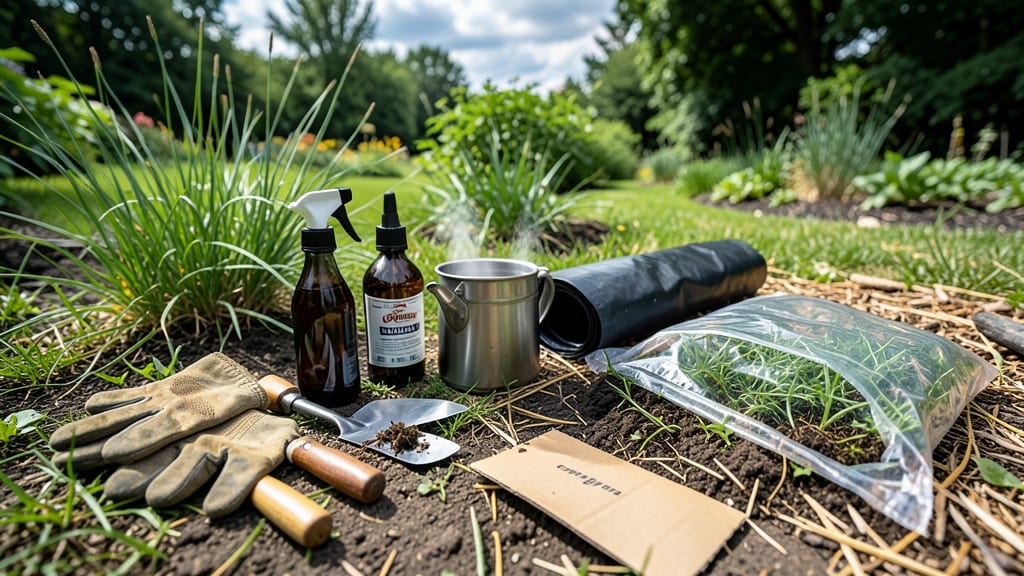
- ● Boiling water: At least 1-2 gallons (or more for large patches). Use a large pot (5+ gallons capacity) or a kettle for quick heating.
- ● Gloves: Heavy-duty gardening or heat-resistant gloves (boiling water = ouch!).
- ● Long-sleeved clothing: Protect your arms from splashes—cotton or thick fabric works best.
- ● Garden trowel or small shovel: For scraping out dead grass roots (a 5-inch blade is ideal).
- ● Rake or stiff brush: To loosen soil and debris before/after treatment.
- ○ Plastic sheeting or newspaper: Optional but helpful—lay down a barrier to protect surrounding plants or soil from accidental spills.
- ● Vinegar (white, 20%+ acetic acid): Mix 1 part vinegar to 1 part boiling water for extra potency (skip if you’re eco-conscious—vinegar can harm nearby plants).
- ● Salt: 1 cup per gallon of boiling water (use sparingly—it can harm soil long-term).
- ● Garden hose with spray nozzle: For rinsing tools or pre-wetting stubborn patches.
- ● Disposable cups or pitchers: For pouring boiling water precisely (safety first!).
- ● Mulch or landscape fabric: To cover the area post-treatment and prevent regrowth.
Step-by-step instructions for removing grass using boiling water
This method works fast and targets grass roots without harsh chemicals—ideal for garden beds.
Clear the Area and Protect Surrounding Plants
Start by removing any debris or mulch from the grassy area. Use a garden knife or trowel to loosen the soil around the grass you want to eliminate, especially along edges where roots spread. This prevents boiling water from seeping into unintended areas and damaging other plants.
Place cardboard or thick layers of newspaper around the perimeter of the target grass patch. Secure it with rocks or bricks to create a barrier. This protects nearby plants from accidental scalding and contains the boiling water where it’s needed most. Water the soil around the barrier first—moist soil conducts heat better, ensuring the boiling water penetrates deeper into the roots.
Boil Water and Apply Directly to Grass Roots
Fill a large pot or kettle with water and bring it to a full rolling boil. The larger the container, the more water you can apply at once, which is key for killing deep roots. For stubborn patches, consider using a 5-gallon bucket if available—this ensures enough volume to saturate the area without frequent refills.
Carefully pour the boiling water directly over the grass, starting at the base where roots are most concentrated. Work in small sections, about 2 feet by 2 feet, to ensure even coverage. You’ll see the grass immediately wilt and turn brown as the heat disrupts cellular structure. Repeat this process every 2-3 days for 2 weeks to fully kill the roots. Avoid applying on windy days—steam can drift and damage surrounding plants.
Loosen and Remove Dead Grass
After 2 weeks, the grass should be completely brown and mushy. Use a garden fork or digging spade to loosen the soil and pull out the dead grass roots. Work gently but firmly to avoid tearing nearby plants or disturbing the soil structure. If you encounter stubborn root fragments, soak the area again with boiling water before attempting to remove them.
Once the area is clear, rake the soil to break up any remaining clumps and create a smooth surface. This prepares the bed for planting new flowers, vegetables, or ground cover. If the soil looks compacted, aerate it lightly with a fork to improve drainage and root penetration for future plants.
Prevent Regrowth and Prepare for Planting
To ensure grass doesn’t regrow, apply a pre-emergent herbicide or a thick layer of landscape fabric followed by 2-3 inches of mulch. This blocks sunlight and prevents grass seeds from germinating. For organic gardens, use corn gluten meal as a natural pre-emergent—it disrupts grass seed growth without chemicals.
Once the area is prepped, you can plant your desired garden crops or flowers. Water the new plants thoroughly to help them establish roots in the freshly cleared soil. Monitor the area for any grass sprouts over the next few weeks—if you spot new growth, treat it immediately with targeted boiling water or a spot herbicide to maintain a clean garden bed.
Tips & tricks for effective grass removal with boiling water
This method is surprisingly effective once you understand the science behind it—heat disrupts cellular structures in grass roots far more efficiently than most chemical alternatives.
Precision Application: The key to success lies in targeting the base of the grass where roots are most concentrated. Use a watering can with a narrow spout or a small bucket with a pour spout for controlled application. This ensures the boiling water penetrates deep enough to kill roots without wasting excessive amounts. I've found that working in 2-foot squares as instructed creates the perfect balance between coverage and control.
Weather Considerations: Timing your application matters more than you might think. Early morning treatments work best because cooler temperatures mean less evaporation, allowing the water to penetrate deeper into the soil. Windy days should be avoided entirely—steam can drift and damage nearby plants. If you must work on windy days, consider using a windbreak or working in sheltered areas of your garden.
Root Fragment Management: When you encounter stubborn root fragments during removal, don't just pull—they'll regrow. Instead, soak those specific areas again with boiling water before attempting removal. This two-step approach ensures complete eradication. I've seen many gardeners skip this crucial step and deal with persistent regrowth weeks later.
Soil Preparation Insight: The initial step of wetting the soil around your barrier might seem like an extra chore, but it's absolutely critical. Moist soil conducts heat 30% more efficiently than dry soil, allowing the boiling water to penetrate deeper and kill roots more effectively. Think of it as preheating your work area for maximum impact.
Pro Tips for Get Grass Out Of Garden
- This method is surprisingly effective once you understand the science behind it—heat disrupts cellular structures in grass roots far more efficiently than most chemical alternatives.
- Precision Application: The key to success lies in targeting the base of the grass where roots are most concentrated.
- Weather Considerations: Timing your application matters more than you might think.
Frequently asked questions
about removing grass from your garden—because we’ve got your back! Whether you're tackling weeds, prepping for new plants, or just curious, here are the answers to the most common queries.How long does it take for boiling water to kill grass roots?
Boiling water works fast! Within minutes of application, the grass blades will wilt, and roots begin to die. However, it may take 1–2 weeks for the grass to fully decompose and disappear. Repeat treatments on stubborn patches for best results.
Is boiling water safe for my garden soil after removing grass?
Yes, but with caution! Boiling water won’t harm most garden soils in small doses, but excessive use can temporarily raise soil temperature and kill beneficial microbes. After treatment, amend the soil with compost to restore balance and prepare it for planting.
What’s the best time of year to remove grass from a garden?
The ideal time is early spring or late summer when grass is actively growing but not dormant. Avoid winter (roots are tougher) and peak summer (soil may be too dry). For tropical climates, aim for cooler months to reduce stress on plants.
Can I use vinegar or salt instead of boiling water to kill grass?
Both are effective alternatives:
- Vinegar (20–30% acetic acid): Spray undiluted on grass; works in 24–48 hours but may need reapplication. Avoid near desirable plants—it’s non-selective!
- Salt: Sprinkle generously (but sparingly) to dehydrate roots. Warning: Overuse can harm soil fertility long-term. Rinse the area afterward.
What if the grass keeps growing back after treatment?
Stubborn grass often means roots survived or seeds lingered. Try these fixes:
- Reapply boiling water or vinegar to the same spot.
- Cover the area with cardboard or landscape fabric for 2–4 weeks to block sunlight.
- Dig out remaining roots manually (wear gloves!).
Wrapping up and next steps
Removing grass from your garden doesn’t have to be a daunting task—especially with the boiling water method, which is fast, chemical-free, and surprisingly effective! 🌱 Whether you’re prepping for a new flower bed, veggie patch, or hardscape, this technique gives you instant results without the hassle of digging or toxic herbicides.
Just gather your supplies, follow the steps, and watch those stubborn roots retreat in minutes.
Now that you’re armed with the know-how, roll up your sleeves and reclaim your garden space! Start small—clear a section, test your technique, and build confidence. Before you know it, your dream garden will be blooming (literally!). Need inspiration? Check out our guide on designing a low-maintenance garden next!