
Propagation
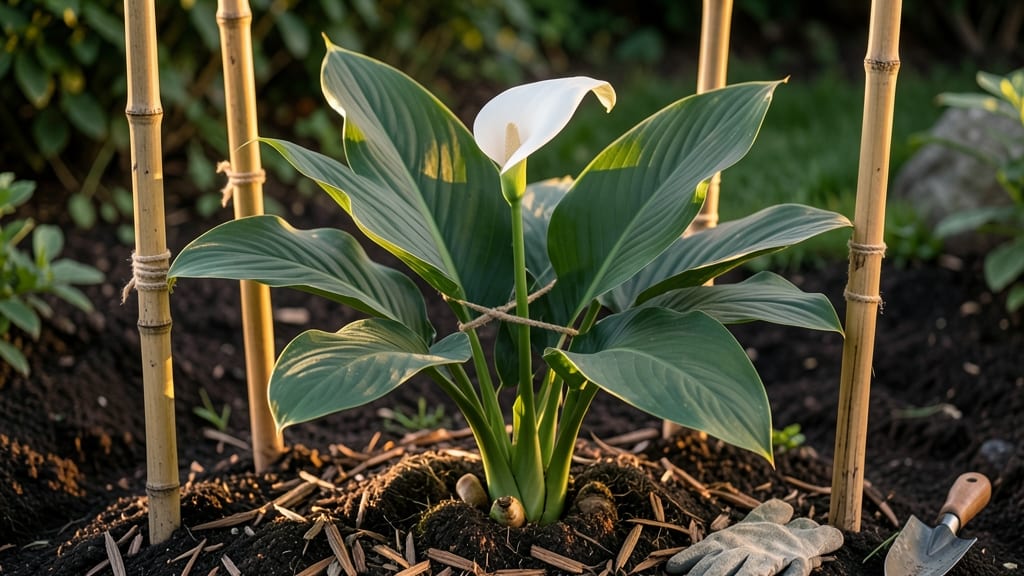
How to keep calla lily from falling over—start with the right support! 🌿 The moment their heavy blooms droop, you know the stems can't handle the weight—whether it's wind, rain, or just their own top-heavy nature. I've seen calla lilies go from elegant to embarrassing in one storm, but these tricks keep them standing tall all season.
The fix starts with proper planting depth—bury the rhizomes just below soil level so new roots anchor firmly before the stems get tall. Add sturdy stakes (bamboo or metal) at planting, tying stems loosely with soft twine as they grow.
For extra insurance, tuck a small garden stone near the base to weigh down the plant without damaging roots.
By midsummer, your callas will be thriving upright, their dark blooms standing out against the foliage. The key is checking stakes weekly—loosen ties as stems thicken, and replace flimsy supports before they snap. Even in windy spots, these plants stay graceful with the right prep.
This method works for both container and in-ground callas, and the same principles apply to other top-heavy perennials like cannas. Let's get those stems standing straight!
📚 In This Guide
- What you need
- Instructions
- Tips and common mistakes
- Wrapping up and next steps
What you need
- ● Stakes or bamboo canes: 3–5 per plant, 6–12 inches tall (depending on plant height). Choose 1/4-inch diameter for stability.
- ● Garden twine or soft plant ties: 1–2 yards per plant (avoid wire—it can damage stems!). Opt for eco-friendly, biodegradable twine if possible.
- ● Heavy garden rocks or pebbles: 3–5 per plant, 1–2 inches in diameter (smooth, flat stones work best).
- ● Potting mix (if repotting): Well-draining, peat-based mix (e.g., African violet mix). Avoid heavy garden soil.
- ● Watering can or hose with a gentle spray nozzle: For hydrating plants without disturbing stakes.
- ● Decorative plant supports: Wrought-iron stakes or woven baskets for aesthetic appeal.
- ● Plant clips or Velcro ties: Reusable and gentler on stems than twine.
- ● Slow-release fertilizer: To boost root strength (e.g., 14-14-14 NPK ratio).
- ● Mulch: 2–3 inches of pine bark or straw to retain moisture and add stability.
Step-by-Step instructions for keeping calla lilies upright
Callas lean like drunks after a rainstorm—but these simple tricks keep them standing tall all season.
🪴 Step 1: Plant in Well-Draining, Nutrient-Rich Soil
Start with the right foundation: calla lilies need soil that drains well but retains moisture. Mix equal parts peat moss, perlite, and garden soil to create a loose, airy medium. I always add a handful of compost to give them the nutrients they crave. The goal is soil that feels like a damp sponge—not heavy clay or gritty sand.
When planting, place the rhizome (the thick, horizontal root) just below the soil surface—about ½ inch deep. Burying it deeper causes rot, while planting too shallow leads to floppy stems. Press the soil gently around the rhizome so it stays in place, but don’t compact it. You’ll notice the first shoots emerge within 2-3 weeks if conditions are right.
☀️ Step 2: Provide Stake Support at the Right Time
Wait until the plant reaches 6-8 inches tall before staking—earlier support can restrict growth. Use 3-4 foot bamboo stakes or sturdy wooden dowels, inserted 2 inches deep beside each stem. I like to place them 1-2 inches away from the plant so they don’t crowd the roots as it grows.
Secure the stems loosely with soft garden twine or fabric strips—never tighten immediately. You’ll see the stems lean toward the stake naturally. Re-tie the twine every 1-2 weeks as the plant grows taller. This prevents the twine from digging into the stem and causing damage. Watch for the first blooms to form—this is your cue to check stability.
💧 Step 3: Water Strategically to Strengthen Stems
Callas need consistent moisture, but soggy soil weakens stems. Water deeply once a week (or more in hot weather) until the top 2 inches of soil feel damp. Avoid overhead watering—it makes leaves heavy and encourages leaning. Instead, water at the base, directing the stream toward the rhizome.
Here’s the trick: water in the morning. This gives leaves time to dry before evening, reducing weight and preventing the stems from bending under their own weight. You’ll notice sturdy growth when the leaves stand upright and the stems feel firm to the touch. If they wilt by midday, they’re not getting enough water—but if they stay droopy all day, they’re likely overcrowded.
✂️ Step 4: Use Weighted Tricks for Extra Support
For callas in windy areas or with top-heavy blooms, add small decorative stones or pebbles to the soil surface around the base. I use ¼-inch river rocks—just enough to weigh down the stems without smothering the plant. Place them within 2 inches of the stem so they anchor it gently.
Another trick: tie a small clay pot (about 3 inches wide) to the stem near the base. Fill it with ½ cup of small pebbles—this adds just enough weight to keep the plant upright without damaging it. Check the pot every 2 weeks to ensure it hasn’t shifted or become a pest haven. This method works best for callas with tall, slender stems that wobble easily.
🌿 Step 5: Prune and Deadhead for Long-Term Stability
Remove spent blooms immediately with clean pruners—this redirects the plant’s energy into stronger stems instead of producing more flowers. Cut the stem just above a leaf node to encourage new growth. I also trim any yellow or damaged leaves, as they weigh down the plant and attract pests.
After flowering, reduce watering slightly to harden off the stems for winter. If you’re growing callas in USDA zones 8-10, they’ll go dormant naturally. In colder climates, dig up the rhizomes after the first frost, trim the foliage, and store them in dry peat moss until spring. This prevents weak regrowth and ensures sturdy stems the following season.
Tips & tricks for perfectly upright calla lilies
These simple but game-changing tips will transform your calla lilies from floppy to flawlessly upright.
Soil Science: The foundation matters more than you think. When mixing your soil blend in Step 1, add a handful of perlite to create air pockets—this prevents waterlogging that weakens stems. I've found that adding ½ cup of coarse sand to the mix also improves drainage without sacrificing moisture retention. The goal is soil that crumbles easily when squeezed, not stays clumped together.
Staking Strategy: In Step 2, don't wait until your calla reaches 8 inches to stake—actually place stakes when it hits 4-5 inches for extra support. I use 2 stakes per plant for added stability, especially in windy conditions. Position them on opposite sides of the plant at a slight angle (about 15 degrees) to create a natural cradle for the stems. This prevents the plant from growing into the stake as it matures.
Watering Wisdom: The morning watering tip in Step 3 is crucial, but here's the secret: use a watering wand with a gentle spray setting to direct water exactly where the rhizome meets the soil. This prevents water from pooling on leaves, which creates weight that makes stems bend. I water until I see moisture reach 3-4 inches deep—deeper than just the top 2 inches—to encourage stronger root development that supports the stems.
Weighted Support Hacks: For the clay pot trick in Step 4, I've had great success using terracotta pots instead of ceramic—they're lighter but still provide enough weight. Fill them with ½ cup of pebbles plus 2-3 small pebbles on top to add just the right amount of counterbalance. Place the pot 3-4 inches up the stem rather than at the base for better leverage. This works especially well for callas with single, tall stems that tend to lean dramatically.
Pro Tips for Keep Calla Lily From Falling Over
- These simple but game-changing tips will transform your calla lilies from floppy to flawlessly upright.
- Soil Science: The foundation matters more than you think.
- Staking Strategy: In Step 2, don't wait until your calla reaches 8 inches to stake—actually place stakes when it hits 4-5 inches for extra support.
Frequently asked questions
Got questions about keeping your calla lilies upright? You’re not alone! Here are some of the most common concerns—and quick solutions—to help your plants stand tall and proud.
Why do my calla lilies keep leaning or toppling over?
Calla lilies often flop due to weak stems, overcrowding, or poor support. Their heavy blooms can also pull them down. If planted too close together or in shady spots, stems struggle to stay upright. Add stakes or ties and ensure they get bright, indirect light (6+ hours/day) to strengthen growth.
When is the best time to add support to my calla lilies?
Add support early—as soon as you notice stems bending or when new growth reaches 6–8 inches tall. Waiting until blooms appear means the plant may already be stressed. For container-grown callas, use bamboo stakes or tomato cages inserted at planting. For ground-planted varieties, gently tuck stakes into the soil beside stems.
Can I use weights (like rocks or pebbles) to keep calla lilies upright?
Weights can work short-term, but they’re not ideal for long-term support. Heavy objects (like smooth stones) may crush stems or restrict root growth. Instead, opt for soft ties (like velcro or fabric strips) around stakes. If using weights, place light materials (e.g., small pebbles in a mesh bag) only at the base of the stem to avoid damage.
What if my calla lilies are already falling over—can I still save them?
Yes! First, trim any damaged stems at the base to redirect energy. Then, install support immediately and check for root rot (soft, mushy roots = overwatering). Move the plant to a sunnier spot and reduce watering slightly. With proper care, callas often bounce back—just give them time!
Are there calla lily varieties that stay upright better?
Some varieties are naturally sturdier, like Calla palustris (wild swamp calla) or Zantedeschia aethiopica (white calla). For containers, dwarf varieties (e.g., ‘Little Angel’) handle wind better. If you love dramatic blooms but hate flopping, choose taller, bushier types and always use support—no exceptions!
Wrapping up and next steps
Keeping your calla lilies upright is all about support, balance, and a little extra care—no green thumb required! 🌿 With the right stakes, weights, or pruning techniques, you’ll have those elegant blooms standing tall in no time.
Remember, consistency is key, so check on them regularly and adjust as needed.
Now that you’re armed with these tricks, go show off your sturdy stems! Want to take it further? Try experimenting with creative supports like decorative stakes or even DIY weighted bases for a unique garden touch. Happy gardening! 🌸