
Tools
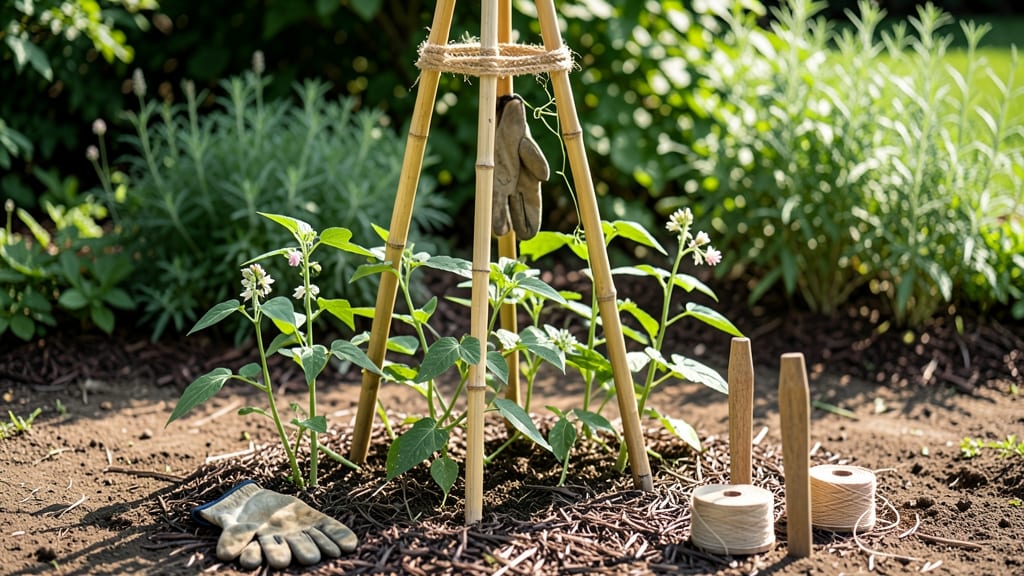
Building a teepee trellis changed how I grow climbing plants forever. ✨ No more sprawling vines or wasted space—just a simple, sturdy structure that turns vertical into productive.
My first attempt took 15 minutes and now supports a jungle of beans, peas, and morning glories that would otherwise take over the yard.
You only need 4-6 sturdy stakes (bamboo, metal pipes, or even thick branches work), some twine or zip ties, and a few minutes of your time. The key is spacing the stakes evenly—about 2 feet apart—so they form a cone shape.
For larger gardens, double the stakes for extra height and stability. Even my neighbor’s skeptical "that’ll never hold" comment was silenced when her pole beans climbed to 6 feet last summer.
What you end up with is a lush, self-supporting garden feature that saves space, improves airflow (fewer diseases!), and looks intentional. The trellis stays sturdy through wind and rain, and you can disassemble it at season’s end or leave it up for perennials like clematis.
Plus, kids love climbing through the vines—it’s basically a built-in play structure.
Works for containers, raised beds, or in-ground gardens. Whether you’re growing food or flowers, this foolproof design adapts to any space. Let’s get those stakes in the ground!
📚 In This Guide
- What you need
- Instructions
- Tips and common mistakes
- Wrapping up and next steps
What you need
- ● 6-8 wooden stakes – 4 to 6 feet tall, 1 to 2 inches in diameter (cedar or redwood for durability).
- ● Twine, jute rope, or garden twine – 100+ feet (for weaving).
- ○ Staple gun + staples – Optional but helpful for securing twine to stakes.
- ● Measuring tape – To ensure even spacing.
- ● Mallet or hammer – For driving stakes into the ground.
- ● Decorative twine or colored rope – For a polished look.
- ● Wood glue – If reinforcing joints.
- ● Garden stakes or flags – To mark stake positions.
- ● Pruners – For trimming plants later.
Step-by-Step instructions for building a teepee trellis
Here's the quick method I use to create a sturdy, attractive trellis that supports vines for years.
🪴 Step 1: Gather and Prepare Your Materials
For a 4-foot diameter teepee (supporting 4-6 plants), you'll need 4-6 straight bamboo stakes (or wooden dowels) at 6-8 feet tall, plus flexible garden twine or jute twine. I prefer bamboo because it's lightweight yet strong enough to handle morning glories or pole beans without bending. Cut all stakes to the same length to ensure even height.
Check each stake for straightness by holding it against a wall—any bowing will cause your teepee to lean. If using wooden dowels, sand any rough edges to prevent splintering. Keep your workspace clear; you'll need room to arrange the stakes in a circle.
✂️ Step 2: Assemble the Teepee Frame
Drive the first stake 6 inches deep into the soil at the center of your planting area. Space the remaining stakes 12-18 inches apart in a circle around it, angling them slightly outward (about 10-15 degrees) as you insert them. This outward lean creates stability and prevents the structure from collapsing inward under vine weight.
Use a mallet to tap stakes into the ground firmly, but avoid overcompacting the soil around the roots of nearby plants. Once all stakes are in place, tie the tops together with twine, crossing them in an X pattern for extra reinforcement. Leave about 6 inches of slack at the center to accommodate future vine growth.
💧 Step 3: Secure the Structure and Add Support
Wrap twine around each stake 2 feet from the ground and tie them together in a horizontal loop. This creates a lower support ring for early-season vines and prevents the teepee from spreading too wide. For taller climbers like cucumbers or beans, add a second horizontal ring 4 feet up to distribute weight evenly.
Test the stability by gently pushing on each stake—it should hold firm without wobbling. If any stake feels loose, drive it deeper or add a small stake nearby for extra support. This step ensures your trellis won’t topple when vines become heavy with fruit or flowers.
🌱 Step 4: Train Vines and Maintain the Trellis
Once your climbing plants sprout 3-4 inches tall, gently weave the main stems up the trellis, securing them with soft twine every 12 inches. Avoid tying vines too tightly—you want to guide growth, not strangle it. For aggressive climbers like morning glories, add a third horizontal ring at 6 feet to prevent vines from tangling at the top.
Check the trellis weekly for loose twine or leaning stakes. After the first harvest, trim any dead or overgrown vines to keep the structure lightweight. This maintenance keeps your teepee functional for multiple growing seasons.
☀️ Step 5: Winterize for Longevity
When the growing season ends, remove all vines and twine, but leave the stakes in place. Brush off any soil buildup and store the twine for next year. If your climate experiences freezing temperatures, wrap the base of each stake with burlap to protect against cracking. A well-maintained teepee trellis can last 5-10 years with minimal care.
Here’s the thing—if you notice a stake leaning after a few weeks, don’t wait to fix it. A slight adjustment now prevents a full collapse later. Your teepee should stand tall and proud, ready for next year’s climbers.
Tips & tricks for building a sturdy teepee trellis
Between us, a few small adjustments can turn a good teepee trellis into one that lasts for seasons. These are the details that separate a trellis that barely holds up from one that stands strong for years.
Material Selection: For the best stability, choose bamboo stakes that are at least 1-inch in diameter—thinner stakes will bend under the weight of mature vines. If using wooden dowels, opt for cedar or redwood, which resist rot better than pine. I've found that bamboo's natural flexibility actually helps absorb wind, making it ideal for areas with gusty conditions.
Stability Secret: When driving your stakes in Step 2, create a slight outward angle (about 10-15 degrees) as specified, but don't overdo it. The outward lean should be just enough to prevent inward collapse, not so steep that the structure becomes top-heavy. Think of it like a pyramid—wider at the base, narrower at the top. This design naturally resists wind and vine weight.
Twine Technique: For the horizontal rings in Step 3, use a figure-eight knot instead of a simple overhand knot when securing the twine. This knot holds better under tension and won't slip when vines start climbing. I also recommend using 3-ply twine rather than 2-ply—it's stronger and less likely to fray over time. When adding the second ring at 4 feet for taller climbers, space it evenly between the first ring and the top to distribute weight properly.
Long-Term Maintenance: The 5-10 year lifespan mentioned in Step 5 is achievable, but it requires one extra step: after the first growing season, apply a thin layer of outdoor wood sealant to wooden dowels to protect against moisture and UV damage. For bamboo, simply brush off any accumulated soil and store the twine in a dry place. This small effort prevents rot and keeps your trellis looking fresh year after year.
Pro Tips for Make A Teepee Trellis
- Between us, a few small adjustments can turn a good teepee trellis into one that lasts for seasons.
- Material Selection: For the best stability, choose bamboo stakes that are at least 1-inch in diameter—thinner stakes will bend under the weight of mature vines.
- Stability Secret: When driving your stakes in Step 2, create a slight outward angle (about 10-15 degrees) as specified, but don't overdo it.
Frequently asked questions
Got questions about building your teepee trellis? Here are some common ones—and their answers—to help you get started with confidence!
What’s the best time of year to assemble a teepee trellis?
A teepee trellis can be built anytime, but spring (before planting) or early summer (after frost risk passes) is ideal. If you’re in a mild climate, winter assembly works too—just avoid wet soil. For climbing plants like beans or cucumbers, set it up 2–4 weeks before planting for best root support.
How tall should my teepee trellis be?
Standard height is 6–8 feet, perfect for most vining plants (e.g., pole beans, cucumbers, or morning glories). For taller climbers like peas or kiwi vines, go up to 10–12 feet. Pro tip: Measure your garden space first—leave at least 2 feet of clearance around the base for airflow and ease of access.
Can I reuse a teepee trellis year after year?
With proper care, a wooden or metal teepee trellis can last 5+ years. Store it in a dry place during winter, treat wood with a sealant (if needed), and check for rust or splinters annually. Bamboo or PVC trellises are even more durable—just avoid leaving them exposed to harsh elements long-term.
What if my trellis leans or wobbles after planting?
Lean? Reinforce the base by driving stakes deeper into the ground or adding a crossbeam at the bottom. Wobble? Tighten loose joints or use zip ties to secure wobbly poles. For extra stability, space multiple trellises 3–4 feet apart in a row—this creates a windbreak effect and prevents toppling.
Are there alternatives if I don’t want a traditional teepee shape?
Yes! Try these variations:
- Arched trellis: Bend flexible branches (like willow) into a half-circle and secure with twine.
- Obelisk: Use a 4-sided metal frame for compact spaces (great for tomatoes!).
- Fan trellis: Radiate poles from a central stake for a wide-spreading vine like grapes.
Wrapping up and next steps
Building a teepee trellis is a simple yet rewarding way to elevate your garden’s vertical space—perfect for vines, flowers, or even small fruits! With just a few materials and a little creativity, you’ve got a sturdy, eye-catching structure that’s both functional and charming. 🌿✨
Now that you’re armed with the know-how, give it a try—your climbing plants will thank you! Once your trellis is up, consider adding lush greenery or vibrant blooms to turn it into a stunning focal point. Happy gardening! 🌱💚