
Tools
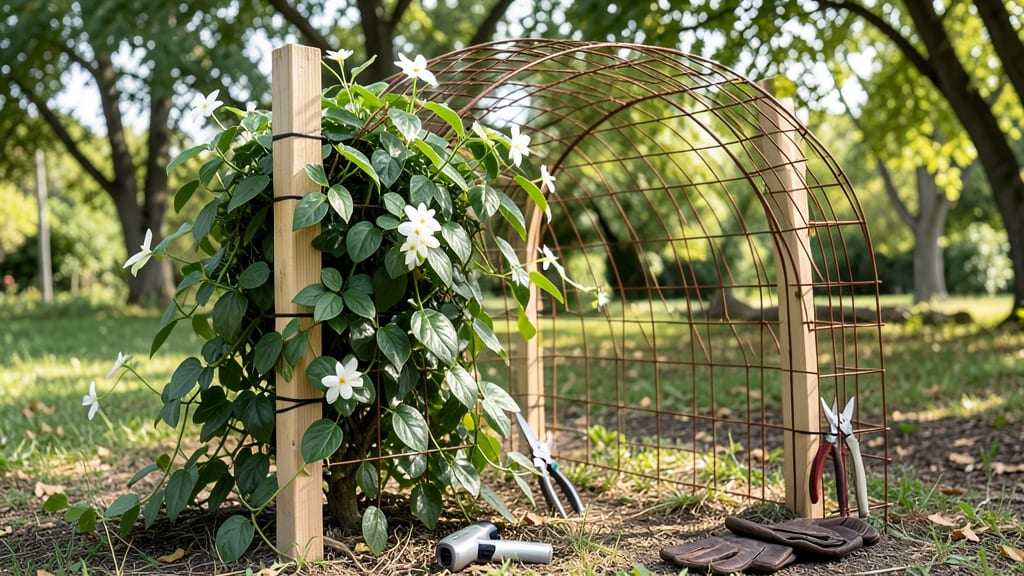
That first whiff of jasmine in summer is worth every twist of wire. 🌿 A sturdy trellis isn't just support—it's the backbone of your fragrant garden escape. I've built mine from simple materials that last through rain and wind, transforming bare walls or fence lines into living perfume dispensers.
You only need four basic supplies: heavy-gauge wire (14-16 gauge), sturdy posts or hooks, wire cutters, and a pair of gloves. The key is tension—jasmine climbs aggressively, so your trellis must hold 20+ pounds of vine without sagging.
My first attempt used cheap wire, and it bent like spaghetti by midsummer. Learn from my mistake: invest in quality wire that won't stretch.
By the time you're done, you'll have a 6-foot-tall framework that guides vines upward while letting them cascade beautifully. The finished trellis doubles as a fragrant backdrop for patios or garden seating, with blooms within arm's reach.
Plus, the structure lasts 5+ years with minimal maintenance—just a quick wipe-down each spring.
Whether you mount it against a fence or build it freestanding, this trellis adapts to any space. The real magic happens when those first white blossoms appear in early summer, filling the air with that intoxicating scent. Here's how to make yours—without the headaches of my first attempt.
📚 In This Guide
- What you need
- Instructions
- Tips and common mistakes
- Wrapping up and next steps
What you need
- ● Creating a wire trellis for your jasmine is a breeze with the right materials! Here’s what you’ll need to craft a sturdy, fragrant-friendly support system:
- ● Pro tip: 💡 Use galvanized wire—it won’t corrode over time, ensuring your trellis lasts for years of fragrant jasmine climbs!
Step-by-step instructions for building a wire trellis for jasmine
Here's the simple, sturdy method I use to create a trellis that lets jasmine climb and thrive.
🪴 Step 1: Gather Materials and Tools
You'll need 18-gauge galvanized wire (10 feet total), four 4-foot wooden posts (2x2 inches), a measuring tape, wire cutters, and a hammer. Galvanized wire resists rust and holds up to jasmine's twining growth. The 2x2 posts provide the stability climbing vines need to support their weight.
Measure and mark the posts at 6 inches from the top and 12 inches from the bottom. These will be your anchor points for the horizontal wires. If you're building a taller trellis, add additional marks every 12 inches up the post. I like to use a pencil to make the marks clear and visible.
✂️ Step 2: Assemble the Frame
Drive the four posts into the ground at each corner of your planting area, spacing them about 4 feet apart to create a square frame. The posts should be 6 feet tall for standard jasmine varieties. Use a level to ensure they're perfectly vertical—jasmine vines will grow toward the light, and crooked posts will create uneven growth.
Cut a 4-foot length of wire and wrap it tightly around the top of two opposing posts, securing it with a few twists. Do the same with the bottom wire, about 6 inches from the ground. These horizontal wires create the first layer of support for the vines to twine around. You'll see the jasmine leaves grow larger and healthier once they have something sturdy to climb.
🌿 Step 3: Add Diagonal Supports
Cut four 5-foot lengths of wire and attach them diagonally between the top and bottom wires on each side of the trellis. This creates an "X" shape between the posts, adding extra strength and giving the vines more surfaces to cling to. Twist the wire firmly around the horizontal wires and posts to ensure it won’t come loose when the vines start growing.
For a more decorative look, you can add a second set of diagonal wires in the opposite direction, creating a crisscross pattern. This not only makes the trellis more visually appealing but also gives the jasmine more options for climbing. I’ve found that jasmine grows faster and produces more flowers when it has multiple surfaces to twine around.
💧 Step 4: Secure the Vines
Once your jasmine plants are about 6 inches tall, gently guide the main stems up the trellis and tie them loosely to the wires using soft plant ties or strips of old fabric. Avoid using wire or anything that could cut into the stems. The goal is to support the vines, not restrict them. You’ll want to check the ties every few weeks and loosen them as the stems thicken.
As the vines grow, they’ll naturally twine around the wires. You’ll notice new leaves appearing along the stems as they climb higher. This is a good sign—they’re putting energy into both growth and flower production. If any vines start to sag or look overcrowded, gently weave them into the trellis to distribute the weight evenly.
☀️ Step 5: Maintain and Adjust
Check your trellis regularly to ensure the wires are still secure and the posts are standing straight. Jasmine can grow aggressively, and the weight of the vines can sometimes cause the trellis to shift. If you notice any wires loosening, twist them tighter or add extra twists to keep everything in place.
In late winter or early spring, before new growth begins, trim back any dead or overgrown vines. This helps keep the trellis from becoming too heavy and ensures the new growth has plenty of space to climb. A well-maintained trellis will support your jasmine for years, providing a fragrant and beautiful climbing display every season.
Tips & tricks for perfect wire trellis construction
Building a sturdy trellis is all about preparation and attention to detail—here's what I've learned after years of working with climbing vines.
Material Selection: The 18-gauge galvanized wire is your best friend for jasmine trellises because it's rust-resistant and flexible enough to work with. I've seen people try cheaper wire that bends too easily—it won't hold up when those vines get heavy with flowers. For the wooden posts, pressure-treated lumber works well too, but make sure they're at least 2x2 inches thick to handle the weight. The extra inch of thickness makes all the difference when jasmine really takes off in spring.
Precision Marking: When you mark your posts at 6 inches from the top and 12 inches from the bottom, use a sharp pencil and make those marks deep enough to see clearly. I learned this the hard way—once I used a dull pencil and couldn't find my marks when it came time to attach the wires. Pro tip: Add a small dot next to each mark to make them stand out against the wood grain. For taller trellises, stick to those 12-inch intervals—it creates perfect spacing for the vines to grow between supports.
Diagonal Support Strategy: The diagonal wires in Step 3 are where you'll notice the biggest difference in stability. I recommend using the same 18-gauge wire for these diagonals—they'll blend seamlessly with your horizontal wires. When creating that decorative crisscross pattern, make sure the second set of diagonals crosses the first at the center. This creates a diamond shape that gives jasmine vines even more surfaces to cling to. It might take a few extra minutes, but your vines will thank you with stronger growth.
Maintenance Secret: Here's what nobody tells you—jasmine vines grow fastest in early summer, and that's when your trellis needs the most attention. I check mine every two weeks during peak growing season, tightening any loose wires and adjusting ties. The key is to keep everything snug but not too tight—you want the vines to have room to grow without feeling restricted. A little preventive maintenance now means you won't have to rebuild next spring.
Pro Tips for Make A Wire Trellis For Jasmine
- Building a sturdy trellis is all about preparation and attention to detail—here's what I've learned after years of working with climbing vines.
- Material Selection: The 18-gauge galvanized wire is your best friend for jasmine trellises because it's rust-resistant and flexible enough to work with.
- Precision Marking: When you mark your posts at 6 inches from the top and 12 inches from the bottom, use a sharp pencil and make those marks deep enough to see clearly.
Frequently asked questions
about building a wire trellis for jasmine—because even the best gardeners need a little extra guidance!What’s the best wire gauge for a jasmine trellis?
For lightweight jasmine vines, use 14-16 gauge galvanized wire—it’s sturdy enough to support climbing growth without bending. If your trellis is tall (6+ feet), opt for 12-14 gauge for extra strength. Avoid thin wire; it’ll sag under the weight of blooms!
When is the best time to install the trellis?
Install your trellis early spring, just as new shoots emerge (March–April in most climates). This gives jasmine vines time to climb and establish roots before summer heat. If planting in fall, set it up 4–6 weeks before frost to allow root growth.
Can I use chicken wire instead of galvanized wire?
Chicken wire can work for small jasmine varieties, but it’s not ideal—its large gaps (1–2 inches) won’t provide enough support, and the thin wire bends easily. For fragrant, heavy jasmine like Jasminum officinale, stick with galvanized or coated steel wire (14–16 gauge) for durability.
Will a wire trellis attract pests like aphids?
Wire trellises themselves don’t attract pests, but jasmine vines can! Monitor for aphids or spider mites (common on new growth). Spray with neem oil or introduce ladybugs to keep populations in check. Prune affected leaves promptly to prevent spread.
How do I train jasmine to climb the trellis?
Gently tie young vines to the wire with soft plant ties or old fabric strips every 4–6 inches as they grow. Avoid wire or tight ties—they can damage stems. For aggressive climbers like star jasmine, weave vines through the wire for natural support.
Do I need to remove the trellis in winter?
No! Leave the trellis up year-round—it won’t harm the plant. In cold climates, lightly prune dead vines in late winter to encourage new growth. If your trellis is in a high-wind area, secure it to a post or stake to prevent tipping.
Pro Tip:
For extra fragrance, train jasmine to climb vertically (along a fence or arbor) instead of sprawling. The more upward growth, the more blooms—and more of that intoxicating scent!
Wrapping up and next steps
Creating a wire trellis for your jasmine is a rewarding project that’ll give your fragrant climber the perfect home to thrive! 🌿 With just a few materials and a little patience, you’ve built a sturdy, custom support system that’ll encourage lush, fragrant growth.
Now that your trellis is ready, it’s time to watch your jasmine climb, bloom, and fill your space with its sweet scent—enjoy the process and the beautiful results!
Ready to take the next step? Plant your jasmine vine near the trellis, gently guide it along the wires, and give it the love it deserves. Happy gardening! 🌸