
How To
How to know when Brussels sprouts are ready to pick can mean the difference between a flavorful harvest and a bitter disappointment. These tiny cabbages pack a punch when harvested at just the right moment, but many gardeners struggle to tell if they're ready before it's too late.
Timing is everything with Brussel sprouts, especially in Zone 6a where the first frost arrives by October. A perfect harvest combines three key indicators: size, color, and stem tenderness. Miss these cues, and you might end up with sprouts that are either too small or too woody to enjoy.
I'll walk you through exactly what to look for—from the ideal 1-1.5 inch diameter to the deep green or purple hue that signals peak flavor. You'll also learn the simple snap test that guarantees you're harvesting at the perfect moment, so you never miss the window again.
Whether you planted in spring or early summer, these tips will help you harvest Brussels sprouts at their absolute best—just in time for fall feasts. Let's get started with the foolproof method that works every time.


The 3 key signs your Brussel sprouts are ready to harvest
Harvesting Brussel sprouts at the right moment transforms a good crop into an exceptional one. The difference between peak flavor and bitter disappointment often comes down to three simple but critical signs: size, color, and stem tenderness.
Master these indicators, and you’ll enjoy homegrown sprouts that rival store-bought quality.
First, let’s talk size. The ideal Brussel sprout should measure between 1 to 1.5 inches in diameter. Think of a quarter-sized bud—this is your target. Smaller than that, and they’ll be bland and underdeveloped.
Larger, and they’ll turn woody or bitter. Use a ruler or your thumb as a quick guide when checking.
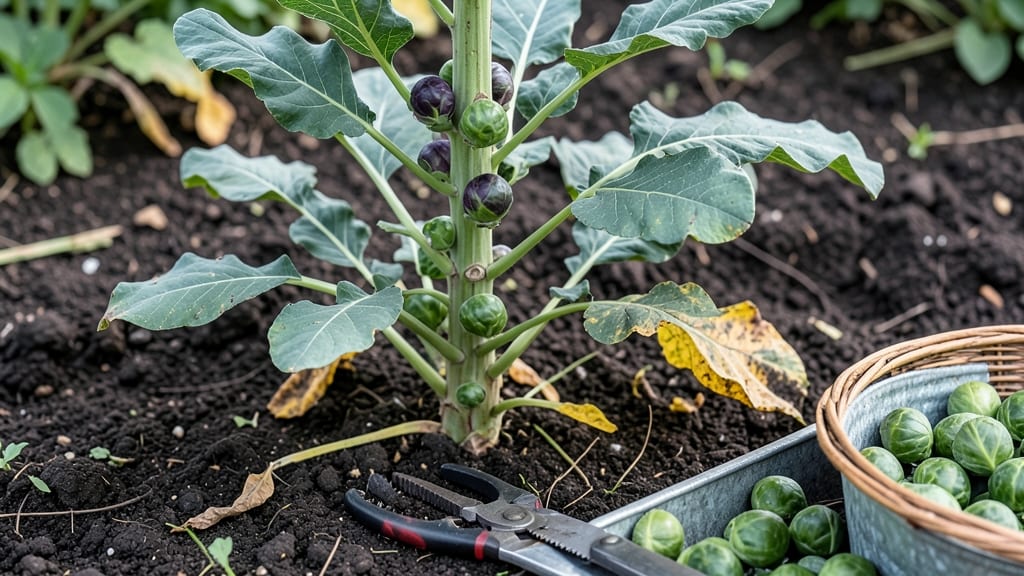
Next, focus on color. Mature sprouts should shift from pale green to a deep green or even purple hue, depending on the variety. This color change signals that the sugars have concentrated, giving them that signature sweetness.
If they’re still light green, they need more time on the plant.
🌱Pro Tip: Some varieties like 'Ruby' or 'Long Island Improved' develop rich purple tones—these are perfect when fully colored.
Don’t overlook the stem tenderness test, which is often the most reliable method. Gently bend a Brussel sprout stem near the base—if it snaps cleanly, it’s ready. If it bends without breaking, it needs more time.
This test works because the cell structure softens as the sprout matures, making it easier to harvest without damaging the plant.
Seasonal timing also plays a role. In fall harvests, watch for yellowing leaves at the top of the plant—this signals the plant is redirecting energy to the sprouts. A light frost can even sweeten the flavor, but avoid harvesting in heavy frost, which can damage the crop.
Aim to pick before the first hard freeze if possible.
🌿Visual Clue: The bottom sprouts will mature first, so start harvesting from there and work your way up. This ensures you get multiple harvests from a single plant over 2–4 weeks.
Finally, avoid common mistakes like waiting too long for "bigger is better"—overgrown sprouts lose tenderness and develop a bitter taste. Equally important is harvesting in dry conditions. Wet sprouts bruise easily, so pick on a sunny, dry day for the cleanest cuts.
✂️Harvest Tip: Use a sharp knife or pruners to cut sprouts 1 inch above the next bud. This encourages the plant to produce more sprouts lower down.
The 3 key signs your Brussel sprouts are ready to harvest
Knowing exactly when to harvest Brussel sprouts ensures you get the best flavor and texture. Look for these three key signs to determine peak ripeness: size, color, and stem tenderness. Each factor plays a crucial role in guaranteeing a successful harvest, so let’s break them down step-by-step.
First, check the size of your sprouts. At harvest time, they should be about 1 to 1.5 inches in diameter. If they’re smaller than 1 inch, they’re still developing and lack the rich flavor you want.
On the other hand, if they grow larger than 1.5 inches, they’ll become tough and bitter. Measure a few sprouts to confirm they’re in this ideal range.
| Sign | Ready Sprouts | Not Ready Sprouts |
|---|---|---|
| Size | 1-1.5 inches | Less than 1 inch |
| Color | Deep green to purple | Light green |
| Stem Tenderness | Snaps easily | Firm, no snap |
Next, examine the color of your sprouts. When ready, they’ll shift from light green to a deep green or even purple hue, depending on the variety. This color change indicates the sprouts have developed their full flavor.
If they’re still light green, give them more time to mature. Avoid waiting too long, though, as overripe sprouts lose their sweetness.
Finally, perform the stem snap test, which is the most reliable way to check ripeness. Gently bend a sprout stem near the base—if it snaps cleanly, it’s ready to harvest. If the stem bends without snapping, it’s not yet ripe.
This test ensures you’re picking sprouts at their peak tenderness and flavor. Always harvest from the bottom up to encourage more sprouts to form higher on the stem.
Timing is also crucial, especially if you’re growing Brussel sprouts for a fall harvest. As temperatures drop and leaves begin to yellow, it’s a sign that the plant is shifting its energy toward the sprouts.
This is your cue to start checking for readiness more frequently. A light frost can even sweeten the sprouts, making them even more flavorful!
Once you’ve confirmed all three signs—size, color, and stem tenderness—it’s time to harvest. Use a sharp knife or pruners to cut the sprouts, leaving about an inch of stem attached. This method keeps the plant healthy and encourages more sprouts to grow.
Store your freshly picked Brussel sprouts in the fridge for up to a week, or blanch and freeze them for longer storage.