
Blooming
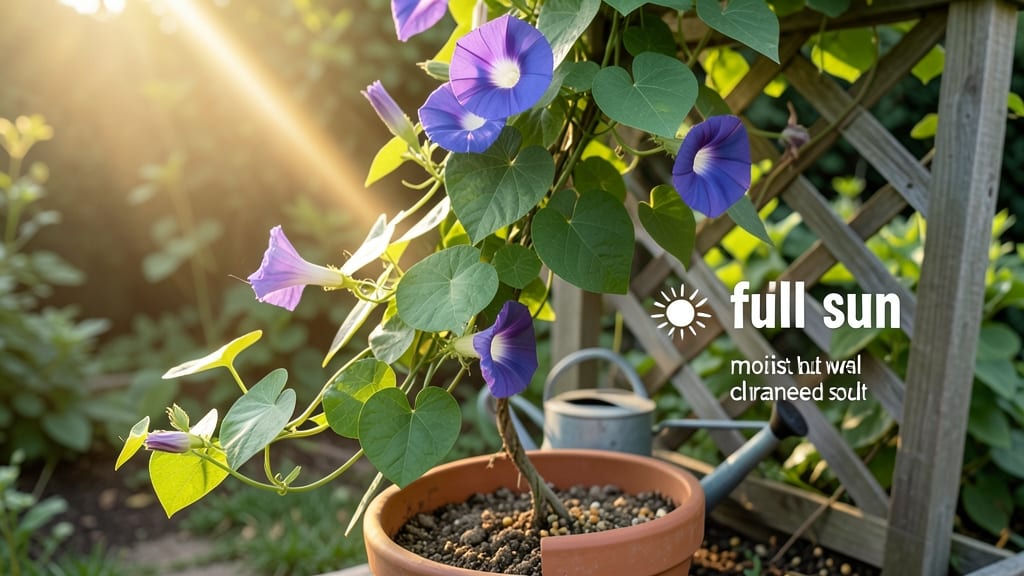
Morning glories refuse to bloom? That changes today. 🌿 These sun-loving climbers need 6+ hours of direct light daily—the more sun, the more flowers. My first year, I planted them in partial shade and got a few blooms. Year two?
Full sun, and suddenly, the vines exploded with blue trumpet flowers all summer. The secret isn’t just sunlight—it’s well-draining soil and consistent moisture (not soggy roots). I mix compost into the planting hole and water at the base when the top inch of soil feels dry.
Overwatering is the #1 blooming killer—it causes rot before flowers even appear. Once established, these vines grow 8-10 feet fast, so trellising early saves your fence from destruction. Prune leggy stems in spring to encourage bushier growth, and deadhead spent blooms to trigger more flowers.
The payoff? Nonstop blooms from early summer until frost—if you nail the basics. Works for containers too (just use a deep pot with a trellis). Here’s how to turn those sleepy vines into a flowering powerhouse—no more sad, sparse stems!
📚 In This Guide
- What you need
- Instructions
- Tips and common mistakes
- Wrapping up and next steps
What you need
Ready to transform your garden into a vibrant canvas of Ipomoea blooms? Gather these essentials to give your morning glories the perfect start! Whether you’re a seasoned gardener or a curious beginner, having the right tools and materials will make all the difference. Here’s your
Step-by-step instructions for encouraging morning glory blooms
Morning glories love to show off once you give them the right conditions—here's how to unlock their vibrant blooms.
🌱 Step 1: Plant in Full Sun and Well-Draining Soil
Morning glories need at least 6-8 hours of direct sunlight daily—that's non-negotiable for blooms. I plant mine in a spot where they'll get morning sun and afternoon shade if temperatures climb above 85°F. The soil should drain quickly but retain moisture; I mix in 1 part perlite to 3 parts garden soil to prevent soggy roots that stunt flowering.
Sow seeds ½ inch deep after the last frost when soil warms to 60°F. You'll see sprouts in 7-14 days—watch for the first true leaves to appear before thinning seedlings to 12 inches apart. This spacing gives vines room to climb and bloom without competing for sunlight.
☀️ Step 2: Provide Support and Consistent Watering
Morning glories are vining powerhouses, so give them a 6-foot trellis, fence, or sturdy string support right at planting. I tie the vines loosely with soft twine as they grow—never pull tight, or you'll snap delicate stems. You'll notice blooms open best when vines have plenty of upward growth (aim for 3-4 feet of vertical climb before expecting flowers).
Water deeply 2-3 times weekly, keeping the soil evenly moist but not soggy. Wilting in the afternoon means you're underwatering; droopy leaves that stay down signal overwatering. Mulch with 2 inches of straw to retain moisture and prevent weeds from stealing nutrients.
✂️ Step 3: Prune Strategically for More Blooms
Here's the thing—morning glories bloom on new growth, so regular pruning encourages more flowers. Once vines reach 3 feet tall, pinch back the tips to redirect energy into side shoots. You'll see 3-4 new branches form within 2 weeks; these are your future bloom producers. Remove any dead or yellowing leaves immediately—they drain the plant's energy.
Deadhead spent blooms daily if possible (they wilt by mid-afternoon). I use my fingers to gently twist off faded flowers—this prevents seed pods from forming and signals the plant to produce more blooms. With consistent deadheading, you'll get continuous flowers from early summer until frost.
💧 Step 4: Feed and Protect for Long-Lasting Blooms
Morning glories aren't heavy feeders, but a monthly application of 10-10-10 fertilizer (½ teaspoon per plant) keeps them blooming. I mix it into the soil at the base, then water deeply to distribute nutrients. Too much fertilizer leads to lush vines but fewer flowers—think quality over quantity here.
Watch for Japanese beetles or slugs that can defoliate vines overnight. I handpick beetles in the morning (they're sluggish then) and set out beer traps for slugs. A healthy vine can recover from light damage, but severe defoliation means fewer blooms. Spray with neem oil if pests become a problem—it's safe for blooms and beneficial insects.
Tips & tricks for encouraging morning glory blooms
Morning glories reward patience with stunning displays—but only if you give them the right care. These simple tricks will help you coax out the most vibrant blooms possible.
Sunlight Strategy: Those 6-8 hours of sunlight are critical, but location matters just as much. If your morning glories get afternoon shade naturally (like under a tree), they'll handle summer heat better than those baking in full sun all day. I've noticed vines in afternoon shade actually produce blooms 2-3 weeks earlier than those in relentless sun—just don't let them get less than 6 hours total.
Support System: Don't wait until vines are climbing to add support! Install your 6-foot trellis or fence at planting time. I use soft garden twine to loosely tie vines every 12 inches as they grow—this prevents stem damage and encourages upward growth. The key is to let them climb freely without restriction; vines that struggle to climb produce fewer blooms. Think of it like giving them a ladder to reach their full potential.
Watering Wisdom: The 2-3 times weekly watering guideline works best when you water deeply—aim for 1 inch of water per week. I check moisture by sticking my finger 2 inches into the soil; if it's dry at that depth, it's time to water. Morning is the best time to water because it gives foliage time to dry before evening, reducing disease risk. And remember: mulch is your best friend here—those 2 inches of straw keep soil moist and cool, which translates directly to more blooms.
Pruning Payoff: When you pinch back those tips at 3 feet tall, you're not just shaping the plant—you're telling it to focus its energy on producing flowers instead of climbing higher. I make sure to do this in the morning when the plant is turgid (full of water) to minimize stress. And here's a pro move: if you see any side shoots forming at the base of the plant, leave them! These low-growing branches often produce the most abundant blooms of all.
Pro Tips for Make Morning Glories Bloom
- Morning glories reward patience with stunning displays—but only if you give them the right care.
- Sunlight Strategy: Those 6-8 hours of sunlight are critical, but location matters just as much.
- Support System: Don't wait until vines are climbing to add support!
Frequently asked questions
Got questions about coaxing those stunning morning glory blooms? You’re not alone! Here are answers to the most common queries from gardeners eager to see their vines flourish.
How long does it take for morning glories to bloom after planting?
Most morning glories bloom 60–90 days after planting seeds, depending on the variety and growing conditions. Fast growers like Ipomoea purpurea may flower in as little as 4–6 weeks, while some heirloom types take longer. Patience pays off—consistent warmth and sunlight speed up the process!
Why aren’t my morning glories blooming? Troubleshooting tips.
If your vines are lush but flowerless, check these common culprits:
- Insufficient sunlight: Morning glories need 6+ hours of direct sun daily. Move them to a sunnier spot or provide a trellis for better air circulation.
- Over-fertilizing: Too much nitrogen = leafy growth, not flowers. Use a low-nitrogen, high-phosphorus fertilizer (like 5-10-10) to encourage blooms.
- Stress or pests: Check for aphids, spider mites, or fungal issues. Healthy vines bloom better!
Can I make morning glories bloom earlier in the season?
Yes! Start seeds indoors 2–3 weeks before the last frost (or use transplants) to give them a head start. Harden off seedlings gradually, then transplant after soil temps hit 55°F+. For a longer bloom season, deadhead spent flowers to prompt new blooms—just pinch off faded blooms in the morning (hence the name!)
Do morning glories bloom all summer, or do they need a break?
With proper care, morning glories can bloom continuously from late spring until frost. To extend their show, remove spent flowers daily (they self-seed aggressively!) and ensure consistent watering. Some varieties, like Ipomoea nil, produce nonstop blooms if given enough sun and support.
Are there morning glory varieties that bloom better in partial shade?
Most morning glories thrive in full sun, but a few tolerate partial shade (4–6 hours of sunlight):
- Ipomoea batatas (sweet potato vine) – Decorative foliage + edible tubers.
- Ipomoea quamoclit (cypress vine) – Drought-tolerant with delicate blooms.
- Ipomoea lobata – Heat-resistant and adaptable to shadier spots.
Wrapping up and next steps
Growing vibrant morning glories is all about patience, the right care, and a little love for these climbers! 🌸 With the perfect balance of sunlight, support, and soil, you’ll soon be rewarded with stunning blooms that brighten up your garden.
Start small—even a single vine can make a big impact—then expand as you gain confidence.
Ready to see your hard work pay off? Plant a seed today, and watch your garden transform! 🌱💚